
Biodiversity Conservation
Biodiversity Policy
SK ecoplant recognizes the potential impact of its business activities on the environment and biodiversity, and strives to minimize any adverse effects on biodiversity both domestically and internationally. To this end, the company has established principles and implementation standards within its environmental management policy to mitigate biodiversity risks across all business operations.
Biodiversity Policy
SK ecoplant considers the protection of biodiversity essential for sustainable development and recognizes the potential environmental and biodiversity impacts of its business operations. Accordingly, it strives to minimize the adverse effects of business activities on biodiversity.
SK ecoplant will prevent, minimize, and mitigate biodiversity risks across all operations. When undertaking new projects, such as facility expansions or upgrades, SK ecoplant will identify and assess the status and value of biodiversity and monitor the resulting impacts. Furthermore, SK ecoplant will strive to apply these measures to directly operated sites as well as secondary and tertiary supply chains.
Regarding land management and biodiversity conservation, SK ecoplant will comply with all relevant local, national, and regional legal requirements at all sites subject to applicable international conventions (World Heritage Areas, IUCN Category I–IV Protected Areas).
SK ecoplant will prioritize the protection of endangered, rare, and endemic species while exploring ways to support local, national, and global biodiversity conservation initiatives. Furthermore, SK ecoplant will provide various environmental training programs to employees and stakeholders to enhance their knowledge and understanding of biodiversity conservation issues.
At sites containing critical habitats, SK ecoplant will strive to prevent biodiversity loss (NNL: No Net Loss) and achieve a positive impact (NPI: Net Positive Impact). To this end, SK ecoplant will comply with biodiversity policies while measuring and reviewing pollution levels near its sites affecting wildlife, plants, air quality, odors, groundwater and marine water quality, as well as soil. Furthermore, SK ecoplant will actively engage in monitoring activities to improve the local environment.
Biodiversity Management System
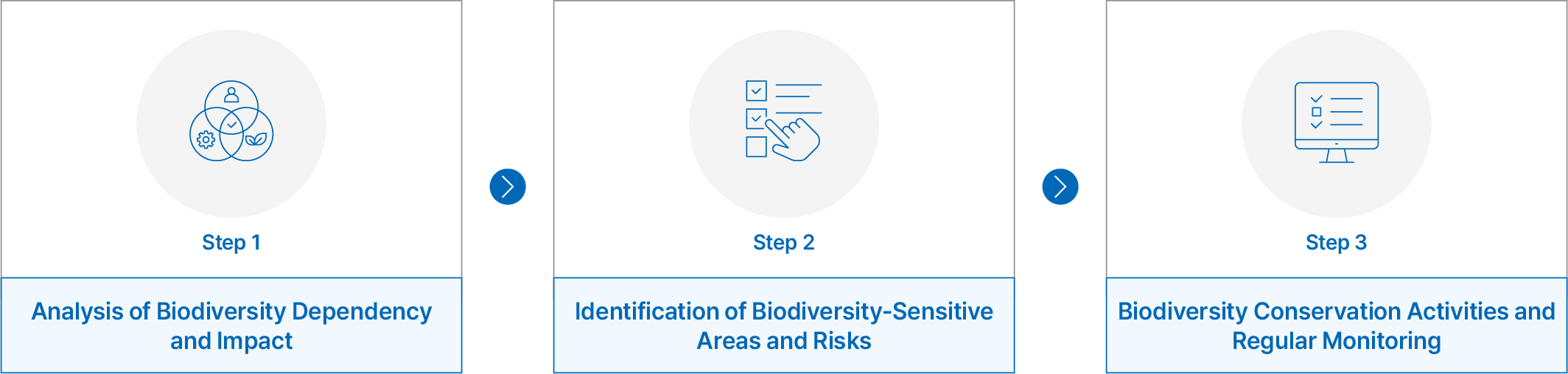
SK ecoplant identifies the degree of biodiversity dependence based on industry characteristics and the level of ecological impact caused by its business activities, while evaluating and analyzing biodiversity risks in the areas where its sites and construction sites are located. When launching new businesses or projects, the company conducts environmental impact assessments and implements measures to mitigate any identified negative impacts. Additionally, SK ecoplant manages biodiversity risks through continuous monitoring of environmental impacts.
Biodiversity Management Process
Analysis of Biodiversity Dependency and Impacts
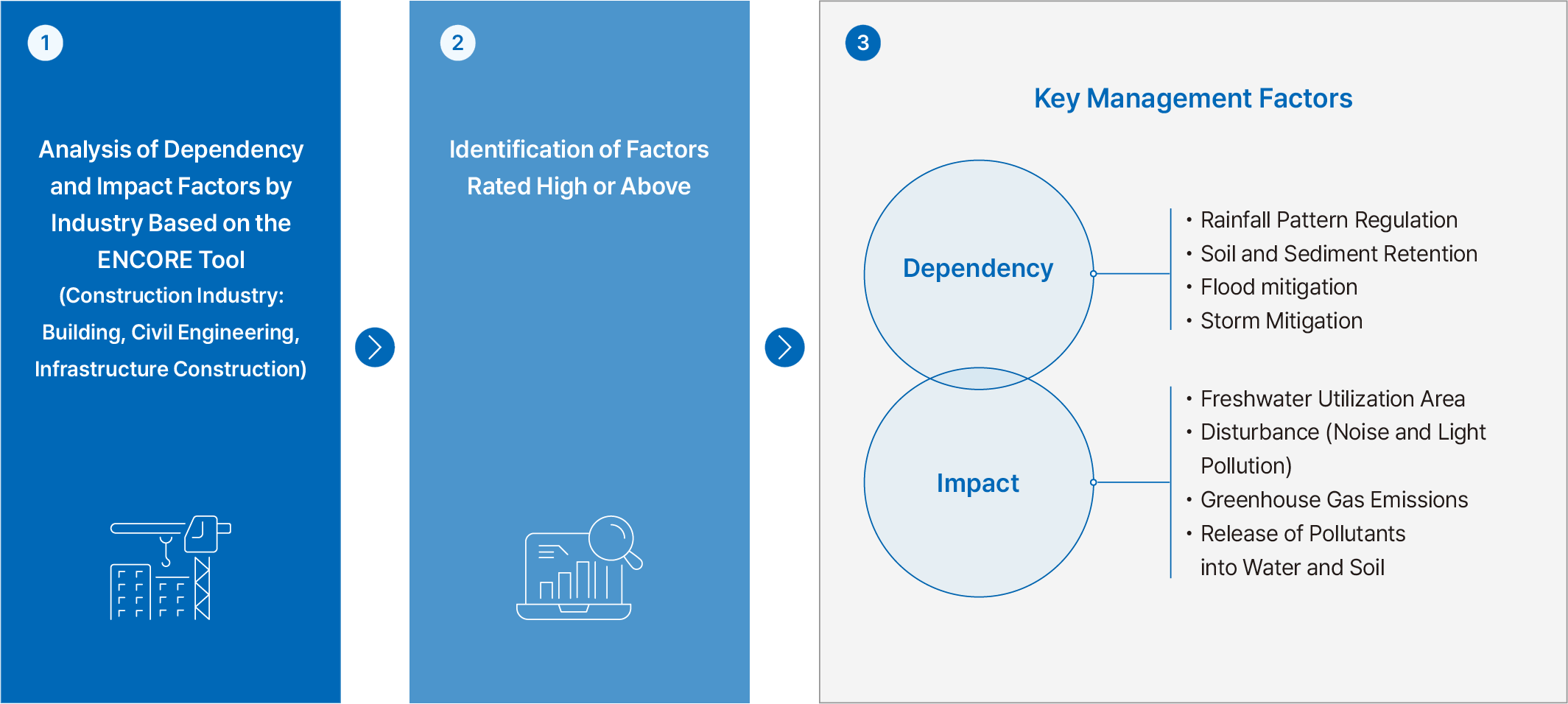
SK ecoplant conducted an assessment of ecosystem service dependency and the ecological impact of its business activities, reflecting the characteristics of the construction industry, using the ENCORE (Exploring Natural Capital Opportunities, Risks and Exposure) Tool. ENCORE is a global assessment tool that quantitatively analyzes a company’s level of dependency on ecosystem services during business operations ("dependency") and the negative impact those activities may have on ecosystems ("impact").
A result of "High" indicates that a company’s operations either rely heavily on certain ecosystem services or have a significant adverse impact on ecosystems. SK ecoplant defined items rated “High” or above in terms of dependency or impact as requiring management. In terms of dependency, Rainfall Pattern Regulation—a function of natural water cycles—and Soil and Sediment Retention—which contributes to preventing soil erosion and ensuring ground stability—and Flood as well as Storm Mitigation—which reduce floods, storms, or subsequent damage—were identified as key management factors. In terms of impact, key issues identified included Disturbance (Noise and Light Pollution) caused during construction, Greenhouse Gas Emissions from equipment operations, and Release of Hazardous Substances into Water and Soil from potential site runoff. SK ecoplant is implementing tailored management plans in phases to reduce its dependency on ecosystem services and minimize negative ecological impacts, focusing on the items identified as requiring management.
Results of Biodiversity Dependency and Impact Analysis
Identification of Biodiversity-Sensitive Areas
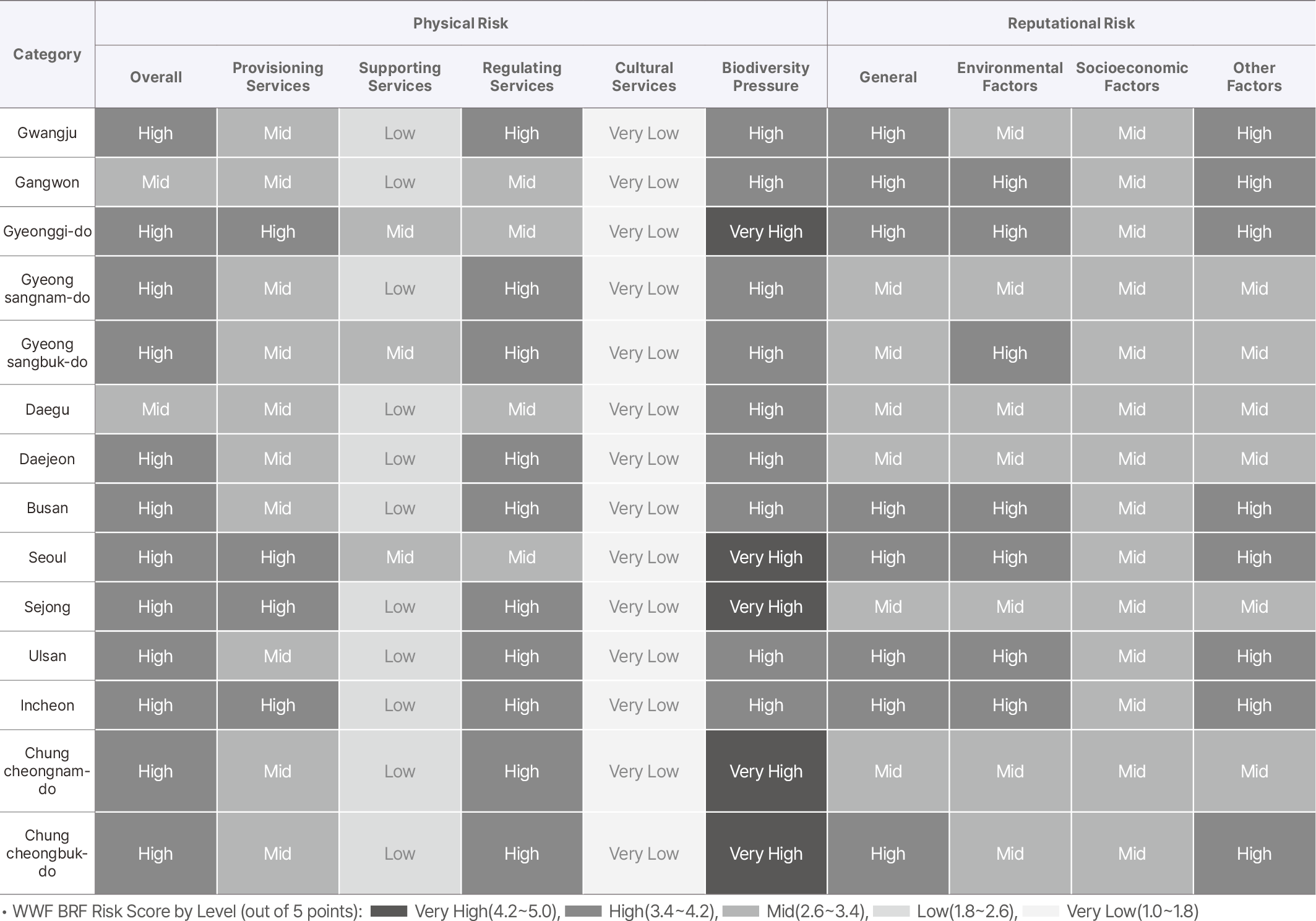
SK ecoplant assessed biodiversity risks in the regions where its major domestic operations are located using the World Wildlife Fund(WWF)’s Biodiversity Risk Filter (BRF). The BRF is a global assessment framework that enables companies to quantitatively analyze not only their impact on natural ecosystems but also the risks that biodiversity loss poses to their operations. The BRF categorizes biodiversity risks into physical risks and reputational risks. Physical risks refer to potential operational disruptions and increased costs that may arise if the ecosystem services on which the company relies are damaged or weakened. Reputational risks refer to risks that affect a company’s social reputation—such as criticism from local communities or stakeholders, or a decline in brand trust—should the company negatively impact the ecosystem.
The analysis revealed that among the regions where SK ecoplant’s domestic sites are located, none were assessed as having a “Very High” overall level of physical and reputational risk; most were rated at the “Medium” or “High” level. However, in some regions—including Gyeonggi-do, Seoul, Sejong, Chungcheongnam-do, and Chungcheongbuk-do—the “Biodiversity Pressure” indicator, which measures the level of ecosystem stress, was rated “Very High” due to factors such as changes in land use, pollution, population density, and climate. SK ecoplant is prioritizing biodiversity conservation activities, particularly in these regions, to minimize ecosystem stress caused by its business operations.
Biodiversity Risk Analysis Results
Biodiversity Protection and Management
SK ecoplant has established an environmental impact monitoring plan and is implementing activities that comply with relevant laws in the regions and countries where its sites are located. In particular, prior to launching new projects and commencing construction, SK ecoplant identifies potential negative impacts on areas surrounding the project site through the developer’s environmental impact assessment. To mitigate these impacts, the company implements various biodiversity conservation measures tailored to the characteristics of identified protected species, including minimizing habitat destruction, installing ecological corridors and artificial nests, creating resting areas, establishing alternative habitats, relocating species, as well as restoring and replanting vegetation. In addition, SK ecoplant conducts biodiversity monitoring at least once per quarter to carry out detailed surveys of key flora and fauna.
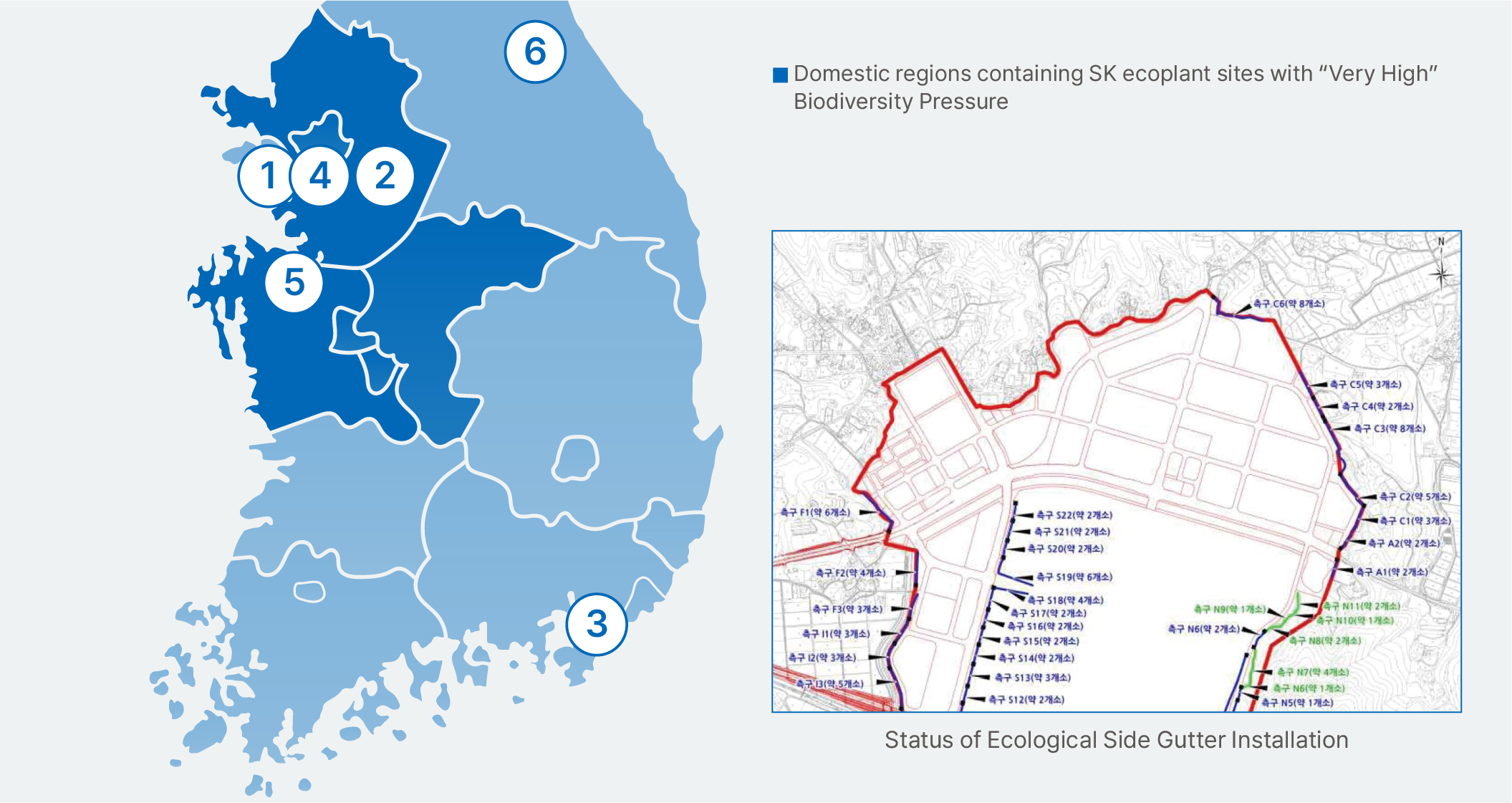
Biodiversity Protection and Management Activities
Regions and Projects | Identified Protected Species | Conservation Activities |
|---|---|---|
① Gwangmyeong–Seoul Expressway Investment Project (Section 3) |
|
|
② Yongin Semiconductor Cluster General Industrial Complex Development Project |
|
|
|
| |
- |
| |
③ Yangchon and Yongjeong Districts General Industrial Complex Development Project |
|
|
|
| |
- |
| |
④ Wolgot–Pangyo Double- Track Railway Construction Project (Section 8) |
|
|
⑤ Pyeongtaek–Osong 2nd Double-Track Railway Construction Project (Section 2) |
|
|
⑥ Gangneung–Jejin Single-Track Railway Construction Project (Section 4) |
|
|
|
| |
- |
|