Sustainable Products and Services
Sustainable Technology Development
SK ecoplant has adopted technology development for sustainable products and services as a core growth strategy, securing future growth capabilities during the transition of its business portfolio while simultaneously enhancing the operational efficiency of its existing assets. Starting in 2024, to strengthen competitiveness in environmental and energy technologies, the company established greenhouse gas reduction, energy optimization, air pollutant reduction, and identifying solutions and developing technologies for water reuse and zero discharge as core KPIs within its company-wide ESG-specific metrics; these have been implemented as priority tasks. As a result, SK ecoplant is currently conducting demonstrations of proprietary water reuse and zero liquid discharge technology (CSRO), in addition to preparing pilot testing for the air pollutant-reducing Bay Scrubber technology.
SK ecoplant is currently pursuing the phased commercialization of each of these technologies and aims to continue realizing both economic and social value by establishing environmental infrastructure that integrates AI and digital technologies, as well as by localizing and advancing clean energy technologies. Furthermore, the company reports and reviews key agenda items related to sustainable product and service technologies—such as the circular economy and renewable energy—with the Board of Directors and the Strategy and ESG Committee.
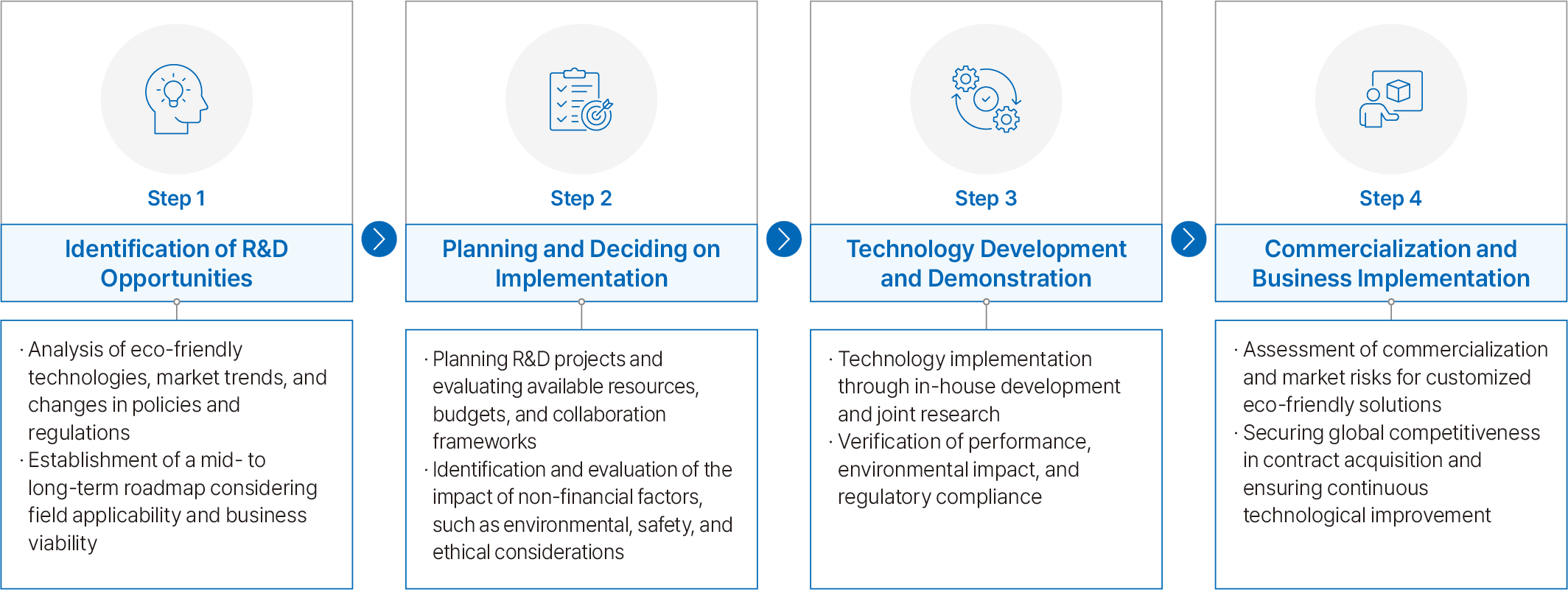
SK ecoplant establishes R&D roadmaps by comprehensively analyzing eco-friendly technologies, policies, and market trends, and is building a diverse technology portfolio through C&D (Connect & Development) activities aligned with its business strategy. The company provides advanced eco-friendly solutions not only through in-house technology development but also through joint development with external innovation partners, and applies a systematic risk management framework that incorporates environmental, social, and technical factors throughout the entire process—from the initial planning stage of technology development to commercialization. In particular, to address social and policy demands for eco-friendly R&D and the uncertainties associated with technology investment, SK ecoplant proactively identifies and manages risks at every stage of the R&D process—from identifying and planning opportunities to technology development, demonstration, commercialization, and business implementation.
Sustainable Technology R&D Process
Investment Objectives and Plans
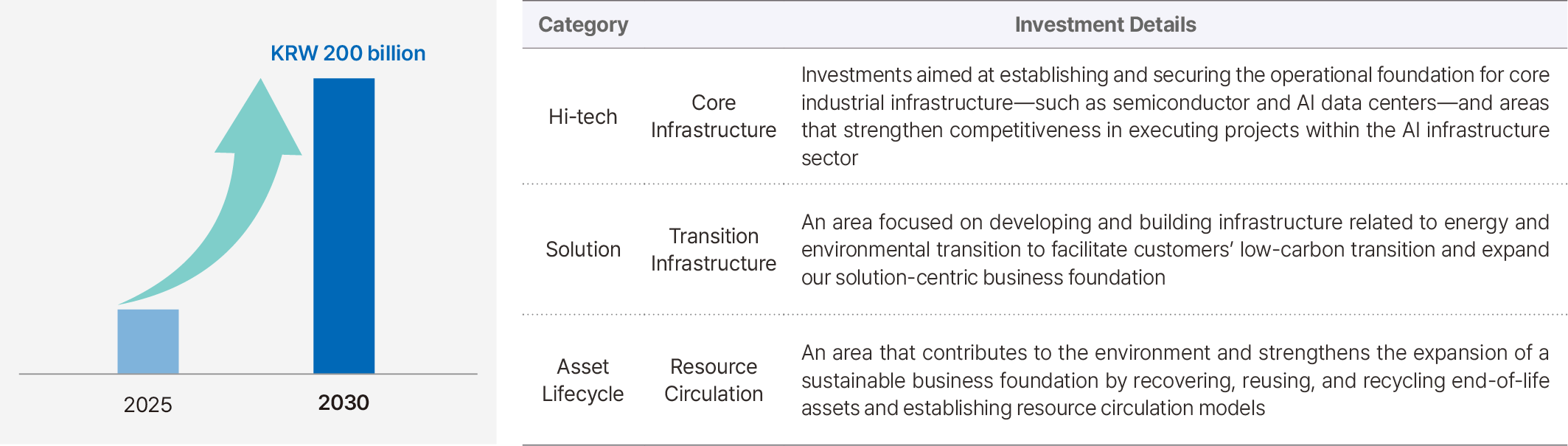
SK ecoplant has been continuously expanding its investments in the fields of Hi-tech, AI Solutions, and Asset Lifecycle to secure a leading position in the future AI infrastructure market and develop sustainable products and services, and plans to invest approximately KRW 200 billion by 2030.
Scale of Business Investment
Sustainable Products and Services Performance
Sustainable Construction and Technology Development
In response to the growing market demand for eco-friendly buildings, SK ecoplant conducts building Life Cycle Assessments (LCA) on a project-by-project basis and quantitatively evaluates the environmental impacts generated throughout a building’s life cycle. Furthermore, the company develops and applies eco-friendly technologies across the entire life cycle of a building—from design through construction to operation. In particular, SK ecoplant has obtained certifications under the Green Building Certification and Building Energy Efficiency Rating systems, both of which are eco-friendly building certification programs. Furthermore, by constructing zero-energy buildings (ZEBs) that incorporate environmental and energy solutions, SK ecoplant is actively participating in the national initiative to mandate zero-energy buildings (ZEBs).
SK ecoplant defines, calculates, and discloses “eco-friendly building revenue” (aggregated separately, excluding subsidiaries) as revenue generated from products certified by third parties (official certification bodies such as the Korea Real Estate Board and the Korea Research Institute of Eco-Environmental Architecture) under programs such as the Green Building Certification (G-SEED) and the Building Energy Efficiency Rating Certification. The company consistently sets certification targets in consideration of trends in the construction industry, thereby strengthening its competitiveness in the eco-friendly construction market.
Green Building Certification
Category | Unit | 2023 | 2024 | 2025 | 2026 | 2027 | ||
|---|---|---|---|---|---|---|---|---|
Total | SK ecoplant | SK ecoengineering | Target3) | |||||
Final Certification | Cases | 5 | 12 | 10 | 10 | 0 | 5 | 7 |
Final Certification for Building Energy Efficiency Rating2) | Cases | 5 | 13 | 11 | 11 | 0 | 5 | 5 |
1) Green Building Certification (G-SEED): A system that grants eco-friendly building certification to structures that contribute to energy conservation and the reduction of
environmental pollution throughout the entire process, including design, construction, and maintenance. 2) Building Energy Efficiency Rating : A certification system designed to expand demand for high-energy-performance buildings and promote awareness of effective building
energy management by providing quantitative and objective information on building energy performance. 3) Target: Total target, including SK ecoplant and SK ecoengineering
Eco-friendly Building Revenue
Category | Unit | 2023 | 2024 | 2025 |
|---|---|---|---|---|
Total Revenue (Separate Basis) | KRW 100 million | 46,022 | 54,173 | 74,896 |
Eco-friendly Revenue1) | KRW 100 million | 16,247 | 18,458 | 14,293 |
Eco-friendly Revenue Ratio2) | % | 35.3 | 34.1 | 19.1 |
1) Eco-friendly Revenue: Products that have received third-party certification were defined as Eco-friendly Revenue, and the total figure includes eco-friendly revenue generated from
projects that have completed either full or preliminary certification. 2) Eco-friendly Revenue Ratio = (Eco-friendly Revenue ÷ Total Revenue (Separate Basis)) × 100
SK ecoplant is also developing construction materials using industrial and municipal waste. KEco-Bar, an eco-friendly rebar substitute based on glass-fiber-reinforced plastic (GFRP) blended with recycled PET, is a new material that is lightweight, has high tensile strength, and offers excellent corrosion resistance. It has been successfully listed in the National Design and Specification Standards (24 Code, 14 Code) and has also obtained Green Certification and Eco-Label Certification. Its registration under the Korea Design Standard (KDS, 41 Code: Building Structures) is currently being prepared, while it is already listed as a Public Procurement Service “Excellent Product.” Furthermore, to introduce environmental solutions linked to resource circulation, SK ecoplant aims to take the lead in solving environmental problems through sustainable products and services, such as developing an automated waste collection and sorting system for apartment complexes.
R&D and Patents
SK ecoplant continues to invest in R&D across the entire value chain. To secure differentiated technological capabilities related to sustainable products and services, the company is expanding the number of patents it files and holds; as a result, it currently holds a total of 83 patents as of 2025.
Strategic Directions for Sustainable Products and Services
Through this report, SK ecoplant details key examples that align with its strategic direction for sustainable products and services across each business division, and will continue to expand these activities through ongoing improvement and advancement.
Strategic Directions by Business Division
Category | Strategic Direction |
|---|---|
Hi-tech |
|
Solution |
|
Asset Lifecycle |
|
CASE | Catalytic Bay Scrubber for Removing Greenhouse F-Gases in Semiconductor Processes |
|---|
Due to recent trends in semiconductor miniaturization and the surge in AI demand, not only front-end semiconductor process equipment but also back-end systems and environmental facilities are requiring more space and power. Consequently, environmental equipment in sub-FABs—such as scrubbers, electrostatic precipitators, and vacuum pumps—must be compactly designed to reduce power consumption, installation footprint, and piping complexity while maintaining performance. Currently, environmental equipment used to treat greenhouse F-gases generated during semiconductor production processes (such as etching and deposition) relies on small-scale plasma-wet and burn-wet scrubber technologies. With approximately 10,000 units installed in semiconductor manufacturing facilities, there is a pressing need to enhance space efficiency, reduce power consumption, and improve maintenance convenience through the adoption of medium- and large-scale systems. | |
|---|---|
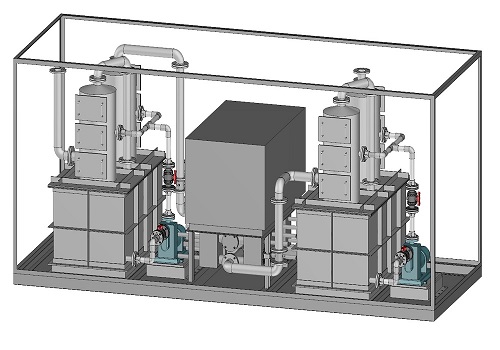 | Based on technical collaboration with global partners and its own design capabilities, SK ecoplant has developed medium- to large-scale catalytic bay scrubber technology. By using a catalyst to significantly lower the decomposition temperature of greenhouse gases, this technology reduces power consumption and can replace 20 to 50 existing units, thereby greatly improving space efficiency and ease of maintenance. By 2025, SK ecoplant has completed pilot technology validation and built a prototype on the same scale as commercial facilities, achieving a greenhouse gas reduction efficiency of 95% or higher for major F-gases and an energy recovery rate of 90% or higher. In addition, the company has developed its own dynamic simulator to optimize design and operating conditions, thereby enhancing technical performance. In 2026, SK ecoplant plans to conduct demonstration tests at semiconductor manufacturing facilities to lay the groundwork for commercialization, in addition to developing technology to scale up systems installed on factory roofs. |
* Greenhouse gas reduction efficiency and energy recovery rates are based on internal measurements; figures may vary depending on actual operating conditions. | |
CASE | Proprietary CSRO Technology for Water Reuse and Zero Liquid Discharge |
|---|
As industrial water usage increases across the electronics industry—including semiconductor manufacturing—the burden of securing water resources is growing, and from an ESG perspective, customer demand for wastewater reuse is surging. SK ecoplant has developed a high-efficiency water treatment technology (CSRO: Circle-Sequence Reverse Osmosis) that increases recovery rates and reduces concentrated wastewater discharge compared to existing processes, while also minimizing operating costs with minimal equipment. CSRO is a system technology that uses reverse osmosis membranes—which are widely used for process water production and wastewater reuse—to sequentially switch between forward and reverse modes, thereby recirculating concentrate internally. | |
|---|---|
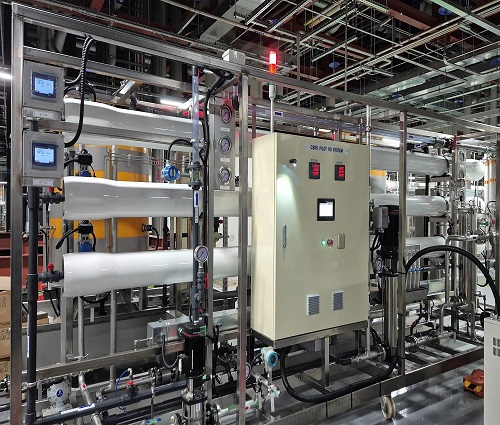 | Reverse osmosis membranes act as filters that remove chemicals and impurities from the effluent. Depending on the properties and condition of the influent, CSRO is a technology capable of achieving a higher recovery rate compared to conventional reverse osmosis processes. In 2025, SK ecoplant is verifying performance and stability through CSRO technology demonstrations while simultaneously pursuing commercialization. The company is also enhancing operational stability and efficiency through the development of design and automated operation software for CSRO. In 2026, SK ecoplant aims to advance technology—including the development of a water-quality-linked operational optimization program capable of responding to various inflow conditions—while proceeding with demonstration and practical application. Based on this, the company will support customers in achieving their ESG goals of reducing water consumption and expanding reuse, while also translating these efforts into business results. |
CASE | Energy Efficiency in Eco-Friendly Buildings |
|---|
SK ecoplant aims to minimize waste and carbon emissions throughout the entire life cycle of various buildings—including residential and commercial facilities, infrastructure, and industrial complexes—by integrating eco-friendly elements with the EPC (Engineering, Procurement, Construction) capabilities accumulated through its existing construction business. To this end, the company is continuously conducting R&D on design and construction technologies that reduce environmental impact and enable resource circulation. In particular, to reduce a building’s energy consumption and greenhouse gas emissions, SK ecoplant applies design and technical elements that enhance the building’s energy efficiency while improving comfort for residents and users. To this end, the company evaluates the potential for utilizing natural energy based on the building’s location, orientation, and insulation performance from the initial design stage, while employing high-efficiency heating systems, equipment, and lighting. Furthermore, SK ecoplant operates a phased integrated energy design process—covering the entire “review–design–implementation–operation” cycle—to gradually increase a building’s energy self- sufficiency through the application of renewable energy sources such as solar power. The goal is not only to optimize elements such as the building envelope, systems, controls, and renewable energy to achieve energy performance that meets external standards—such as Zero Energy Buildings (ZEB)—but also to ensure that performance is maintained stably throughout the operational phase. In 2025, a highly insulated and airtight building envelope system was implemented at the SK V1 knowledge industrial complex in West Busan to minimize heat loss, while a Building Energy Management System (BEMS) was established to enhance operational efficiency through real-time monitoring of energy consumption. Furthermore, by installing a rooftop photovoltaic (PV) system and solid oxide fuel cells (SOFCs), the facility achieved an energy self-sufficiency rate (the percentage of primary energy production relative to primary energy consumption) of over 20%, thereby earning a Zero Energy Grade 5 (preliminary certification). | |
|---|---|
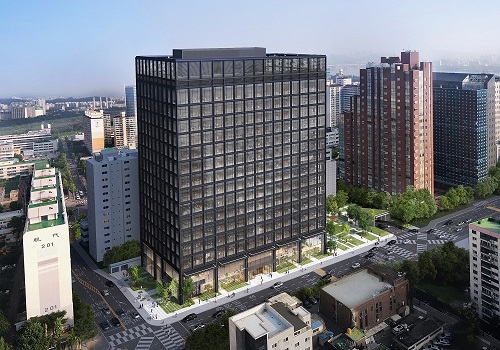 | The Yeongdeungpo office building also incorporates a highly insulated and airtight building envelope system; the use of a double-skin envelope system enhances occupant comfort and minimizes energy loss. To strengthen energy usage management, an integrated building energy management system was implemented, while the building itself was designed to improve energy self-sufficiency through a rooftop photovoltaic (PV) system and solid oxide fuel cells (SOFC). SK ecoplant is standardizing the most efficient combinations of renewable energy sources—such as building-integrated photovoltaic (BIPV) systems and solid oxide fuel cells (SOFCs)—tailored to the purpose, size, and energy usage characteristics of all buildings currently under construction. Based on this, the company plans to establish specific performance targets aligned with the government’s energy self-sufficiency goals and monitor their implementation progress. |
Energy Efficiency Measures by Construction Phase
Category | Details |
|---|---|
Design |
|
Construction |
|
Operation |
|
CASE | Fuel Cell Waste Heat Reuse Chiller (WHRC) Technology |
|---|
Fuel cell power generation inevitably produces high-temperature exhaust gas (waste heat) during the electricity production process; recovering and utilizing this heat can improve energy efficiency while reducing the environmental impact. SK ecoplant set the improvement of integrated thermo-electric efficiency—converting heat sources previously wasted during power generation into usable energy—as its core objective by developing Waste Heat Reuse Chiller (WHRC) technology that utilizes this waste heat for system cooling. | |
|---|---|
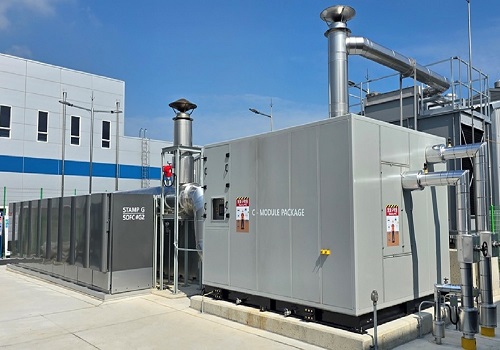 | To simultaneously expand the scope of technology application and business viability, SK ecoplant aims to strengthen cost competitiveness and supply stability by increasing the localization rate and continuing performance improvement efforts. Furthermore, the company plans expansion into international markets by securing overseas technology rights for WHRC, in addition to standardizing the technology so it can be consistently applied to all projects. In addition, SK ecoplant will implement Hot Water System (HWS) technology that utilizes waste heat to produce hot water, thereby establishing a comprehensive waste heat utilization system capable of not only cooling but also hot water production. |
CASE | Data-Driven Circular Economy Platform (WAYBLE) |
|---|
SK ecoplant’s WAYBLE is a digital platform designed to reduce carbon emissions and cultivate a circular economy, currently offering services in five areas. WAYBLE circular manages the entire waste and resource recycling process, while WAYBLE decarbon manages the entire process of calculating, analyzing, and reducing corporate carbon emissions. WAYBLE re:energy is an AI-based system for optimizing energy, water treatment, and recycled resource production. These three service areas, along with WAYBLE re:water and WAYBLE resources, help companies manage their carbon emissions and waste disposal operations. In particular, WAYBLE circular is a service that digitally tracks and manages the entire waste management process—from generation to collection, transportation, and final disposal. It automates previously manual tasks through features such as the automatic generation of waste transfer forms and integration with the Ministry of Environment’s Allbaro reporting system, thereby enhancing operational productivity and data transparency. | |
|---|---|
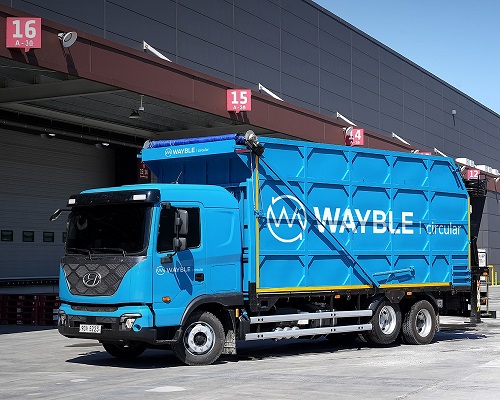 | Furthermore, the platform enables the management of key performance indicators—such as waste generation volumes by category, disposal patterns, and recycling rates—and supports global business operations, including the acquisition of Zero Waste to Landfill (ZWTL) certification. Currently, over 900 sites owned by domestic companies are utilizing WAYBLE circular, while WAYBLE re:energy is being implemented not only in Korea but also at environmental and energy facilities in Vietnam and Malaysia. Centered on the two key pillars of resource circulation and carbon emissions management, WAYBLE is addressing the climate crisis through digital transformation while simultaneously improving corporate operational efficiency. SK ecoplant intends to continue presenting its unique vision for the circular economy through WAYBLE services. |
CASE | E-Waste Recycling |
|---|
 | Through SK tes, its IT Asset Disposition (ITAD) subsidiary that focuses on the disposal of IT products and high-performance electronic equipment, SK ecoplant has proactively secured technologies for the dismantling and recycling of IT assets and is responding to the demand for related services. SK tes currently operates approximately 40 processing facilities in 21 countries worldwide and has established a stable e-waste collection network. The company possesses recovery and processing technologies for resources classified as key future industries, ranging from e-waste containing semiconductors to electric vehicle batteries and data center servers. Furthermore, SK ecoplant’s semiconductor memory subsidiary, ESSENCORE, reprocesses components collected from high-performance servers handled by SK tes into memory products such as SSDs and SD cards. Thus, it contributes to efficiently recycling resources and establishing a circular supply chain. |