Governance
Occupational Safety and Health Management Policy
SK ecoplant’s Occupational Safety and Health Management Policy is based on the fundamental Occupational Safety and Health Policy. It consists of implementation principles for application scope, the Occupational Safety and Health Management System, and worksite occupational safety and health management. The company strives to prevent accidents and create a safe and healthy work environment by conducting occupational safety and health risk management activities—including hazard management, accident and recurrence prevention, smart safety digital transformation (DT), compliance audits for occupational safety and health laws, safety management for Biz. Partners, and emergency response—and by reviewing implementation performance.
The Occupational Safety and Health Management Policy applies to all employees company-wide, including regular staff, contractors, service providers, outsourced workers, and workers in special employment arrangements. Compliance is also encouraged from all Biz. Partners with whom the company has transactional relationships. Furthermore, SK ecoplant conducts an annual review of the policy’s effectiveness and revises detailed guidelines to align with changes in the internal and external regulatory environment.
SK ecoplant and its major subsidiaries have obtained Occupational Safety and Health Management System (KOSHA-MS, ISO 45001) certification for all domestic and international sites, and maintain an effective occupational safety and health management system through annual follow-up audits by certification bodies.
Status of Occupational Safety and Health Management System Certification
Category | Initial Certification Date | Validity Period |
|---|---|---|
SK ecoplant (KOSHA-MS) | Nov. 26, 2015 | Nov. 26, 2024 – Nov. 25, 2027 |
SK ecoplant (ISO 45001) | Nov. 8, 2010 | Nov. 9, 2025 – Nov. 8, 2028 |
SK ecoengineering1) | Feb. 1, 2022 | Feb. 1, 2025 – Jan. 31, 2028 |
SK airplus1) | Aug. 17, 2020 | May 9, 2025 – May 8, 2028 |
ESSENCORE1) | Dec. 8, 2020 | Dec. 27, 2025 – Dec. 26, 2028 |
SK tes1) 2) | Feb. 7, 2025 | Feb. 7, 2025 – Feb. 6, 2028 |
SK oceanplant1) | Jan. 19, 2018 | Jan. 4, 2024 – Jan. 4, 2027 |
SK materials performance (Photoresist)1) 3) | Jun. 12, 2020 | Jun. 12, 2026 – Jun. 11, 2029 |
SK materials performance (Semiconductor Back-End Process)1) 3) | Dec. 16, 2023 | Dec. 16, 2023 – Dec. 15, 2026 |
SK trichem1) | Mar. 5, 2020 | Mar. 5, 2026 – Mar. 4, 2029 |
SK resonac1) | Jun. 30, 2020 | Dec. 27, 2023 – Dec. 26, 2026 |
SK materials jnc1) | Jan. 7, 2022 | Jan. 7, 2025 – Jan. 6, 2028 |
1) All subsidiaries (SK ecoengineering, SK airplus, ESSENCORE, SK oceanplant, SK materials performance, SK trichem, SK resonac, SK materials jnc) hold ISO 45001 certification 2) SK tes data is based on the Domaine (SBS) site in France; a total of 36 sites hold ISO 45001 certification
3) SK materials performance holds ISO 45001 certification for each business division
Occupational Safety and Health Management Governance
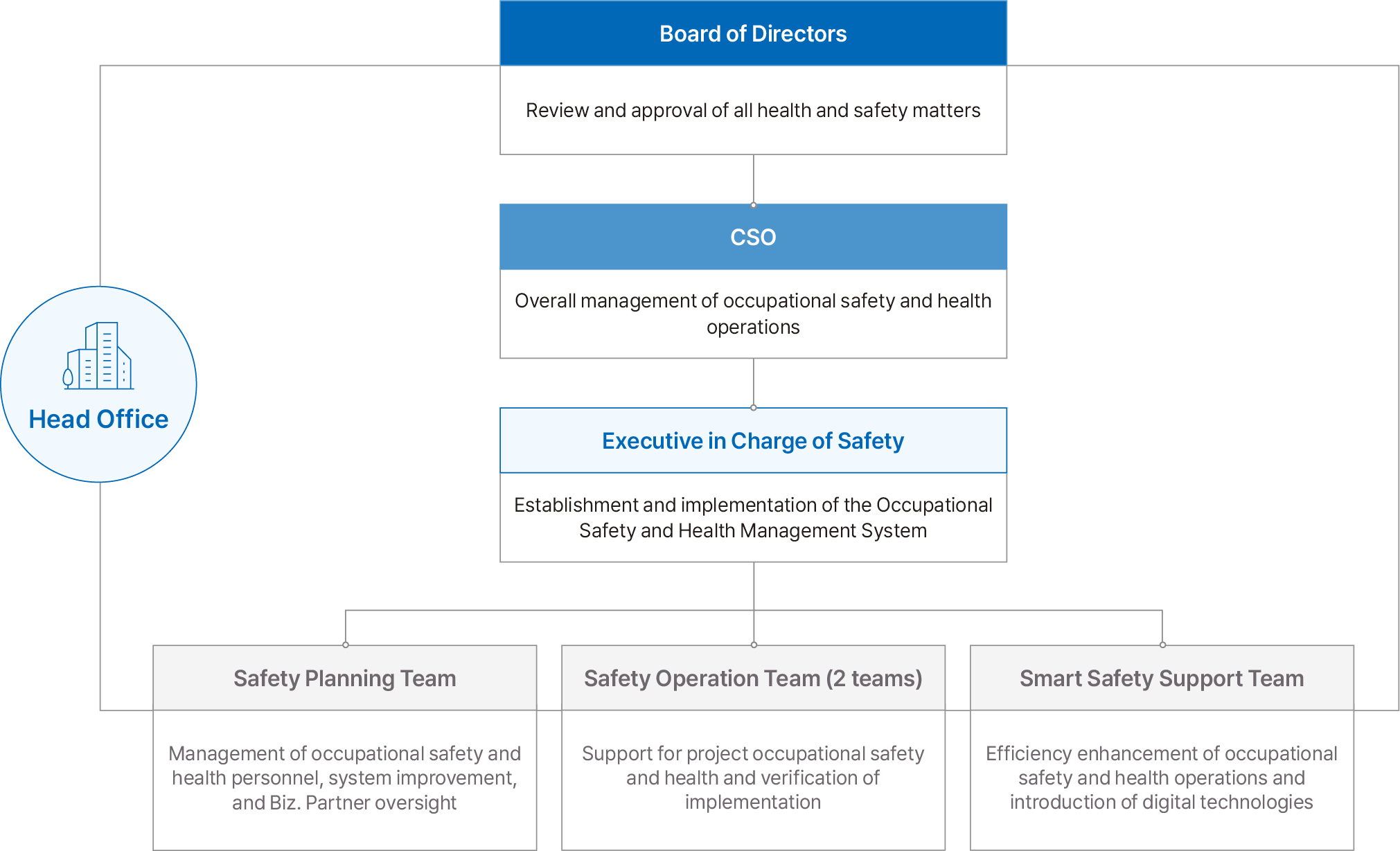
SK ecoplant prioritizes the safety and well-being of all employees and stakeholders above all else and operates a systematic occupational safety and health management system led by the CSO (Chief Safety Officer).
The CSO, with independent decision-making authority, oversees all worksite occupational safety and health operations, including the establishment of the occupational safety and health management system, organizational operations, as well as budget planning and execution. The implementation teams under the CSO regularly review the status of the occupational safety and health management system while carrying out activities to improve safety and health performance indicators. In addition, the CSO hosts semi-annual occupational safety and health performance review meetings. Attendees—including the CSO, center heads, heads of each business unit, executives in charge of business and safety, and team leaders of subordinate organizations—review the effectiveness and implementation of the occupational safety and health management system. They identify areas requiring improvement and implement corrective measures to ensure the system operates effectively and efficiently. By sharing internal and external occupational safety and health trends along with the results of project support reviews, workplace accidents are minimized. Feedback is actively solicited from site personnel and incorporated into improvement measures, thereby contributing to accident prevention. The Board of Directors serves as the highest decision-making body for occupational safety and health. At the beginning of each year, it reviews and approves matters related to all aspects of occupational safety and health—including policies, organizational structure, budget and facilities, operational performance, and plans—as reported by the implementation teams.
Furthermore, to strengthen management’s accountability for occupational safety and health, SK ecoplant has incorporated metrics such as achieving zero serious accidents, implementing risk assessment processes, complying with relevant laws and regulations, and employee health examination compliance rates into executives’ KPIs, including those of the CSO. In 2025, the company introduced and implemented an evaluation system for the CEO focused on the completeness and effectiveness of the occupational safety and health management system, as well as the Lost Time Injury Rate (LTIR).
Occupational Safety and Health Management Organizational Chart
Items Reported to and Approved by the Board of Directors
Date | Agenda Item | Approval Status |
|---|---|---|
Feb. 10, 2025 | 2025 Occupational Safety and Health Plan (2024 Results and 2025 Plan) | Approved |
CASE | Safety and Quality Committee |
|---|
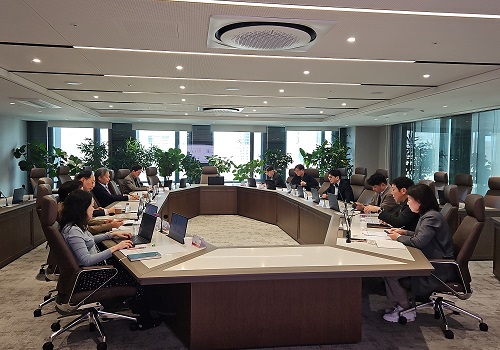 | SK ecoplant operates a Safety and Quality Committee to prevent serious accidents and continuously improve safety and quality management standards, taking into account the unique characteristics of the construction industry. The Safety and Quality Committee is an independent decision-making body that deliberates and resolves key safety and quality issues based on expertise and independence. It aims to review site-centered improvement tasks and strengthen their implementation. Chaired by the CSO, the Safety and Quality Committee consists of nine members, including business unit leaders, center heads, executives in charge of safety and quality, and external experts. Regular committee meetings are held monthly. By providing objective verification and advice on safety and quality management systems as well as overall operations, the Safety and Quality Committee continuously enhances the company’s safety and quality management standards. |
Strategy
Identification and Assessment of Occupational Safety and Health Risks and Opportunities
SK ecoplant identifies and assesses key occupational safety and health risks and opportunities expected to impact its business operations. By understanding their implications across the entire business and value chain, the company incorporates these findings into its occupational safety and health management strategy. Through this, SK ecoplant manages occupational safety and health risks, while implementing effective improvement activities by deriving company-wide initiatives and site-specific action plans.
Impact on Business and the Value Chain
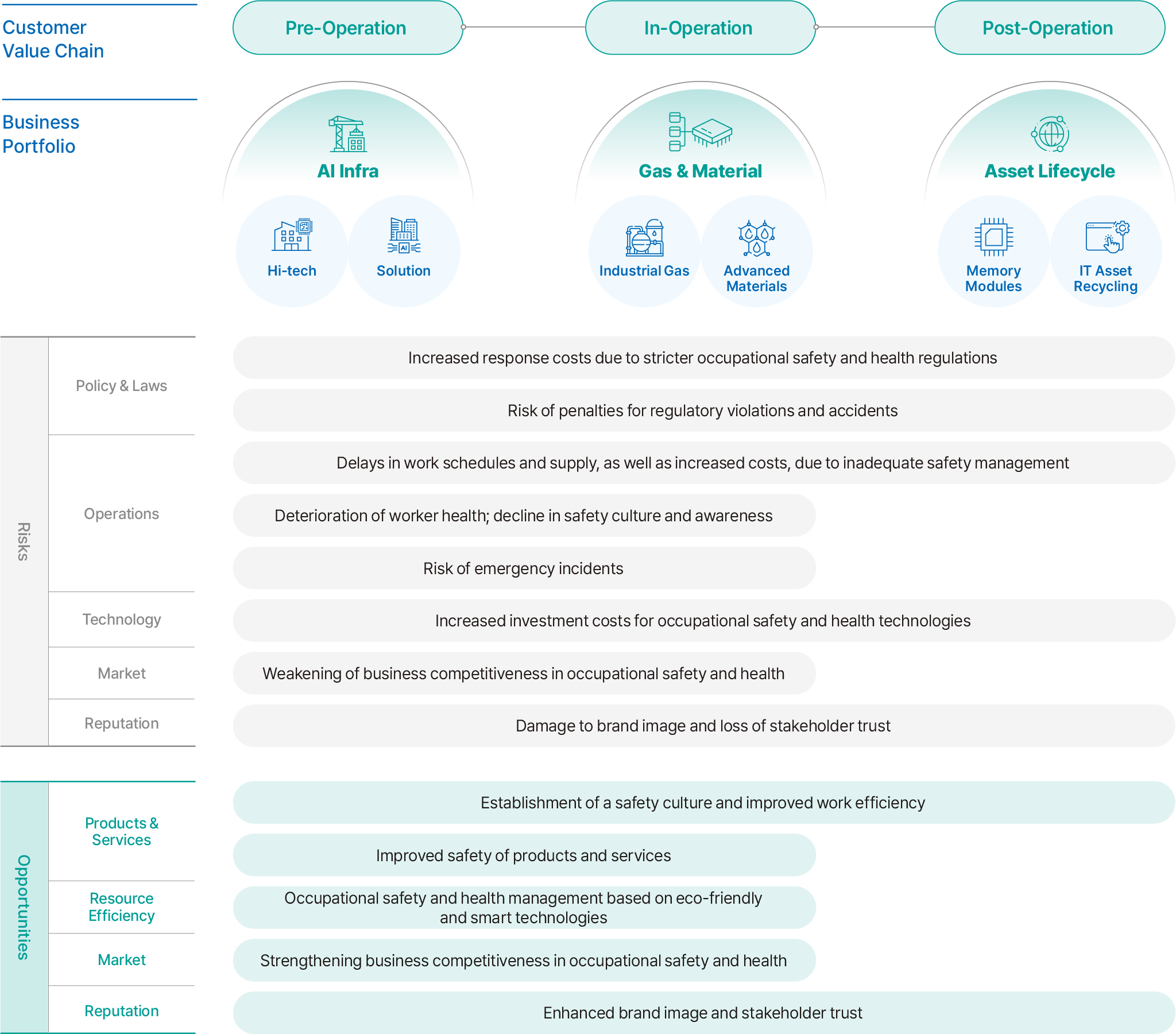
Key Risks and Opportunities
Category | Risks and | Business and Financial | Timing of Maximum | Response Strategy | |||
|---|---|---|---|---|---|---|---|
Short-term (up to 1 year) | Medium term | Long- | |||||
Risks | Policy & | Increase in legal |
| ● | ● | ● |
|
Operations | Inadequate |
| ● |
| |||
Inadequate | ● | ||||||
Increase in |
| ● | ● | ● |
| ||
Opportunities | Products & Services | Promoting a |
| ● |
| ||
Resource | Real-time on-site |
| ● | ● | ● |
| |
Growing market | ● | ● | ● | ||||
Strategies for Addressing Key Risks and Opportunities
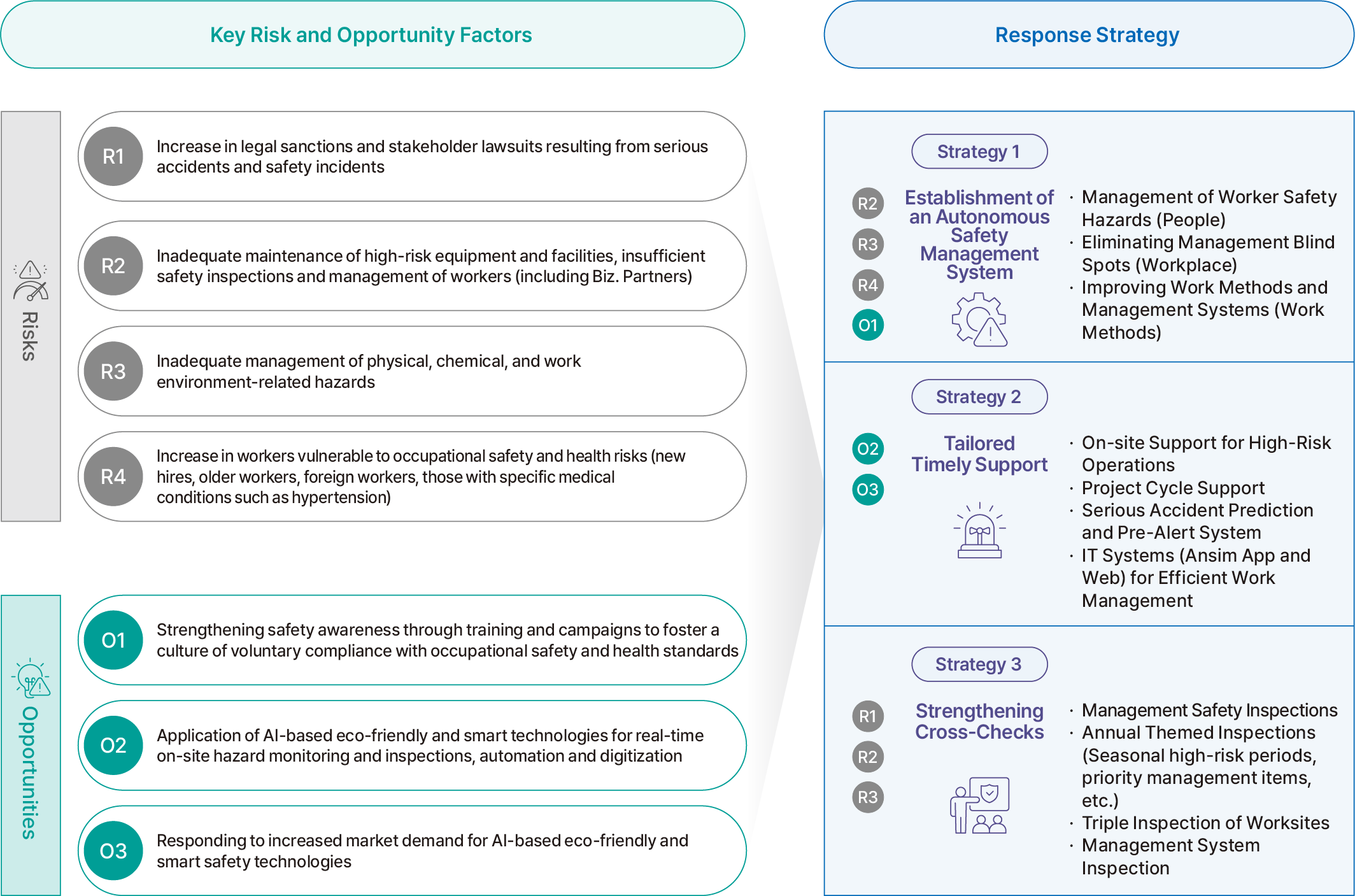
Strategy 1. Establishment of an Autonomous Safety Management System
SK ecoplant continuously manages operations to ensure that safety is established and upheld as a fundamental priority at every project site and workplace. To establish a self-managed safety system at project sites, supervisors and occupational safety and health officers carry out duties under the site manager, who serves as the chief occupational safety and health officer. This approach focuses on practical accident prevention by empowering on-site workers to create a self-managed safe work environment.
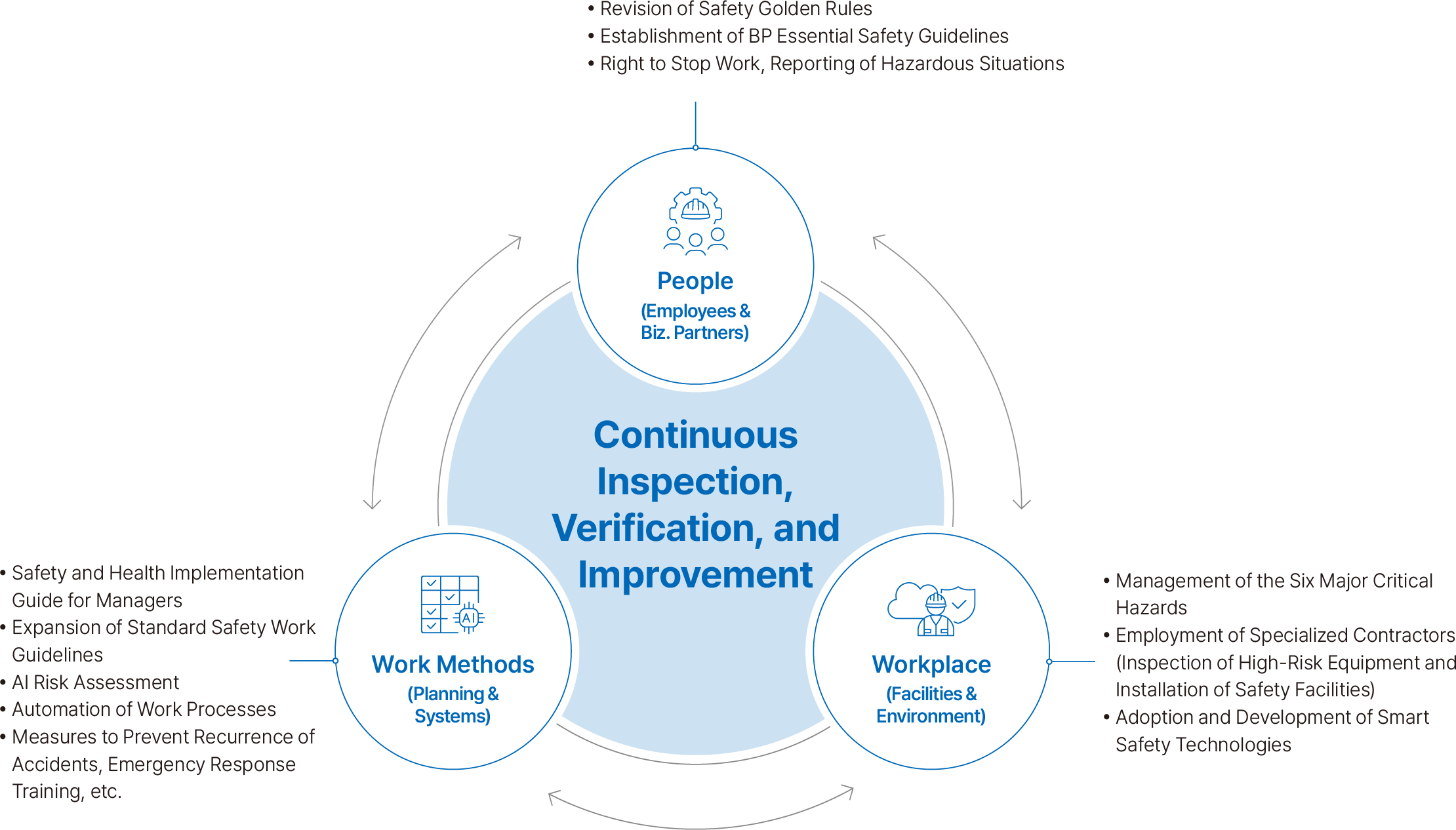
SK ecoplant continuously inspects and improves unsafe and vulnerable factors related to people, workplace, and work methods, while promoting activities to strengthen safety capabilities.
First, to manage worker-related safety hazards (people factors), training on Safety Golden Rules and safety guidelines is provided to all on-site workers, including Biz. Partners. Rewards and penalties are applied to instill a code of conduct among those responsible for construction operations. Additionally, the company is establishing a safety-first culture by ensuring that not only managers but all workers utilize the “right to stop work” system to halt operations in dangerous situations.
Second, to eliminate management blind spots on-site (workplace factors), SK ecoplant focuses on managing the six major critical hazards (falls, entanglement, suffocation, collapse, fire, and explosion), while employing specialized contractors to inspect high-risk equipment and install safety facilities. Furthermore, the company is introducing, developing, and utilizing smart safety technologies to predict and prevent serious accidents.
Third, to improve work methods and management systems (work methods factors), SK ecoplant has added a Safety and Health Implementation Guide for Managers and Standard Safety Work Guidelines by construction work type (currently 27 types), and plans to expand this to 66 types by 2026. To automate the AI-based hazard and risk management system, improvements to the AI risk assessment process, including refinements to risk factors, safety measures, and risk rating selection methods, have been carried out. In 2026, the AI risk assessment will be further enhanced to incorporate legal and internal regulations as well as inspection results. Additionally, work productivity is being increased by preventing errors and omissions through document automation, focusing on repetitive tasks and time-consuming daily paperwork.
Autonomous Safety Management System
Support for Workers Vulnerable to Occupational Safety and Health Risks
SK ecoplant conducts health examinations and workplace environment assessments in accordance with the Occupational Safety and Health Act. Through this, the company prevents accidents and illnesses among on-site workers, creates a comfortable working environment, and enacts health protection measures based on the results. To better assess workers’ conditions and prevent the risk of secondary accidents caused by deteriorating health, proactive health examinations for all workers are conducted upon project assignment, utilizing health monitoring devices such as vascular health monitors and electrocardiogram (ECG) machines. For vulnerable workers, such as the elderly or those with hypertension, risk is managed by having them wear health monitoring devices, providing ongoing health counseling, and assigning appropriate tasks.
In particular, as the frequency of heat waves increases due to abnormal weather patterns, SK ecoplant is strengthening health measures during periods of extreme heat. To prevent heat-related illnesses among outdoor workers, the company adjusts work schedules, mandates rest breaks, and provides functional protective gear such as ice vests and hard hat ice packs. Perceived temperatures and heat-related illness risks have been lowered through preventive measures tailored to site conditions, including shift rotations, mobile shade structures, health buses, and localized cooling systems.
For foreign workers, who may be particularly vulnerable to extreme heat due to language barriers and limited access to information, SK ecoplant has strengthened tailored support by closely monitoring their health before work and during peak heat hours. Multilingual heat-related illness prevention guides are also distributed as an extra precaution. Under the supervision of site managers, on-site inspections are being conducted through voluntary themed inspections in preparation for the extreme heat season. Effectiveness is enhanced through the promotion of heat-related illness prevention guidelines through a summer heat health campaign and site-specific activities. When a heat wave warning is in effect, SK ecoplant provides real-time weather updates and implements phased flexible work arrangements. The company also promotes proactive responses by helping workers monitor symptoms through self-checks using the “Heat Illness Symptom Checklist.” In addition, employee CPR training ensures rapid response in the event of cardiac arrest. In 2025, this training was expanded to include headquarters employees.
CASE | Heat-Related Illness Prevention Campaign |
|---|
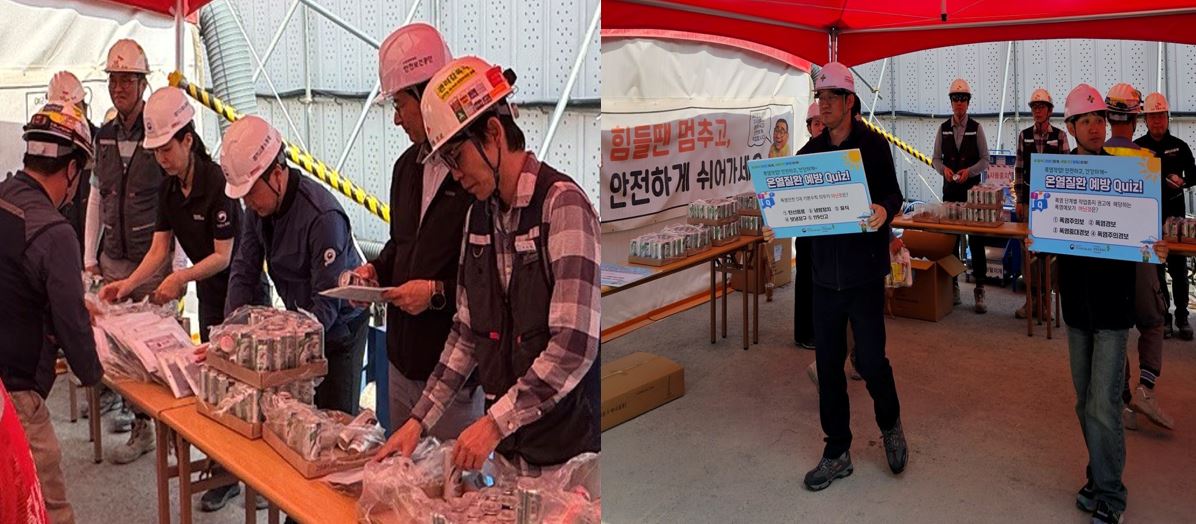 | SK ecoplant held an internal contest to identify creative ideas for preventing heat-related illnesses and encourage employees to participate in relevant campaigns. Outstanding ideas selected included the “Rest Area Hammock-Style Bed,” the “Mobile QR-Based Breaktime Self-Certification System,” and the “Heat-Related Illness Golden Bell Quiz.” The winning teams and individuals were presented with a beverage truck offering refreshing drinks and cash prizes. Considering the nature of its sites, which involve high-intensity labor and extensive outdoor work, SK ecoplant plans to continue establishing a multifaceted response system to ensure that all on-site workers, including its employees, can work safely and healthily. |
Supporting Employee Health
SK ecoplant provides various health promotion programs, including medical check-ups and management of employees with medical findings, to all employees—including contract workers—and their spouses. In particular, data on employees diagnosed with abnormal findings (such as brain/cardiovascular conditions or metabolic syndrome) during medical check-ups is collected separately and used to monitor health management levels. In 2025, the company analyzed medical check-up data to identify indicators of diseases requiring management, and starting in 2026, it plans to further strengthen employee health management by providing customized health promotion programs based on these findings.
Programs by Key Health Management Areas
Category | Management Approach | Key Programs |
|---|---|---|
Work |
|
|
Mental Health |
|
|
Physical |
|
|
Occupational Safety and Health Training
SK ecoplant strengthens employees’ and Biz. Partners’ occupational safety and health capacities through regular occupational safety and health training. Training completion is monitored via the “Ansim” system, and any non-compliance is met with real-time inspections and guidance. In particular, the company provides occupational safety and health training that exceeds statutory standards to ensure that workers and supervisors assigned to hazardous tasks possess the necessary knowledge, skills, and competencies. All project employees are required to complete onboarding training to enhance project understanding and ensure they acquire the necessary knowledge for preventing occupational safety and health incidents. Additionally, various practical measures, such as employee CPR training, are being explored and implemented to strengthen occupational safety and health capabilities.
Strategy 2. Tailored Timely Support
To achieve and maintain its “Zero Serious Accidents” goal, SK ecoplant is enhancing its accident prevention and response systems and utilizing smart technologies—both through adoption and in-house development—to prevent serious accidents. In addition, the company utilizes IT systems (the Ansim App and web) to help workers safely and efficiently manage their tasks. Furthermore, through various Biz. Partner management and support activities, the company fosters a safe workplace environment for not only its own staff, but also those of Biz. Partners.
Serious Accident Prevention and Response System
Category | Details |
|---|---|
Establishment of a | To prevent serious accidents, SK ecoplant identifies high-risk worksites and tasks by comprehensively assessing site conditions, work complexity, and construction methods for each project, and focuses its occupational safety and health capabilities on managing them. In particular, for high-risk tasks, pre-work workshops are conducted to review work plans and communicate mandatory safety rules to on-site personnel, thereby strengthening head office- level support and oversight. In addition, by analyzing serious accident cases, the company establishes core safety standards that must be strictly observed at worksites, distributes them across all worksites, and continuously monitors compliance to prevent recurrence of similar incidents. Key Activities for 2025 - Identified potential scenarios for serious accidents, analyzed root causes, and established measures to prevent - Revised the “Safety Golden Rules” and established mandatory safety work guidelines for Biz. Partners - Distributed translated versions of Recurrence Prevention Measures to foreign workers, etc. |
Operation of | SK ecoplant operates an emergency response organization and a Safety Control Center to ensure prompt action in emergency situations. Site-specific emergency response scenarios are established to clearly define the roles of employees and Biz. Partners, and based on these, emergency procedures and crisis response drills are conducted at least once every six months. These cover various scenarios such as falls, confined spaces, fires, entrapment, falling objects, explosions, and collapses, enabling on-site personnel to internalize appropriate response actions. In addition, the company continuously provides guidance on emergency procedures, rescue operations, and first aid methods through internal newsletters and the corporate portal, reinforcing the importance of emergency preparedness. Key Activities for 2025 - Revised emergency response and crisis management guidelines; established emergency response organizations - Enhanced the emergency evacuation system: Regular inspections of evacuation facility alarm systems, - Emergency response drills (semiannual): Conducted at all active project sites - CPR training: For 240 employees across 81 departments at headquarters and 66 on-site health and safety |
Expansion of Smart | SK ecoplant is reducing the risk of accidents by applying proven smart safety technologies at worksites to proactively detect and address hazards difficult for humans to control. To prevent falls, the company has introduced safety railing technology that can be pre-installed during the setup and dismantling of system scaffolding. For industrial equipment such as excavators and forklifts, anti-entrapment sensors—which detect people within the equipment’s operating radius and trigger warning alarms—and LED safety sensors that visually mark danger zones on the ground have been implemented to prevent entrapment and collision accidents. A myriad of other safety technology is under operation, including collision-prevention sensors to prevent collisions between tower cranes, and technology that automatically stops moving conveyor belts when people approach them. Starting in 2024, SK ecoplant is expanding the on-site adoption of four safety technologies: real-time defect detection sensors for tower crane wire ropes, fall-rescue safety straps, wearable airbags, and lifeline clamps. This is being achieved through the provision of technical safety guides that allow for voluntary use based on each worksite's unique environment. |
Pre-Alert System
SK ecoplant is currently utilizing the “Pre-Alert System,” developed in 2023, at its headquarters and worksites. Through this system, the company has strengthened its field-centered safety management capabilities and established a self-regulated safety management system that proactively prevents legal violations. Based on data accumulated in the occupational safety and health IT system(Ansim), the Pre-Alert System proactively identifies and alerts users to situations that may lead to legal violations.
When an alert is triggered, employees review the details, take necessary actions through the occupational safety and health IT system(Ansim), and utilize it to record and manage the entire process. In 2026, SK ecoplant seeks to establish an AI-based data-driven serious accident prediction alert system, building a prevention-focused smart safety management system through early alerts and detection of warning signs. Through this, the Safety Control Center—led by the CSO—will serve as a control tower in the event of an emergency, overseeing and supervising worksite crisis situations to minimize damage and take swift follow-up measures.
Occupational Safety and Health Management System “Ansim” (App and Web)
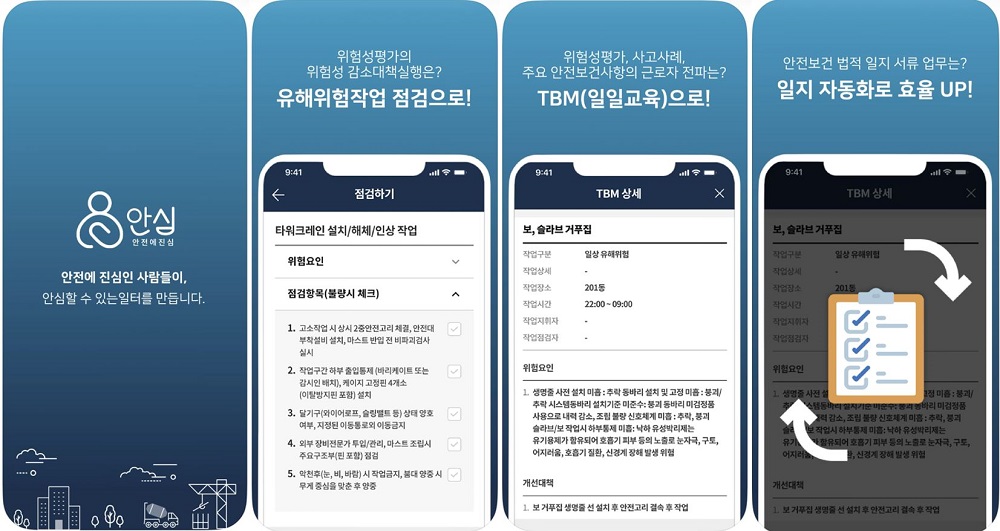
SK ecoplant has developed the “Sincerely for Safety” (hereinafter referred to as Ansim) occupational safety and health management system as both a mobile app and a web version, applying it across all worksites to ensure strict compliance with legal occupational safety and health requirements and to strengthen safe behavior among all workers. Ansim consists of interconnected modules including risk assessment, safety inspections, pre-work safety briefings (TBM: Tool Box Meeting), safety training, safety hotline, and incident reporting, which collectively gather and analyze data. Based on this, the Ansim web dashboard visualizes data from each function, providing users with intuitive insights and enhancing the efficiency of company-wide occupational safety and health management.
All site personnel can use the app to review task-specific risk factors and safety measures, and they can input additional hazards or countermeasures directly into the system. In particular, managers can conduct safety inspections using QR code tags and monitor worker status and legal training completion in real time. The safety hotline function of the Ansim app allows users to freely report hazards or suggestions identified on-site. Verified risks are shared with site managers, supervisors, safety officers, and relevant personnel to ensure prompt action. Suggestions received are reviewed for their effectiveness and relevance to accident prevention, and improvement measures are developed and implemented accordingly.
AI-Based Hazard Management
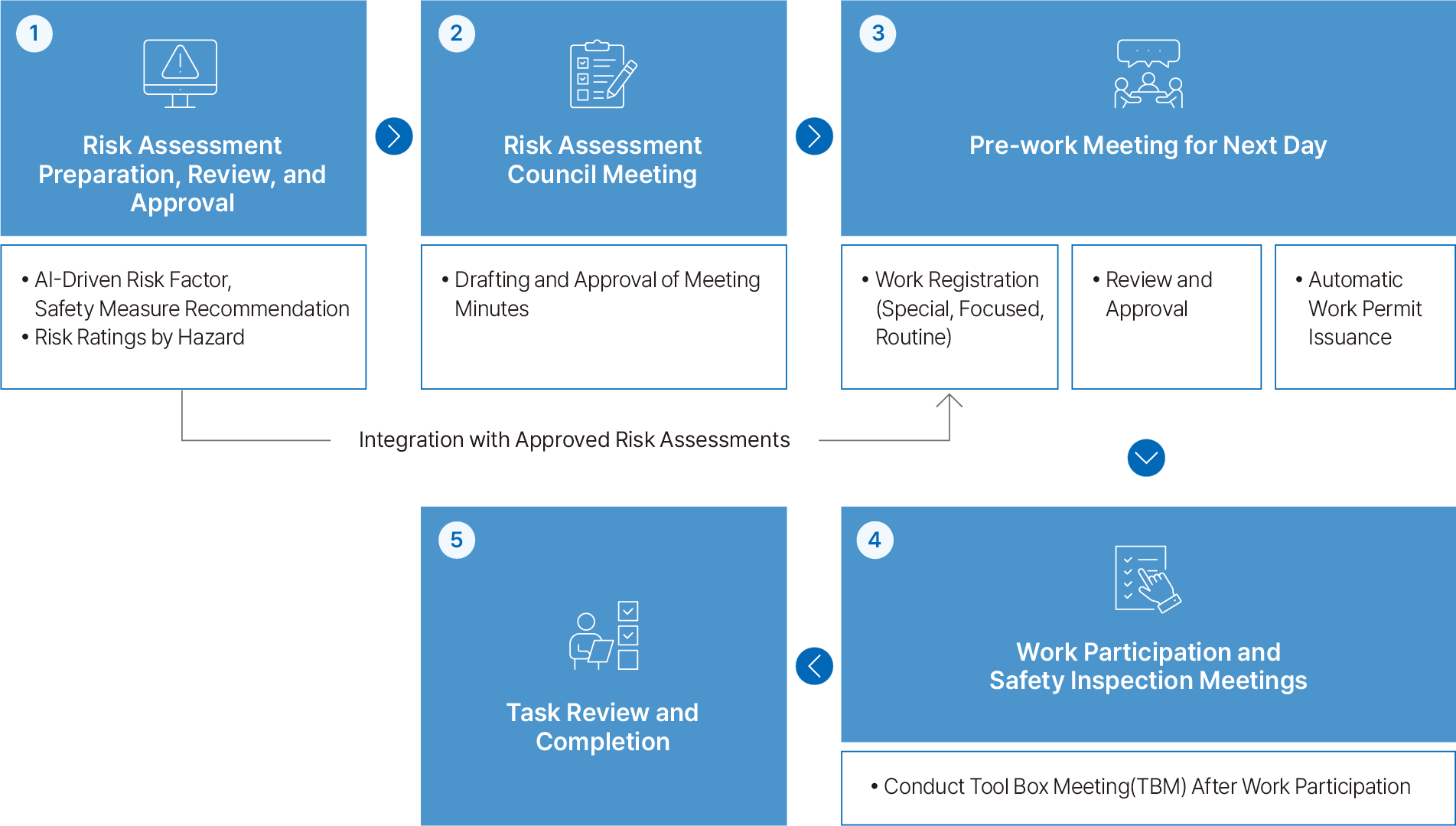
SK ecoplant has applied the latest AI technology to its “Ansim” app and web platform. When a specific task is selected, the system provides optimal information on risk factors and safety measures tailored to the characteristics of that task. By summarizing similar or redundant information and automatically recommending risk ratings—based on recent accidents and frequency of occurrence—the AI supports highly reliable, data-driven risk assessments that do not rely on personal experience or judgment. Generated risk assessment results are linked to training materials for Toolbox Meetings (TBM) and mandatory inspection checklists for each specific task, thereby enhancing their practical application on-site. In addition, inspection results are shared in real time with all employees, allowing them to verify ongoing tasks’ compliance with safety regulations. In the future, SK ecoplant plans to further enhance the system to automatically recommend recurring non-conformities and safety hotline reports submitted directly by workers as Grade A risk assessment items.
AI-Based Hazard Management Process
Biz. Partner Occupational Safety and Health Management
To improve the level of occupational safety and health management among Biz. Partners, safety competency assessments are conducted throughout the entire process—from initial registration to bidding, execution, and renewal—and the results are reflected in final selection and renewal decisions. In addition, support activities at each stage of partner selection are provided to enhance partners’ ability to comply with safety regulations and to foster a culture of safety across the supply chain.
During Biz. Partner bidding evaluations, qualified vendors are selected based on quantitative criteria after assessing the establishment of an occupational safety and health management system and the ability to implement industrial accident prevention measures. For Biz. Partners whose scores fall below a certain threshold, support is provided through occupational safety and health system establishment consulting and the provision of improvement guides.
Based on the results of Biz. Partner safety execution evaluations, SK ecoplant provides incentives to top-performing Biz. Partners and imposes penalties on those with insufficient performance. Customized occupational safety and health management system consulting is also offered to Biz. Partners whose evaluation results fall below a certain threshold.
Occupational Safety and Health Evaluation and Support by Stage of Biz. Partner Selection
Category | Evaluation Criteria | Support Activities |
|---|---|---|
Registration / Bidding |
|
|
Execution / |
|
|
Biz. Partner Execution Evaluation
Category | Unit | 2023 | 2024 | 2025 | Actions Taken Based on Evaluation Results | |
|---|---|---|---|---|---|---|
Evaluation | Companies | 1,537 | 886 | 1,016 | - | |
Grade A | Companies | 16 | 323 | 410 | Sending messages of appreciation and encouragement, selection | |
Grade B | Companies | 1,465 | 344 | 427 | Sending messages encouraging enhanced safety management | |
Grade C | Companies | 26 | 206 | 176 | Sending messages encouraging enhanced safety management | |
Grade D | Companies | 30 | 13 | 3 | Sending warning messages, restrictions on bidding and renewal if | |
Handling Biz. Partners’ Occupational Safety and Health Grievances
SK ecoplant holds occupational safety and health council meetings at least once a month to prevent accidents and address occupational safety and health grievances of Biz. Partner personnel. Workers from Biz. Partners actively participate in these councils to review the implementation status of safety measures discussed in previous meetings, and to jointly identify potential hazards, establish safety measures, adjust work processes, and conduct risk assessments. In addition, for high-risk tasks, Biz. Partners conduct safety execution plan presentations and high-risk task workshops to pre-review and ensure construction safety through mutual consultation. Biz. Partners also voluntarily and actively participate in various occupational safety and health management activities, including joint labor-management safety inspections, pre-work safety briefings (TBM), and safety training sessions.
Strategy 3. Strengthening Cross-Checks
SK ecoplant cross-checks the status of its safety management through various internal and external inspections and assessments. Management safety inspections involve key executives, including the Chief Safety Officer (CSO), verifying on-site occupational safety and health conditions, ensuring that management leads by example in adhering to accident prevention measures. Annual themed inspections focus on seasonal vulnerability periods and priority management items to prevent recurring construction accident types. The three-phased workplace inspection system serves as the core framework for SK ecoplant’s accident prevention efforts. It consists of MSA (My Safety Area), in which project members are responsible for inspecting their designated zones; high-risk work inspections led by headquarters to prevent serious accidents; and unannounced inspections by external firms that objectively assess safety and health levels. In addition, the company conducts regular audits of ISO and KOSHA management systems to continuously improve its occupational safety and health management system, legal compliance inspections to ensure adherence to the Serious Accidents Punishment Act, and on-site audits to verify compliance with Group guidelines.
Status of Occupational Safety and Health Inspections and Assessments
Category | Subject | Period | Method | |
|---|---|---|---|---|
Management Safety Inspections | Management | Ongoing | Management site visits and occupational safety and | |
Annual Themed Inspections | Projects | Once every two | Monthly Themed Inspections (seasonal vulnerability | |
Three- | MSA(My Safety Area) | Projects | Twice a day | Daily inspection of project team members’ assigned |
High-risk work inspections | Headquarters | Ongoing | Inspection of safety protocol compliance during high- | |
Unannounced inspections | External | Once every two | Unannounced safety and health inspections conducted by external inspection firms | |
Inspection of the Occupational Safety | Internal & | As needed | Compliance audit of the occupational safety and health management system (ISO, KOSHA, Group Guidelines, | |
CASE | Management Safety Inspections and Safety Culture Promotion Campaign |
|---|
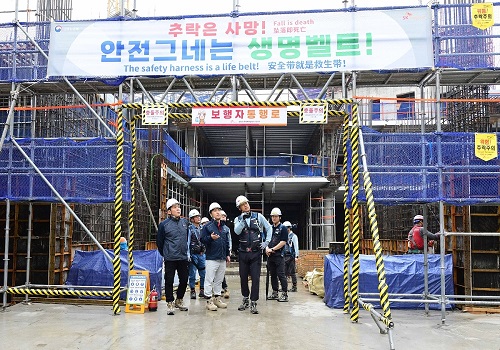 | SK ecoplant’s key executives, including the Chief Safety Officer (CSO), personally participate in inspecting the status of safety management. They visit construction sites to conduct safety inspections, review the implementation of fall prevention measures, and engage in practical, field-centered activities such as communicating with on-site workers. In addition, warning banners and signs were installed in fall hazard zones at construction sites nationwide, while campaigns to prevent fall accidents and promote a safety culture were carried out. Inspections were also conducted to identify fall hazards, verify the installation status of safety facilities, confirm the distribution and use of personal protective equipment (PPE), and review all aspects of on-site safety management. SK ecoplant, which is systematizing its safety management system through its proprietary digital occupational safety and health platform “Ansim” (app and web), plans to continue pursuing a safety management strategy that combines digital technology with management-led, field-centered inspection activities. |
Risk Management
Occupational Safety and Health Risk Management
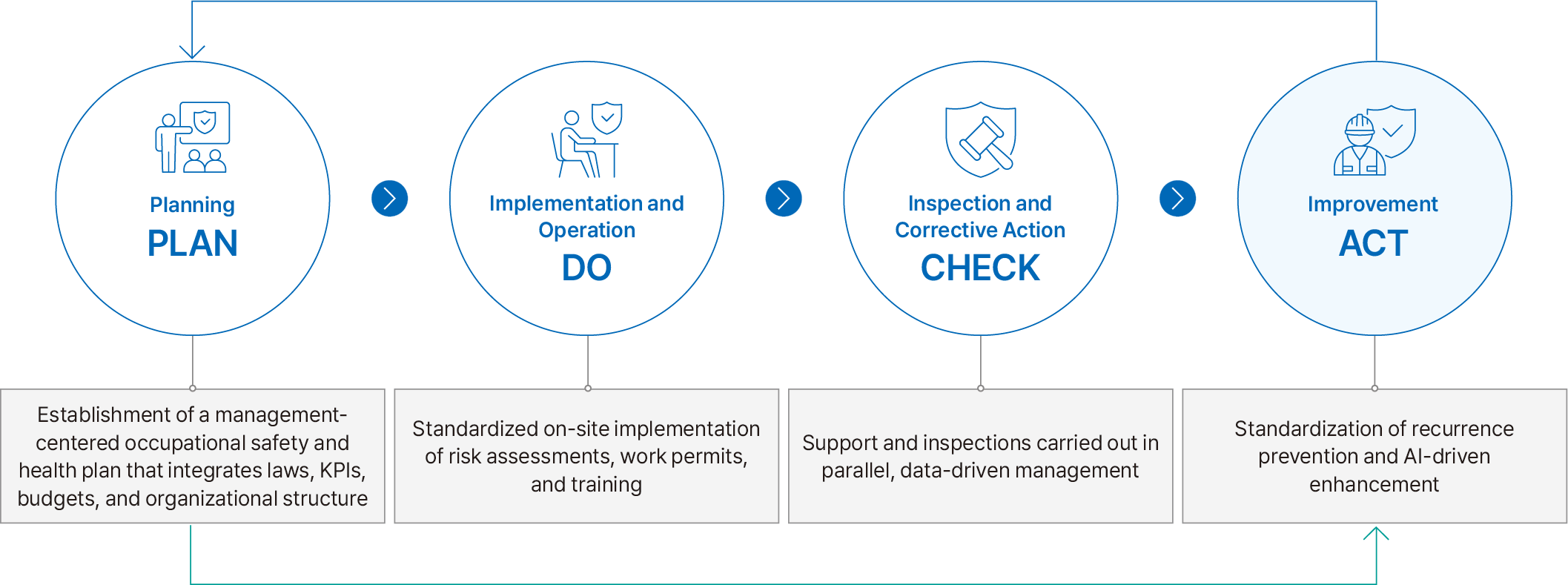
SK ecoplant operates an occupational safety and health risk management process to identify potential hazards within its workplaces and establish effective countermeasures. Through the cyclical process of P (PLAN) → D (DO) → C (CHECK) → A (ACT), the company continuously refines and improves its operational systems. To prevent accidents, the Occupational Safety and Health Department conducts audits on each project’s implementation status of the occupational safety and health management system. For any identified nonconformities, the department analyzes the root causes, establishes corrective measures, and disseminates them through company-wide training to prevent similar incidents from recurring.
Occupational Safety and Health Risk Management Process
Occupational Safety and Health Risk Assessment
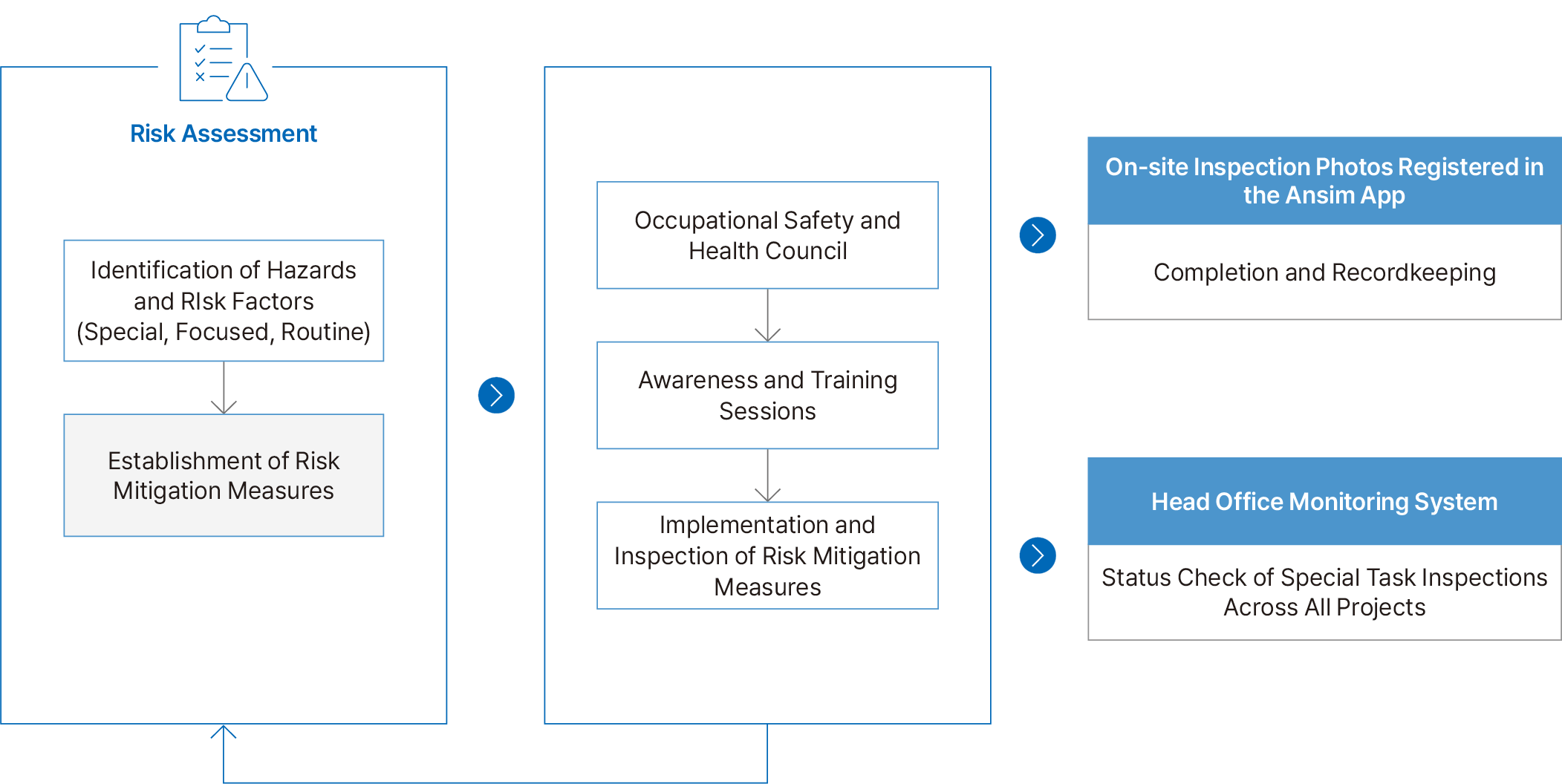
SK ecoplant conducts worker-participatory risk assessments at least once a month for all projects. Through this process, the company identifies and evaluates hazardous and risky factors within workplaces, determines the level of risk, and manages occupational safety and health risks by establishing measures to eliminate or reduce high-risk items. Based on the assessment results, on-site workers are trained on hazardous and risky factors, safety measures, and accident case studies. Compliance with corrective actions is verified through continuous inspections before and during work. In particular, for tasks involving hazardous and risky factors, the company utilizes the “Ansim” mobile app to implement systematic safety management categorized into special, focused, and routine checks, with all records of inspection results being catalogued in the app. Each project’s collected safety inspection data and corrective action results are reflected real-time in the head office’s integrated monitoring system. Such information serves as foundational data for comprehensive safety management.
Occupational Safety and Health Risk Assessment Process
Pre-Work Safety Inspection for Hazardous and Risky Factors1)
Category | Unit | First Half of 2025 | Second Half of 2025 | ||
|---|---|---|---|---|---|
Number of | Inspection Rate (%) | Number of | Inspection Rate (%) | ||
Special | Cases(%) | 52,254 | 99.0 | 79,557 | 99.4 |
Focused | Cases(%) | 208,193 | 99.1 | 457,293 | 99.5 |
Routine | Cases(%) | 140,709 | 98.1 | 280,021 | 99.1 |
1) Based on performance review meetings held at least once every half-year in accordance with Article 4 of the Enforcement Decree of the Serious Accidents Punishment Act
On-site Accident Investigation and Response
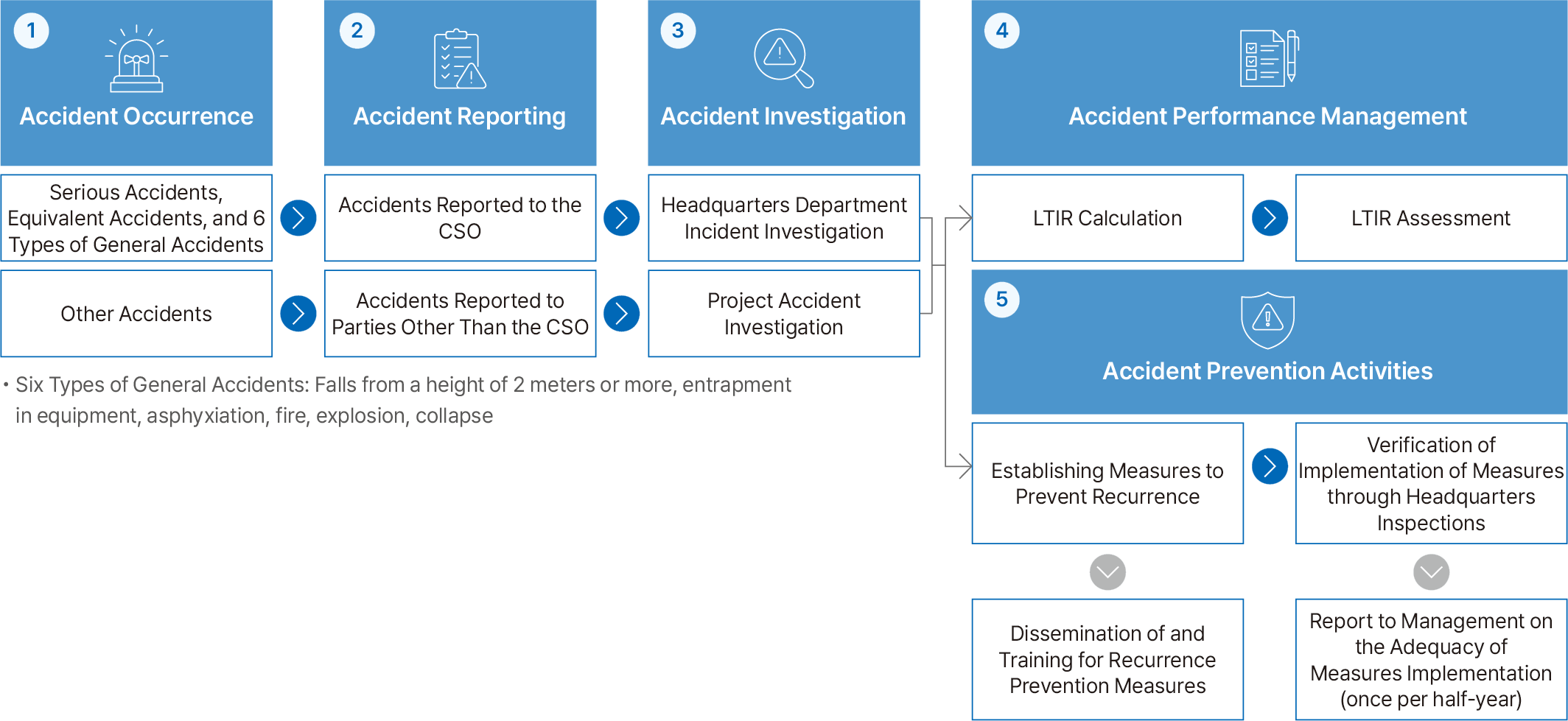
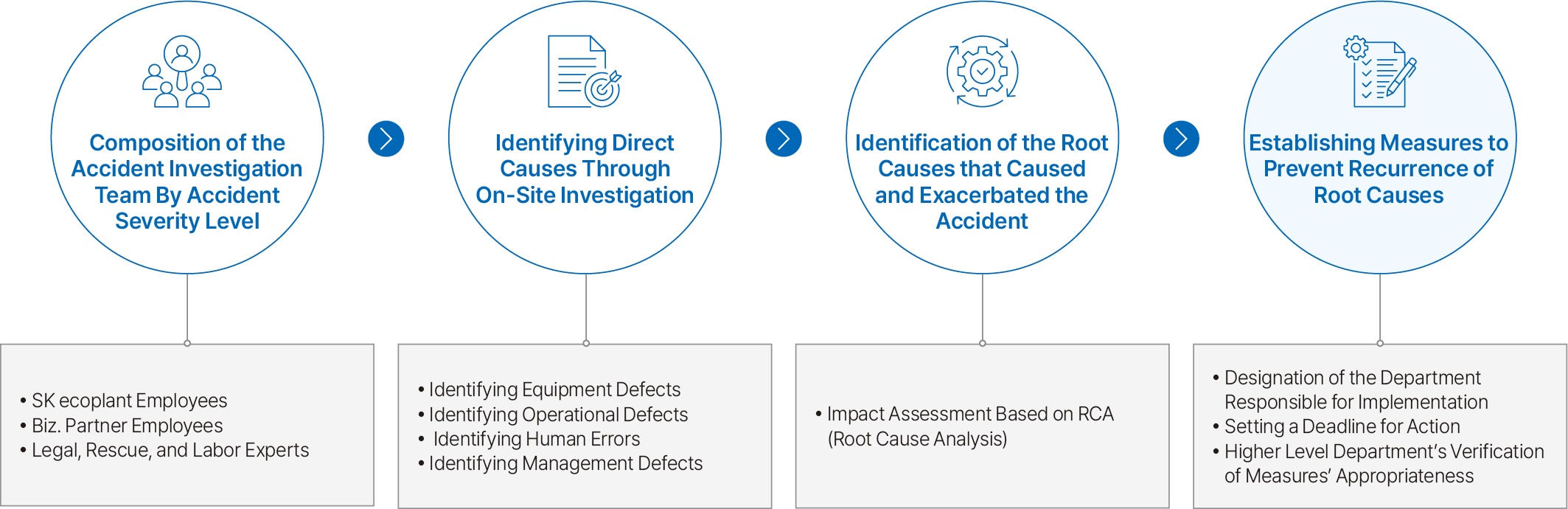
SK ecoplant conducts accident investigations into accidents occurring at project sites to identify the causes and establish measures to prevent recurrence. Headquarters reviews the identified causes and the appropriateness of the established measures, disseminates the accident cases company-wide, and conducts on-site inspections to verify the implementation of recurrence prevention measures and identify any residual risk factors. In 2025, the company established recurrence prevention measures for incidents occurring at worksites that were deemed to require such measures, and verified their implementation. Additionally, the effectiveness of these measures was assessed by measuring risk levels before and after the implementation of corrective actions.
Accident Reporting and Management Process
Accident Investigation Process
Measures to Prevent Recurrence and Corrective Actions
Category | Frequency | Severity1) | Major Hazards and Risk Factors | Corrective Actions | Risk Level | |
|---|---|---|---|---|---|---|
Before Correction | After | |||||
Falls | High | Minor ~ Moderate Injury |
|
| High | Low |
Caught-In / Between | High | Moderate Injury |
|
| High | Low |
Struck | Moderate | Moderate Injury |
|
| High | Low |
Falls from Height | Low | Severe |
|
| High | Low |
1) Minor injury (2–4 weeks’ recovery), moderate injury (5–8 weeks’ recovery), severe injury (more than 8 weeks’ recovery)
Compliance with Occupational Safety and Health Regulations
Occupational Safety and Health Compliance Inspection
SK ecoplant conducts semiannual occupational safety and health compliance inspections for all ongoing projects to verify the detailed status of compliance with relevant laws and regulations. By taking immediate corrective actions for any identified nonconformities, the company prevents the risk of accidents and occupational safety and health issues arising from violations of relevant laws and regulations. In the first half of 2025, SK ecoplant conducted compliance inspections at a total of 67 worksites, identified 237 areas requiring improvement, and completed 100% of the corrective actions. In the second half of the year, the company inspected 62 worksites, identified 385 areas requiring improvement, and completed 100% of the corrective actions. In addition, each worksite uses the legal compliance checklist provided by headquarters to conduct its own quarterly reviews of legal compliance status. Furthermore, by distributing occupational safety and health compliance guides to workers at project sites and providing training, SK ecoplant has minimized legal risks that could arise from misinterpretation or lack of legal awareness.
Occupational Safety and Health Compliance Inspections and Corrective Actions
Category | Key Risks | Corrective Actions |
|---|---|---|
Serious Accidents | Partial deficiencies in the establishment and implementation of the occupational safety and health management system | 100% of corrective actions completed in - Site-specific corrective actions completed - Follow-up reports submitted to the head |
Occupational Safety | Partial deficiencies in system implementation related to risk | |
Occupational Safety | Partial deficiencies in safety management such as installation of |
Metrics & Targets
Occupational Safety and Health Management Target Roadmap
To achieve its “Zero Serious Accidents” goal, SK ecoplant has established short-, medium-, and long-term quantitative targets for the Lost Time Injury Rate (LTIR), fatality rate per 10,000 persons, number of serious accidents, and number of fatalities. The company aims to achieve a Lost Time Injury Rate of 0.414 or lower by 2030.
Occupational Safety and Health Management Status and Targets
Category | Unit | Baseline | Performance | Target | ||||
|---|---|---|---|---|---|---|---|---|
2023 | 2024 | 2025 | 2026 | 2027 | 2030 | |||
Lost Time Injury | Cases / 200,000 | 0.828 | 0.971 | 1.508 | 1.265 | - | - | 0.414 |
Fatality Rate per | ‱ | 0.577 | 0.650 | 0.240 | 0 | 0.418 | 0.382 | 0.290 |
Number of Serious | Cases | 0 | 0 | 1 | 0 | 0 | 0 | 0 |
Number of Fatalities | Cases | 0 | 0 | 1 | 0 | 0 | 0 | 0 |
1) Lost Time Injury Rate (LTIR): Includes SK ecoplant employees (including contract workers) and Biz. Partners; baseline is based on 2023 data, figures adjusted due to
retroactive application of additional industrial accident cases from 2023–2024 2) Fatality Rate per 10,000 Persons: For the fatality rate, the government's Serious Accident Reduction Roadmap target for 2026 has been applied, and the 2030 target is based
on the OECD average fatality rate per 10,000 persons. The baseline for the fatality rate is the weighted average of annual fatality rates from 2020 to 2022.