Environmental Management System
Environmental Management Policy
SK ecoplant establishes environmental management policies, guidelines, and strategies, and based on these, strives to minimize environmental pollution across all business divisions. The Environmental Management Policy applies to all employees at all sites, including the headquarters and subsidiaries. Compliance is actively encouraged for customers and Biz. Partners as well.
All domestic and international sites have established environmental management systems that comply with international standards by obtaining ISO 14001 (Environmental Management System) certification. Certification is maintained through annual surveillance audits and triennial renewal audits. Major affiliated companies (SK ecoengineering, SK airplus, SK materials performance, SK trichem, SK resonac, SK materials jnc, ESSENCORE, SK tes, and SK oceanplant) have also obtained ISO 14001 certification to strengthen their environmental management systems.
Environmental Management Governance
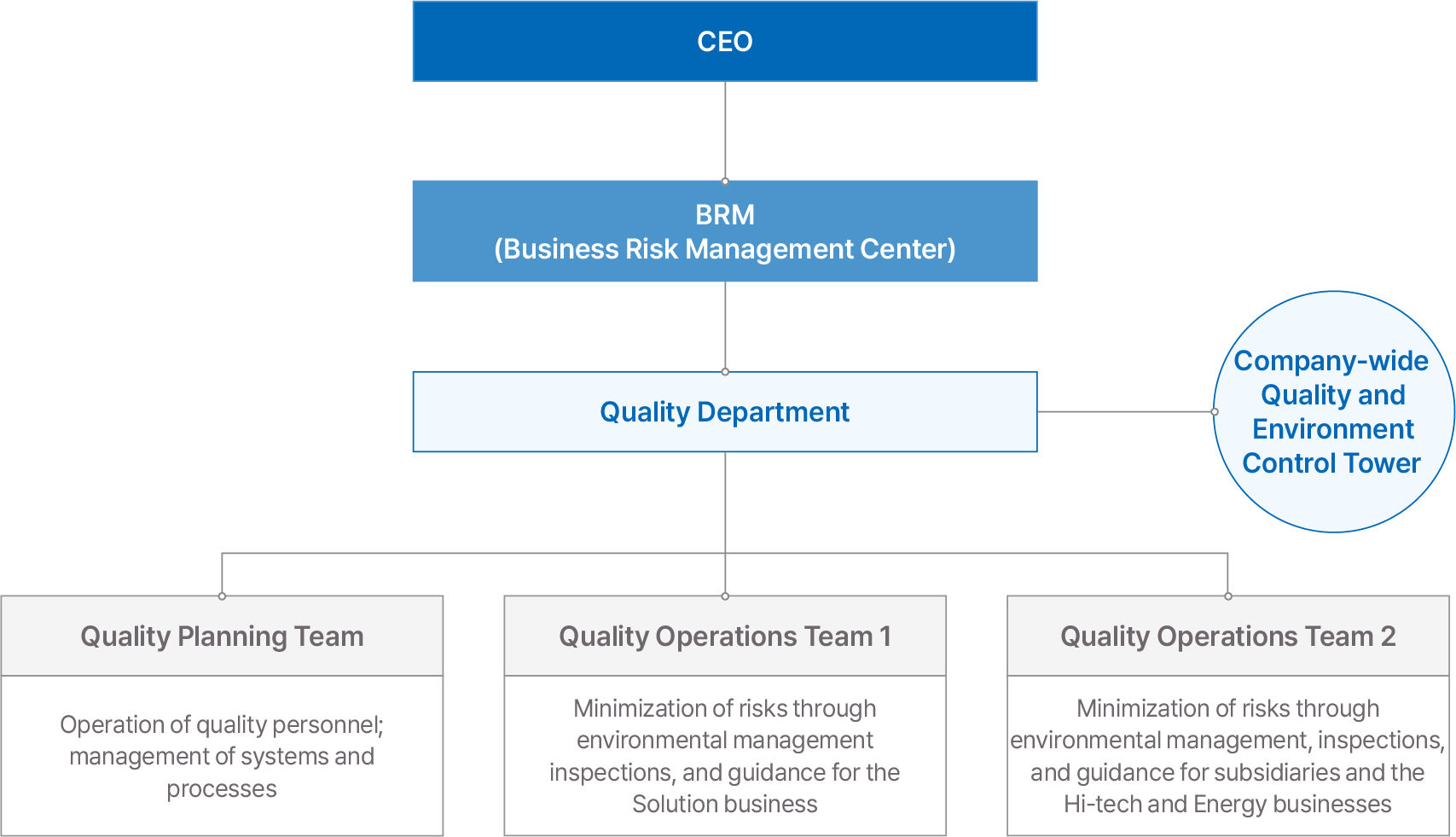
SK ecoplant, led by the CEO and executive management, regularly reviews the environmental management implementation plans and performance, incorporates the findings into decision-making, and reports to the Board of Directors. The Board of Directors annually reviews and approves the environmental management plans and key matters; in 2025, it assessed legal violations and the outcomes of environmental management activities through the Annual Quality and Environment Business Plan Report. The Quality Department under the BRM(Business Risk Management) Center, as the dedicated organization for company-wide environmental management, establishes corrective actions and recurrence prevention measures based on internal and external environmental inspection results, disseminates standardized pollution reduction models across the company, and systematically manages indicators for each environmental factor.
In addition, to implement the environmental management system, SK ecoplant incorporates environmental performance metrics into the performance evaluations of executives and business divisions. The CEO’s KPIs include greenhouse gas reduction targets aimed at achieving net-zero, while the KPIs for each business division set improvement targets for key environmental indicators such as greenhouse gas emissions, water intake, waste generation, and energy consumption. In 2025, the Quality Department’s KPIs reflected the enhancement of the environmental management system in conjunction with the Group’s SHE management system, as well as a 15% reduction in environmental law violations (compared to the previous year) achieved through inspections based on environmental risk ratings and theme.
Environmental Management Organizational Chart
Environmental Management Goals and Strategies
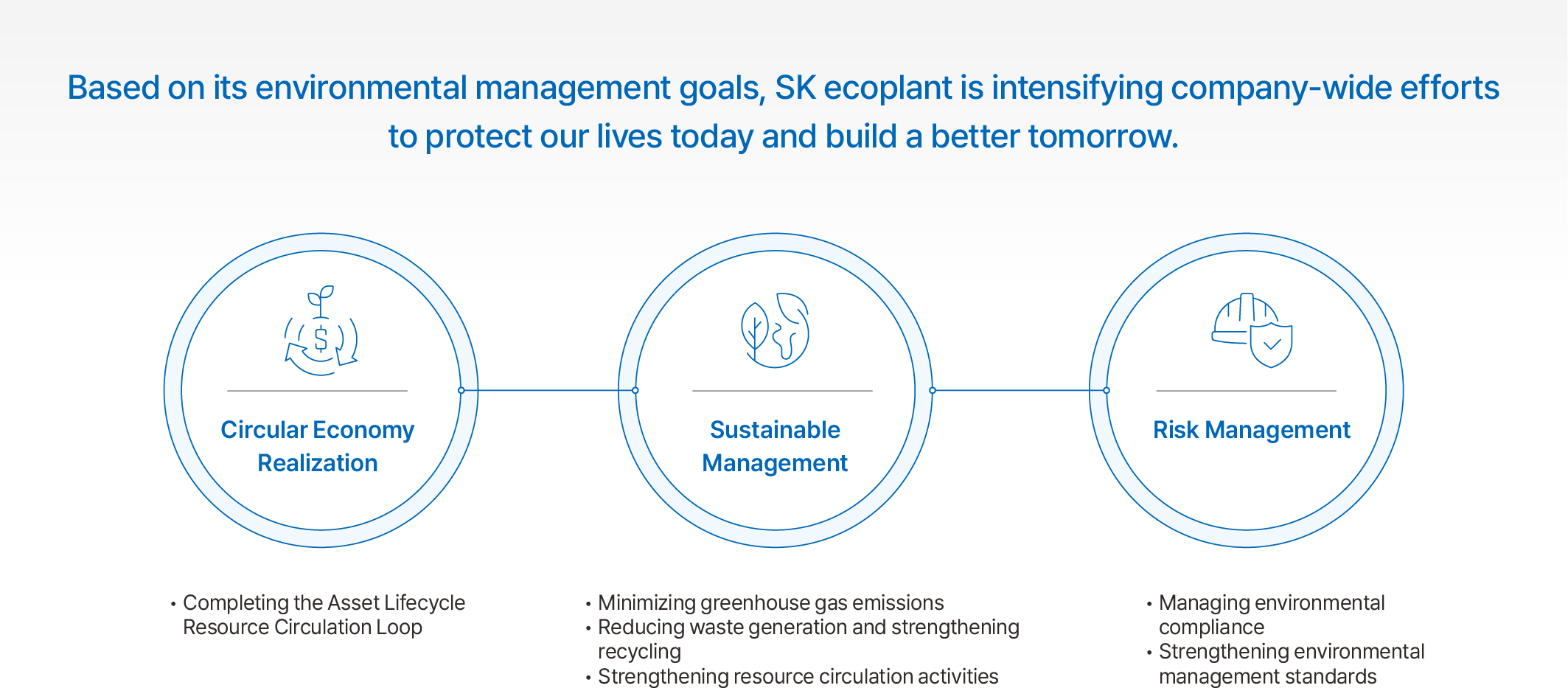
SK ecoplant has adopted the vision of becoming a leading ESG company through eco-friendly management activities as its strategic direction and has established specific environmental management goals to achieve this. In particular, the company is enhancing its waste management system to achieve a waste recycling rate that meets ZWTL (Zero Waste To Landfill) standards. Furthermore, with the long-term goals of zero violations of environmental regulations and maintaining a 99% waste recycling rate, SK ecoplant is continuously strengthening its environmental management capabilities.
Environmental Management Roadmap
Implementation Target | A company that leads ESG by practicing eco-friendly management | |||
|---|---|---|---|---|
2026 | 2027 | 2030 | ||
Key | Climate |
|
|
|
Pollutants |
|
|
| |
General |
|
|
| |
Detailed Environmental Management Goals
Category | Unit | 2026 | 2027 | 2028 |
|---|---|---|---|---|
No. of Major Environmental Regulation | Cases | 0 | 0 | 0 |
Waste Recycling Rate | % | 97 | 99 | 99 |
1) No. of Major Environmental Regulation Violations: Based on cases involving fines or penalties of KRW 10 million or USD 10,000 or more 2) Waste-related figures are compiled based on the standards set forth in the “Framework Act on the Promotion of Recycling of Construction Waste” and are calculated using data from the Allbaro System.
Environmental Management Strategy
Environmental Risk Management
Environmental Risk Assessment
SK ecoplant continuously monitors environmental laws and regulations through its Compliance Management System (CMS), using this to identify potential environmental risks, develop action plans, and implement them. However, complaints from various stakeholders are increasing, due to the majority of recent construction projects being located in urban areas where noise issues persist, and the increase in the number of large-scale projects attracting significant public attention. To address this, SK ecoplant goes beyond merely taking corrective actions in response to issues and accidents or ensuring regulatory compliance; it conducts environmental risk assessments and management throughout the entire process—from pre-contract stages through construction to project completion. The company predicts risks associated with specific sources of environmental pollution based on each project’s processes and characteristics. It then implements tailored, proactive responses, all with the aim of minimizing negative impacts on the surrounding environment, including air, soil, water quality, and biodiversity.
Environmental Risk Status by Factor
Environmental Factor | Risk Factor | Relevant Regulation | Severity | Potential Financial Impact | Response Measures | Post- Mitigation Severity |
|---|---|---|---|---|---|---|
Greenhouse Gases | Policy violations, etc. | Framework Act on Carbon Neutrality and Green Growth for Coping with Climate Crisis | Mid | Fines, purchase of emission allowances | Implementation of a greenhouse gas management system | Mid |
Air Pollutants | Unauthorized discharge, violation of Environmental regulations | Air Quality Conservation Act | High | Fines, penalties | Continuous monitoring of emission-generating processes for air pollutants (fugitive dust) | Low |
Fugitive Dust | Unauthorized discharge, violation of Environmental regulations | Air Quality Conservation Act | Mid | Improvement order, penalties | Participation in the Seasonal Fine Dust Management Program; thematic inspections on fugitive dust; strengthened dust suppression measures | Low |
Construction Waste | Unauthorized discharge, violation of Environmental regulations | Framework Act on the Promotion of Recycling of Construction Waste | High | Fines, penalties | Thematic inspections on waste in response to stricter regulations | Mid |
Designated Waste | Unauthorized discharge, violation of Environmental regulations | Wastes Control Act | High | Fines, penalties | Thematic inspections on waste in response to stricter regulations | Mid |
Water Pollutants | Unauthorized discharge, violation of Environmental regulations | Water Environment Conservation Act | High | Fines, penalties | Continuous monitoring of wastewater discharge facilities | Mid |
Noise | Resident complaints, damage to livestock and aquaculture facilities | Noise and Vibration Control Act | Mid | Fines, penalties | Thematic inspections on noise and vibration; additional deployment of mitigation facilities | Mid |
Vibration | Resident complaints, damage to livestock, aquaculture facilities, and homes | Noise and Vibration Control Act | Mid | Fines, penalties | Thematic inspections on noise and vibration; additional deployment of mitigation facilities | Mid |
Environmental Risk Management Process
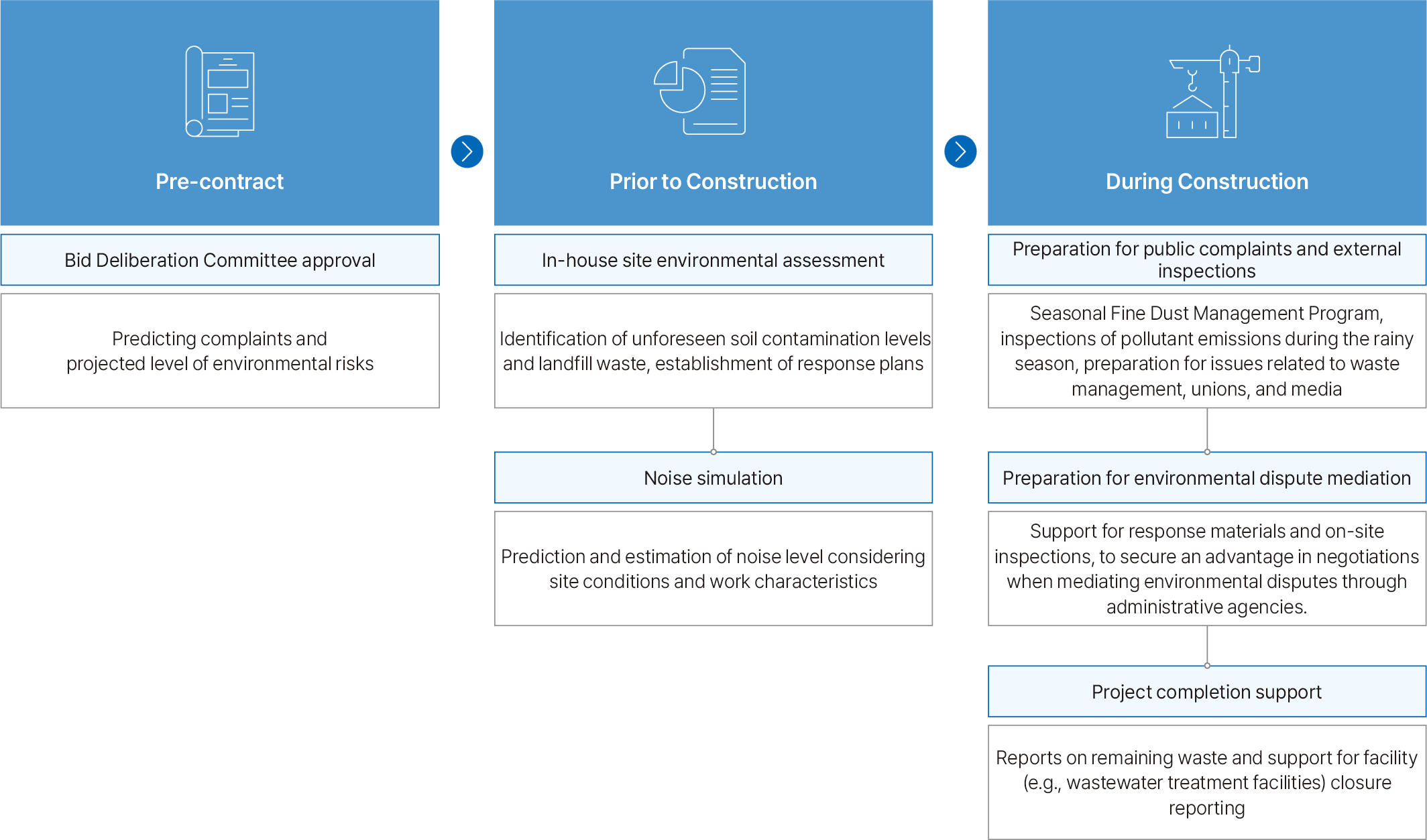
Environmental Audit
To prevent environmental risks that may arise during business operations, SK ecoplant conducts environmental audits at least once a year for all domestic sites*. Non-conformities are identified based on a checklist comprising 54 items, followed by the implementation of corrective actions and the establishment of monitoring plans to prevent recurrence. In 2025, approximately 51 domestic sites were grouped into four regions, and a total of 103 environmental audits were conducted. All 165 identified risks were fully addressed. In addition to construction sites, an environmental assessment checklist tailored to each subsidiary’s characteristics has been developed to continuously expand the scope of inspections.
* Currently, no overseas sites are subject to environmental audits. Environmental audits will be conducted as overseas projects commence.
2025 Environmental Audit Overview
Risk Category | No. of Risks Identified | Rate of Resolution | Key Corrective Actions Implemented |
|---|---|---|---|
Environmental Management | 43 | 100% | Management of environmental management plans, environmental education, environmental performance, waste reduction plans, etc. |
System | 10 | 100% | Management of the Safety Environment Integrated System (SEIS) and the Waste Allbaro system |
Air Quality | 37 | 100% | Measures to control operations that generate fugitive dust (transportation, stockpiling, outdoor grinding, and cutting) |
Waste | 47 | 100% | Separation and sorting of waste; compliance with storage standards for designated waste |
Water Quality | 25 | 100% | Operation and management of wastewater discharge facilities; management to reduce turbidity |
Noise | 3 | 100% | Management of noise reduction facilities |
Environmental Audit Checklist
Category | Inspection Items |
|---|---|
System |
|
Air Quality |
|
Waste |
|
Water Quality |
|
Noise & Vibration |
|
Environmental Incident Response
In the event of non-compliance with environmental regulations, SK ecoplant promptly implements corrective actions in accordance with its site environmental risk response process. Incidents are reported to the CEO and responsible executives, and after root cause analysis, recurrence prevention measures are established and shared with relevant sites and business locations. Subsequently, compliance is continuously monitored through training for responsible personnel, provision of environmental management guidelines by work type and pollutant source, and regular and special inspections conducted by the headquarters.
In 2025, proactive risk mitigation tasks such as early-stage project support and site environmental assessments were implemented. Seasonal thematic inspections (waste, fugitive dust, noise and vibration, pollutant discharge facilities) were also conducted. Together, these measures contributed to the consistent management and monitoring of environmental regulation violations. Based on a voluntary agreement with the Ministry of Environment, efficient air pollutant monitoring was carried out at project sites by improving sprinkler equipment, adjusting construction hours, and introducing Internet of Things (IoT) devices. In addition, low-noise dismantling methods were applied to reduce noise levels.
Guidelines for environmental accident prevention and emergency response were established for all domestic and overseas sites, and emergency response drills are conducted annually. In the event of an incident, immediate reporting and rapid response are initiated to contain the spread of pollution. After the situation is resolved, decontamination and restoration efforts are conducted to prevent secondary damage.
Environmental Compliance
SK ecoplant thoroughly reviews potential legal risks arising from its business activities to ensure compliance with major domestic and international environmental laws and regulations. To manage risks systematically, environmental regulation violations are classified by severity into “Major Violations” and “General Violations.” Compliance with domestic and international environmental laws is strictly upheld in accordance with the environmental management policy. As a result, the number of major environmental regulation violations since the company’s founding remains at zero.
Types of Environmental Regulation Violations
Category | Type | Severity of Impact | Financial Impact of Violation |
|---|---|---|---|
Major Violation | Cases of environmental regulation breaches due to unauthorized discharges, false reporting, or misrepresentation | High |
|
General Violation | Cases of non-compliance with emission standards and violations related to the installation or management of environmental facilities | Mid |
|
SK ecoplant aims to maintain Zero Major Environmental Regulation Violations into the future through a systematic environmental management process. To this end, environmental laws and regulations related to business activities are continuously monitored, and a Compliance Management Report is issued biweekly to share information—such as legal amendments, legislative notifications, and Ministry of Environment press releases—with all project sites. In particular, when regulations are amended, relevant information is shared across all projects, and responsive measures are implemented through training for contract workers, updates to the e-Guide, thematic special inspections, and interdepartmental coordination at headquarters.
Environmental Training
Through SK Group’s education platform, mySUNI, SK ecoplant provides training content on environmental topics such as carbon neutrality, hydrogen, circular economy, and energy solutions to enhance employees’ environmental awareness. Going forward, a variety of environmental training programs will continue to be developed and offered to employees to support effective responses to climate change and environmental issues.
Environmental Impact Mitigation Activities
Waste Management
To minimize the environmental impact of waste generated during construction, SK ecoplant systematically manages the entire process—from waste generation to storage and disposal. In particular, to address issues related to insufficient separation, sorting, and storage, all sites are required to install and operate dedicated waste separation stations. Measures to reduce waste at each construction phase have been implemented, including minimizing mixed waste, recycling construction sludge, and expanding the use of low-waste construction methods. In addition, waste generation and disposal data are centrally managed through a proprietary system, which is also actively used in setting waste reduction targets.
Construction Waste Treatment Process
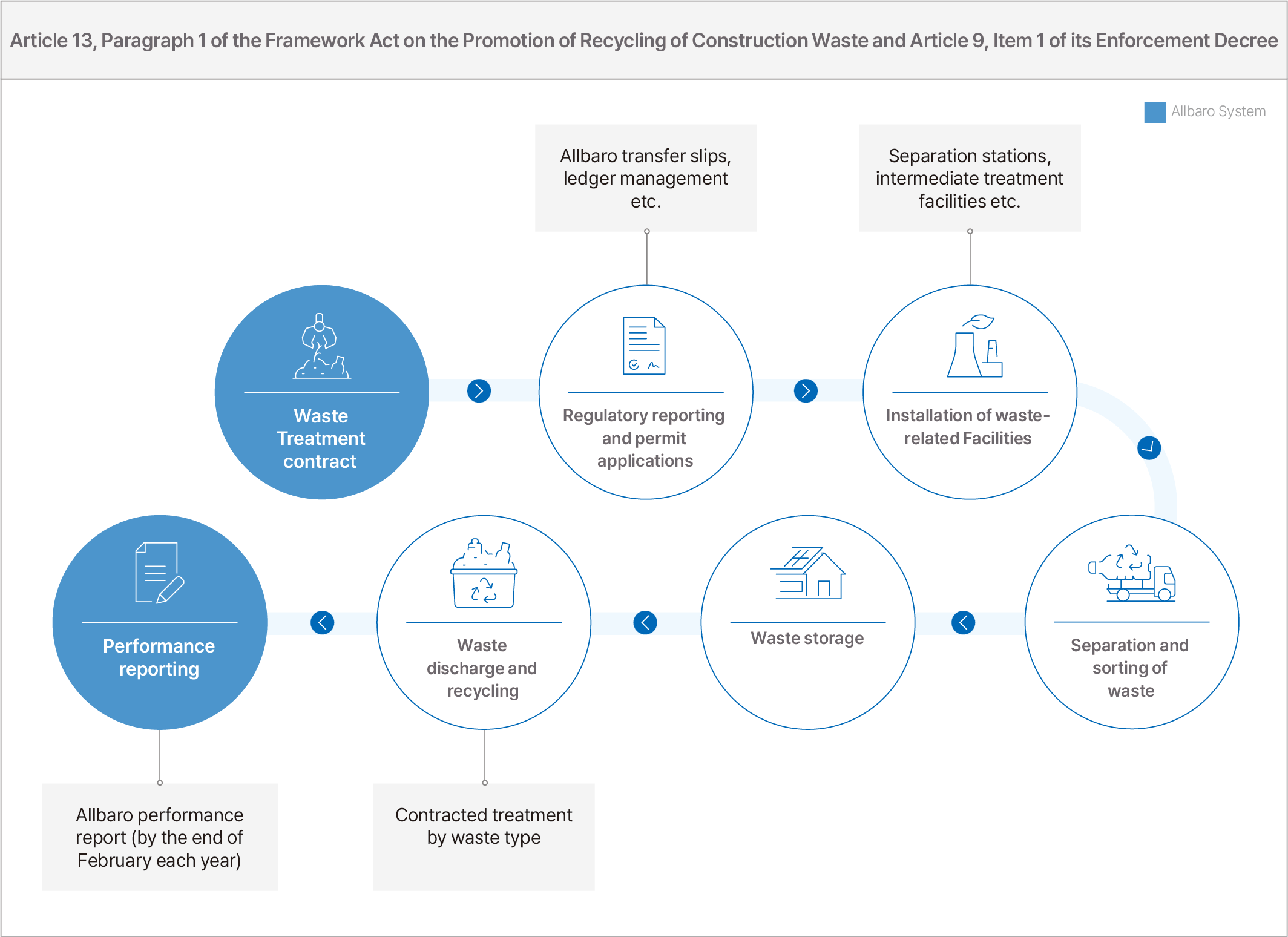
To reduce waste generation, SK ecoplant designates waste generation intensity as a key performance indicator and systematically manages annual performance against set targets. Reduction targets are calculated based on the average waste generation intensity over the previous three years, ensuring a sustained downward trend. Various reduction initiatives are implemented to achieve targets, including resource efficiency improvements and expanded recycling at worksites. In 2025, the target waste generation intensity was 8.46 tons per KRW 100 million, with actual performance recorded at 4.06 tons per KRW 100 million.
Target and Status of Waste Generation Intensity1)
Category | Unit | 2022 | 2023 | 2024 | 2025 | |
|---|---|---|---|---|---|---|
Target | Performance | |||||
Waste Generation Intensity | Tons per KRW 100 million | 6.71 | 9.51 | 9.15 | 8.46 | 4.06 |
1) Waste-related figures were compiled based on the standards set forth in the Framework Act on the Promotion of Recycling of Construction Waste and calculated using
data from the Allbaro System.
Water Resource Management
SK ecoplant systematically monitors water intake and usage across all sites, including the headquarters. Through regular and ad-hoc environmental audits, efforts are made to minimize wastewater discharge and identify ways to increase water reuse rates.
To ensure stable water supply and cost control, SK ecoplant conducts water stress analyses for major domestic construction sites using the World Resources Institute (WRI) framework and continuously monitors the results. Since water use is essential at construction sites for both construction work and dust suppression, an increase in water stress levels can lead to higher water usage costs in the medium to long term. SK ecoplant is implementing measures to improve water use efficiency in regions where water stress levels are rated “High” or higher, and is promoting water conservation initiatives that comprehensively consider the proportion of water intake from each region.
Results of Water Stress Analysis at Major Sites
Site Location | Water Stress Level1) | Proportion of Water Intake | Site Location | Water Stress Level1) | Proportion of Water Intake | |
|---|---|---|---|---|---|---|
Gangwon | Mid - High | 0.9% | Seoul | Mid - High | 20.0% | |
Gyeonggi | Mid - High | 26.6% | Sejong | High | 0.6% | |
Gyeongsangnam-do | Mid - High | 12.2% | Ulsan | Mid - High | 0.8% | |
Gyeongsangbuk-do | Mid - High | 0.02% | Incheon | Mid - High | 6.1% | |
Daegu | Mid - High | 3.7% | Busan | Mid - High | 21.6% | |
Daejeon | High | 4.0% | Chungcheongbuk-do | Mid - High | 3.4% |
1) High: Total water use accounts for 40–80% of available water resources, Mid-High: Total water use accounts for 20–40% of available water resources
Hazardous Substance Management
SK ecoplant monitors compliance with legal standards and health and safety regulations regarding hazardous substances that may arise not only at its directly operated sites but also throughout the entire project value chain. Construction sites are characterized by being established, operated, and decommissioned according to the lifecycle of each project; depending on project characteristics and relevant laws such as the Air Quality Conservation Act and the Water Environment Conservation Act, emission facilities subject to permits or notifications may be installed and operated. SK ecoplant continuously verifies and inspects compliance with relevant regulations, such as emission standards. For projects requiring the management of emission facilities—such as underground excavation and tunnel construction, as well as the operation of batch plants and crushers—the company conducts monitoring to ensure that pollutants are kept below legal limits through wastewater treatment and air pollution control facilities.
Management of Environmental Hazards
SK ecoplant operates inspection processes and monitoring systems to manage individual environmental hazards such as waste, water pollutants, and air pollutants. Using the Environmental Management Implementation Checklist, inspections are conducted across categories including project systems, permits and approvals, operational management, and control and mitigation facilities. Each site also conducts self-assessments using the Standard Model for Site-Centered Environmental Issue Management. In particular, ad hoc inspections of major processes have been strengthened, focusing on six key non-compliance areas: turbid water discharge, wash water runoff, improper waste treatment, fugitive dust generation, and others.
SK ecoplant operates a rigorous management system for each type of environmental hazard. The company signed a Voluntary Agreement for the Reduction of High-Concentration Seasonal Fine Dust with the Ministry of Environment and participated in an agreement to Promote Eco-Friendly Treatment and Expanded Recycling of Construction Waste. Additionally, SK ecoplant entered into a Voluntary Agreement for Eco-Friendly Construction Site Operations to Reduce Fine Dust with the Seoul Metropolitan Government to strengthen fugitive dust management capabilities. In terms of noise control, active noise reduction measures were implemented at major sites including Maegyo Station PELLUCID, Ulsan LALS, Centum Park SK VIEW, and the Yeongdeungpo-gu office development project.
IT-Based Environmental Information Management
Category | Details |
|---|---|
Company-wide Environmental Management System SEIS+ (Safety Environment Integrated System Plus) |
|
SK Environmental Management e-Guide |
|
WAYBLE decarbon (Carbon Accounting & Management Platform) |
|
Environmental Hazard Monitoring Systems
Category | Frequency | Management Method |
|---|---|---|
Air Pollutants | Continuous |
|
Chemical Substances | Continuous |
|
Soil Contaminants | Prior to construction, |
|
Water Pollutants | Continuous |
|
Noise and Vibration | Pre-construction, |
|
Environmental Hazard Management
Category | Management Details |
|---|---|
Fugitive Dust Management |
|
Chemical Substance Management |
|
Soil Management |
|
Water Quality Management |
|
Noise Management |
|
CASE | Fugitive Dust Management and Efficient Water Resource Use |
|---|
As large-scale removal of excavated soil from construction sites using dump trucks continues, the importance of controlling fugitive dust is increasing. SK ecoplant has improved operational efficiency by reducing the wheel-washing time for dump trucks through a two-row, inline arrangement of tank-type and automatic wheel-washing facilities. Additionally, during rainy weather, mobile sprinklers are added in front of and behind the existing wheel-washing facilities, while the washing times for each facility are adjusted to prevent contamination of external roads. During the winter, anti-freeze tunnel-type housing facilities, along with internal heaters, hot water heaters, and pipe heating cables, are installed to ensure the wheel-washing facilities operate normally even during cold snaps, thereby maintaining the effectiveness of fugitive dust management. Furthermore, sedimentation facilities have been installed to recycle the water used in the wheel-washing stations, thereby improving the water quality of the tank-based wheel-washing water and ensuring that no water pollutants are discharged.
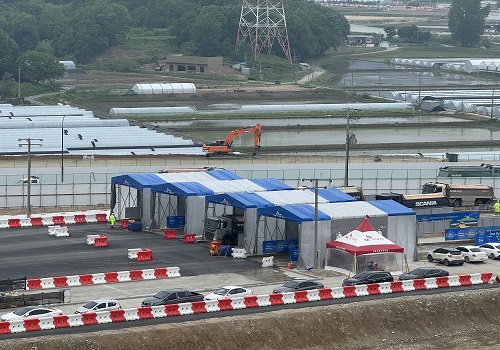 Inline Arrangement of tank-type and automatic wheel-washing facilities | 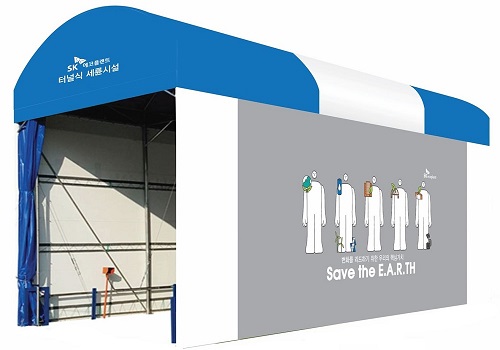 Tunnel-type housing facilities for freeze protection | 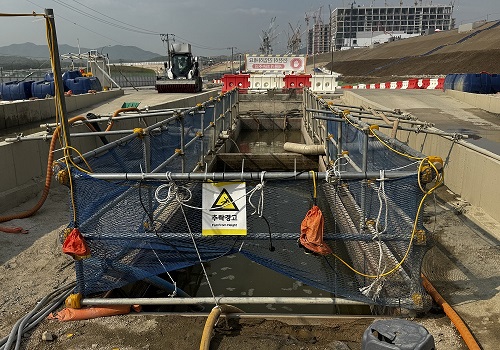 Wheel-washing water reuse facility |
|---|
CASE | Development of Customized Dust Reduction Devices by Fugitive Dust Type |
|---|
SK ecoplant has developed and is currently implementing a “pile driver concentrated water spraying system” and “linear sprinklers” that not only reduce fugitive dust but also ensure the safety of on-site workers, reduce costs, and improve work efficiency. The pile driver concentrated water spraying system is equipped with a device that sprays water directly onto the pile driver’s soil discharge port to suppress the primary sources of fugitive dust and eliminate risks associated with workers manually spraying water. It can be installed on relevant equipment even at demolition sites or during high-rise operations, offering the advantage of directly spraying water onto high-risk areas or dust sources that are otherwise inaccessible. Additionally, the linear automatic sprinkler system, featuring a modular design that allows for immediate relocation and installation, can be set up regardless of road configuration and automatically sprays water twice daily without requiring separate operation. In particular, the system enhances spraying efficiency by incorporating a solenoid valve that automatically controls leaks caused by water pressure and gravity, as well as a high-pressure pump that maintains a consistent water pressure. In recognition of these efforts to reduce fugitive dust, SK ecoplant received the “Minister of Climate, Energy, and Environment Award” at the Construction Environmental Management Best Practices Competition.
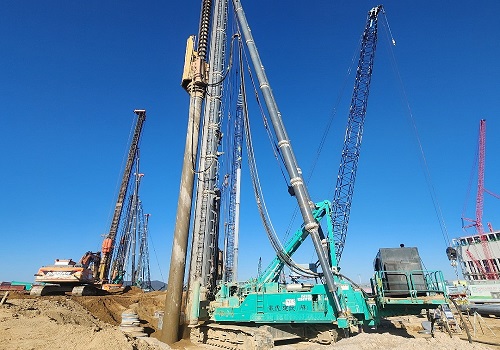 Pile driver concentrated water spraying system | 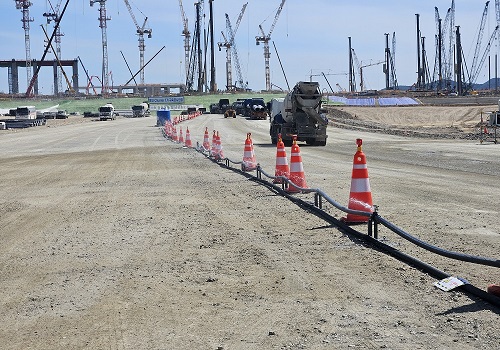 Linear sprinklers |
|---|
CASE | Noise Management |
|---|
SK ecoplant conducts noise simulations prior to construction to predict and assess noise levels based on site conditions and work characteristics. This enables the company to verify the risk of exceeding noise emission standards, and incorporate findings into the development of noise reduction measures. Noise-suppressing barriers are installed during underground construction, while mobile noise barriers, noise barrier inflatables, and soundproof domes are also being utilized. Furthermore, recognizing that many buildings exceed noise standards even when inter-floor soundproofing sheets are installed, noise measurements and monitoring are continuously conducted.
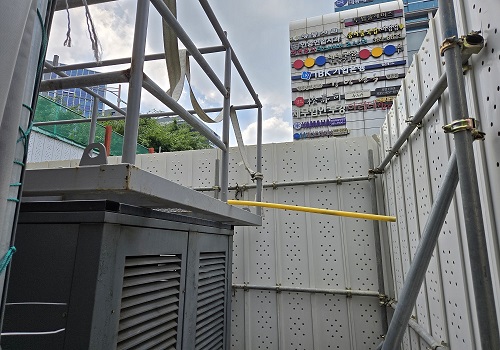 Generator noise barrier | 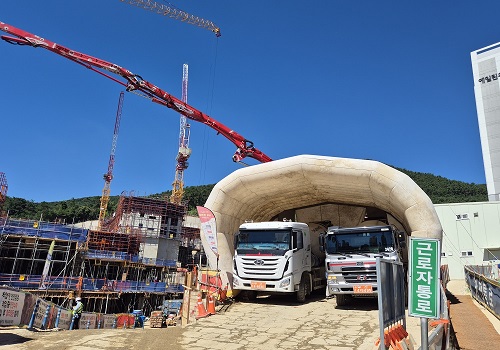 Noise barrier inflatable for concrete pump trucks | 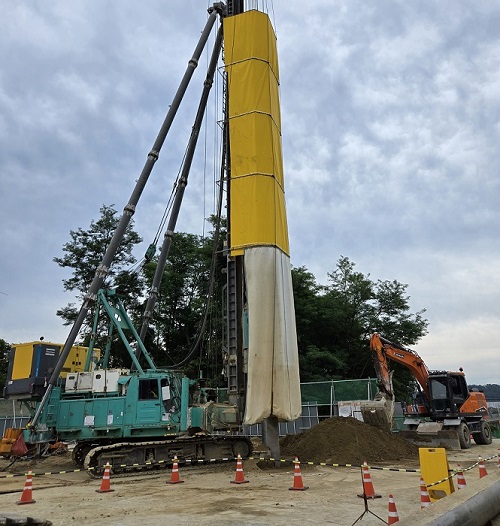 Sound-absorbing pads for pile drivers | 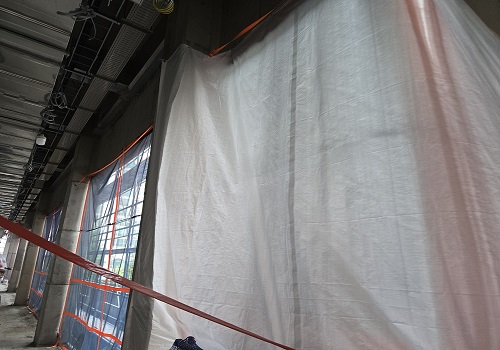 Soundproofing sheets |
|---|
CASE | Management of Environmental Hazards at the Yongin Semiconductor Cluster |
|---|
Category | Environmental Hazards | Management Details |
|---|---|---|
Yongin Semiconductor Cluster General Industrial Complex Road Construction | Fugitive Dust |
|
Water Pollution |
| |
Noise & Vibration |
| |
Waste |
| |
Yongin Semiconductor Cluster General Industrial Complex Development Project | Fugitive Dust |
|
Water Pollution |
| |
Noise & Vibration |
| |
Waste |
| |
Other |
| |
Construction of Support Facilities for Yongin FAB Phase 1 | Fugitive Dust |
|
Water Pollution |
| |
Noise & Vibration |
| |
Waste |
| |
Yongin Semiconductor Cluster Phase 1 Construction | Fugitive Dust |
|
Water Pollution |
| |
Noise & Vibration |
| |
Waste |
| |
Other |
|