
Quality Management System
Quality Management Policy
SK ecoplant has established a Quality Policy that prioritizes quality as a core value and aims to provide products and services that place customer satisfaction first. Based on this policy, the company has established a quality management system and dedicated organizations. Annual quality management business plans are reported to the CEO each year, and key performance results are reported quarterly to the Head of the BRM (Business Risk Management) Center. To prevent quality-related incidents, SK ecoplant operates quality inspection and management processes following the “Plan-Do-Check-Act” cycle, conducting intensive inspections for large-scale projects and those involving material issues. During construction, the company assesses quality in terms of design adequacy, constructability, and operation and maintenance. Quality risks are minimized through proactive quality management activities that apply technical solutions to identified potential risk factors.
Furthermore, to maximize customer satisfaction and ensure quality reliability, all domestic and international sites have obtained and maintain ISO 9001 (Quality Management System) certification. All domestic nuclear power sites have also obtained and maintain KEPIC (Korea Electric Power Industry Code) quality certification.
Quality Management Governance
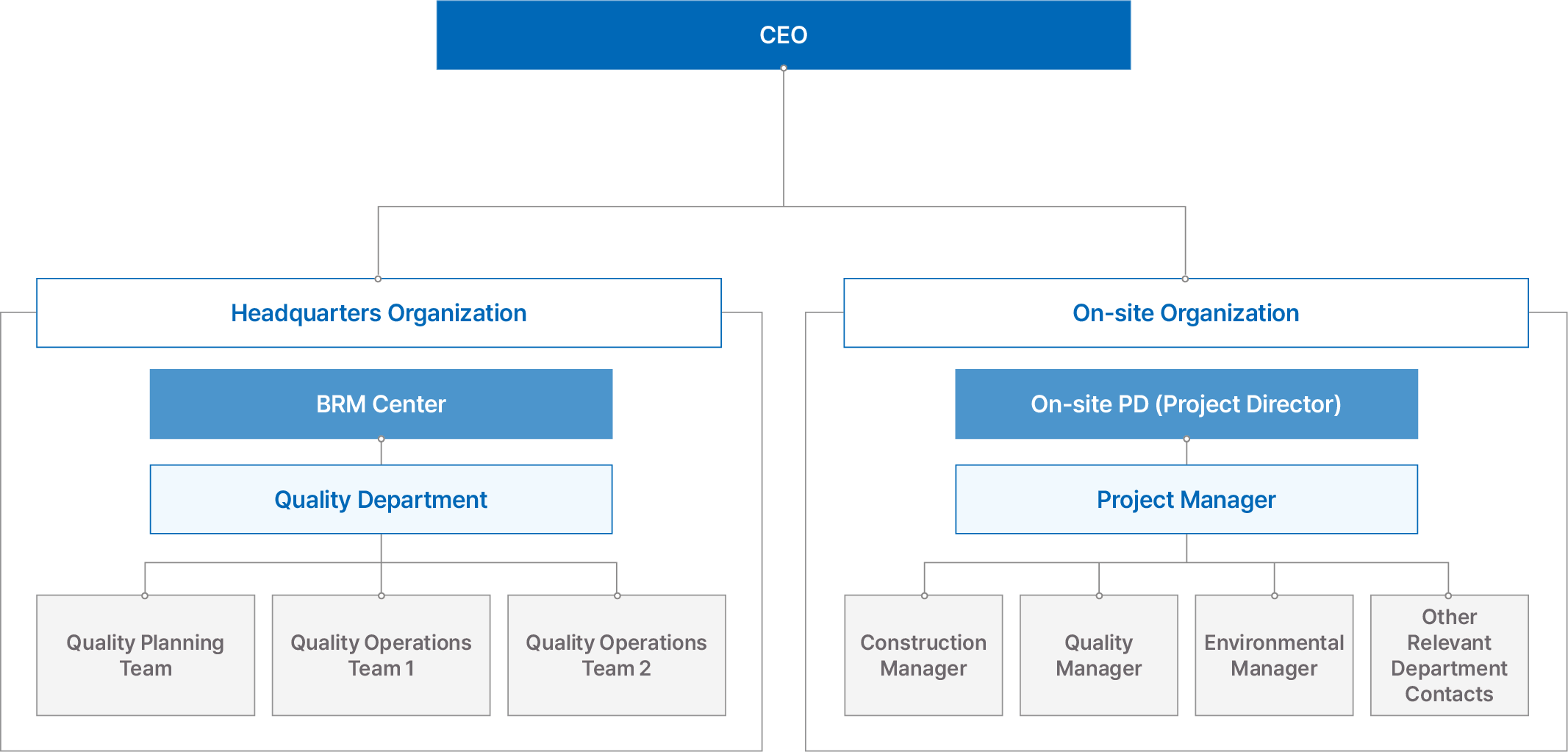
To operate a world-class quality management system, SK ecoplant has established and operates quality management organizations at both headquarters and on-site under the CEO. The headquarters organization manages quality risks through the Business Risk Management (BRM) Center’s Quality Department, while on-site organizations carry out their own quality management activities by assigning construction managers, quality managers, and environmental managers under the project manager.
Quality Management Organizational Chart
Quality Management Objectives
SK ecoplant has established and is implementing a quality management roadmap aimed at preventing large-scale material incidents by strengthening quality risk management. Material incidents totaling approximately KRW 400 million occurred in 2025, and the company is managing rework costs in accordance with its internal property damage incident classification criteria. Moving forward, SK ecoplant plans to further enhance its prevention-focused quality management system based on the quality management roadmap.
Quality Management Roadmap
Category | Performance | Objectives | ||
|---|---|---|---|---|
2025 | 2026 | 2027 | 2028 | |
Resources and Capabilities |
|
|
|
|
Systems and Processes |
|
|
|
|
Inspection and Diagnostics |
|
|
|
|
Quality Management Activities
Quality Training
To enhance project integrity, SK ecoplant has made it mandatory for employees slated for project assignment to complete “Project Assignment Quality Training.” This training covers topics such as the importance of quality management through accident case studies, understanding quality management, project-specific quality activities, and quality IT systems. In 2025, a total of 623 employees completed the training.
Quality Incident and Recurrence Prevention
SK ecoplant conducts regular, special, and joint quality inspections annually to prevent quality-related incidents. For incidents and issues with a high likelihood of occurrence in each business sector, project-level self-inspections are conducted alongside headquarters-led quality inspections, and potential quality risks are proactively reviewed from the marketing stage to prevent incidents during the operational phase. In particular, to prevent recurring material incidents, the company has enhanced its quality risk management system and operates a management framework centered on sensing(early detection), based on comprehensive analysis of incident and risk data. Furthermore, SK ecoplant is enhancing the effectiveness of its quality management by applying a differentiated support system according to each project’s risk ratings.
In 2025, SK ecoplant revised quantitative quality inspection checklists to reflect the characteristics of each site, and based on these, conducted a total of 103 customized support and inspection sessions tailored to each project’s quality risk levels. SK ecoplant plans to further enhance its quality management system through quantitative data-driven risk analysis and quality improvement activities.
Improving Productivity in Quality Operations
SK ecoplant is focusing on improving the productivity of project quality management tasks to enhance on-site quality control efficiency and strengthen management reliability. In particular, by streamlining repetitive quality control tasks, the company enables on-site personnel to focus on core quality management activities. For example, SK ecoplant implemented automated data entry using OCR (Optical Character Recognition) and RPA (Robotic Process Automation) technologies for quality test results submitted to the Construction Safety Management Integrated Information (CSI). This system automatically enters concrete quality test results and generates related reports, thereby reducing workload while improving data accuracy as well as management efficiency. As a result, the company has established a foundation for the systematic management of quality information while achieving an overall improvement in on-site quality control standards. SK ecoplant plans to continue expanding its quality management innovations using digital technology.
Biz. Partner Quality Management Support
SK ecoplant strives to prevent material accidents and improve performance quality through Biz. Partner quality management. By utilizing data-driven quantitative quality assessments and fair feedback processes, the company enables Biz. Partners to establish their own quality management systems and enhance their management capabilities. In particular, by factoring Biz. Partners’ quality management capabilities into business decision-making, SK ecoplant is raising the overall quality standard across its supply chain, while restricting access for Biz. Partners with inadequate quality management. Furthermore, the company is strengthening commitment to quality improvement by offering incentives to outstanding Biz. Partners during bidding.
In 2025, SK ecoplant expanded the scope of work categories (specific types or areas of work performed in construction projects) subject to evaluation. As a result, the company minimized evaluation gaps for key work categories with high potential quality risks, while strengthening the effectiveness of supply chain quality management.
Customer Satisfaction Management System
Customer Rights Protection Policy
SK ecoplant established the “Customer Protection Charter” in 2023 to foster a lasting relationship of trust with customers. Based on this, the “Customer Rights Protection Policy” was enacted in 2026, with the purpose of effectively protecting customer rights and ensuring smooth remedies in the event of harm. This policy outlines specific measures, including the identification of and response to risk factors related to customer rights protection—such as customer complaints and the safety of products and services—as well as procedures for prompt remedies in the event of harm. It is transparently published on the SK ecoplant website to ensure accessibility to customers.
Customer Satisfaction Management Activities
Customer Rights Protection
SK ecoplant is committed to delivering products and services that reflect customer needs throughout its business operations. The CS Team, a dedicated organization for consumer rights protection, conducts mobile surveys targeting residential customers regarding move-in services and defect resolution processes. When dissatisfaction is identified through survey results, immediate corrective actions are taken, and proactive measures are implemented to prevent recurrence. Additionally, for inquiries and complaints received via the website, mobile app, and Customer Happiness Center, relevant departments are directly involved from the root cause analysis stage to ensure timely and accurate feedback.
To prevent information security incidents such as personal data breaches or misuse during service provision, and to protect consumer rights, the company has established and maintains a comprehensive personal information management system. This includes systematically implementing various protection measures such as collecting only minimal personal data, immediate destruction after use, secure and irreversible data disposal, access control and log management, and the establishment of security systems. In 2022, SK ecoplant obtained Information Security Management System & Personal Information Protection (ISMS-P) certification and has since continued to enhance customer data protection through regular audits and improvement activities.
Customer Satisfaction Program
To enhance satisfaction among new residents, SK ecoplant operates a dual inspection system consisting of internal quality inspections and pre-move-in inspections by residents. Internal quality inspections are conducted 40 days prior to the resident pre-inspection, with participation from on-site and headquarters personnel, as well as professional managers who act on behalf of customers, ensuring 100% resolution of identified defects in advance. During the pre-move-in inspection phase, customers are enabled to report any defects they identify through a mobile platform, supported by a mobile defect management system that allows for monitoring of reporting and resolution status, ensuring efficient inspection management.
In addition, SK ecoplant maintains communication with customers through various channels, including phone calls and the mobile app for defect reporting and Voice of Customer (VoC) submissions. Areas with high satisfaction levels are expanded in future applications, while areas of dissatisfaction are analyzed to identify improvement measures, which are actively incorporated into product and service planning.
Customer Satisfaction Status and Targets 1)
Category | Unit | Performance | Targets | ||
|---|---|---|---|---|---|
2025 | 2026 | 2027 | 2028 | ||
Move-in Service Satisfaction | Points | 3.2 | 3.3 | 3.5 | 3.7 |
Defect Resolution Service Satisfaction | Points | 3.7 | 3.8 | 3.9 | 4.0 |
1) Out of a total of 5 points
CASE | Customer Safety Enhancement Activities |
|---|
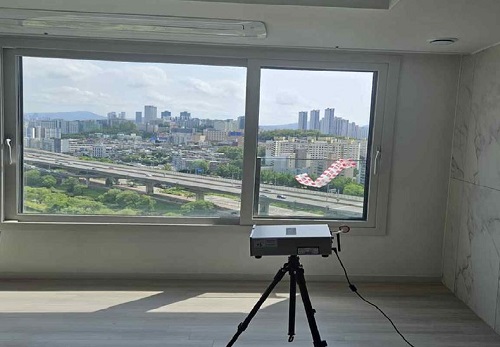 | SK ecoplant primarily uses environmentally certified finishing materials, such as final coatings, adhesives, and interior components, to minimize potential health risks to residents. In compliance with the guidelines under the Indoor Air Quality Control Act, the company obtains test reports on concentrations of harmful substances—such as volatile organic compounds (VOCs) and radon—as well as radioactivity levels for each material, and continuously monitors their safety. To improve indoor air quality in new residential buildings, a flush-out procedure is conducted in all units before occupancy. In addition, comprehensive quality control is implemented across the entire process—from production to installation—for fire doors, fire compartments, and firefighting systems to prevent safety incidents. * Flush-out: The process of using ventilation systems to introduce sufficient fresh outdoor air indoors to expel indoor air pollutants. |
Customer Remedy Procedures
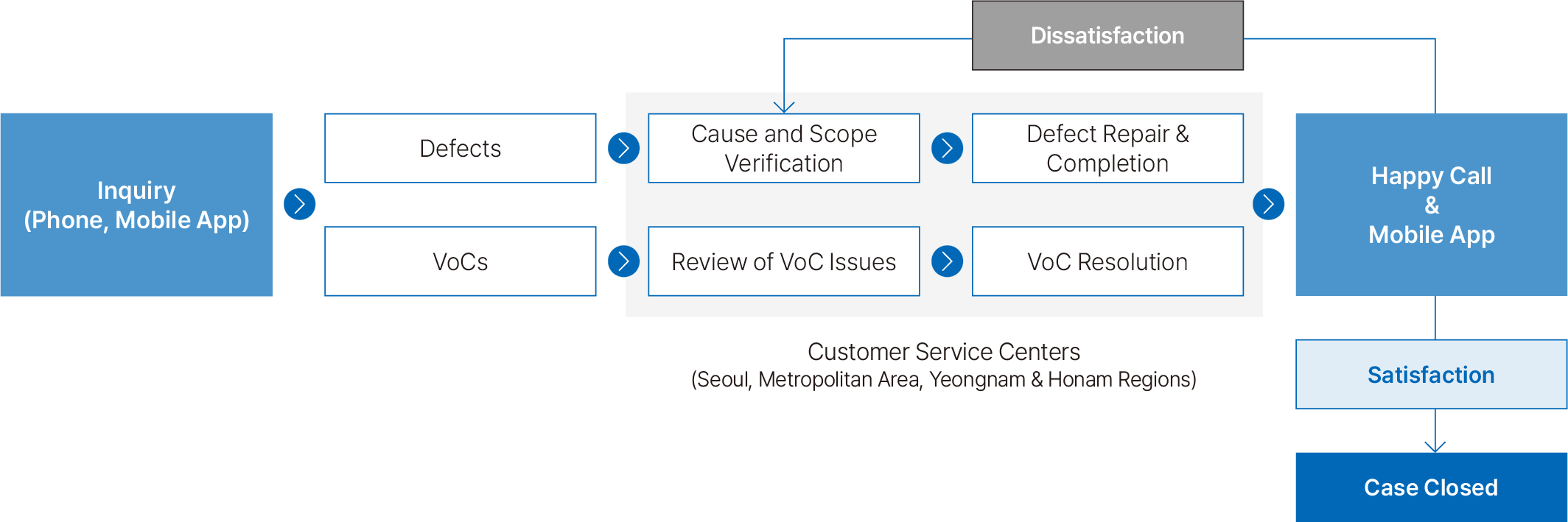
SK ecoplant operates structured remedy procedures to minimize potential customer harm during the use of its products and services. Inquiries received via phone or mobile app regarding defects or Voice of Customer (VoC) are reviewed jointly by the relevant departments and the customer service center before a response is provided.
Following the completion of defect repairs, a follow-up survey is conducted through the mobile app (Happy Call). If dissatisfaction is reported, the relevant departments perform thorough root cause analysis and take corrective action to protect customer rights. In addition, inquiries and complaints collected through surveys are analyzed to identify areas for improvement, which are then reflected in product and service planning to enhance customer satisfaction.
Customer Remedy Procedures