
Governance
Climate Change Response Policies
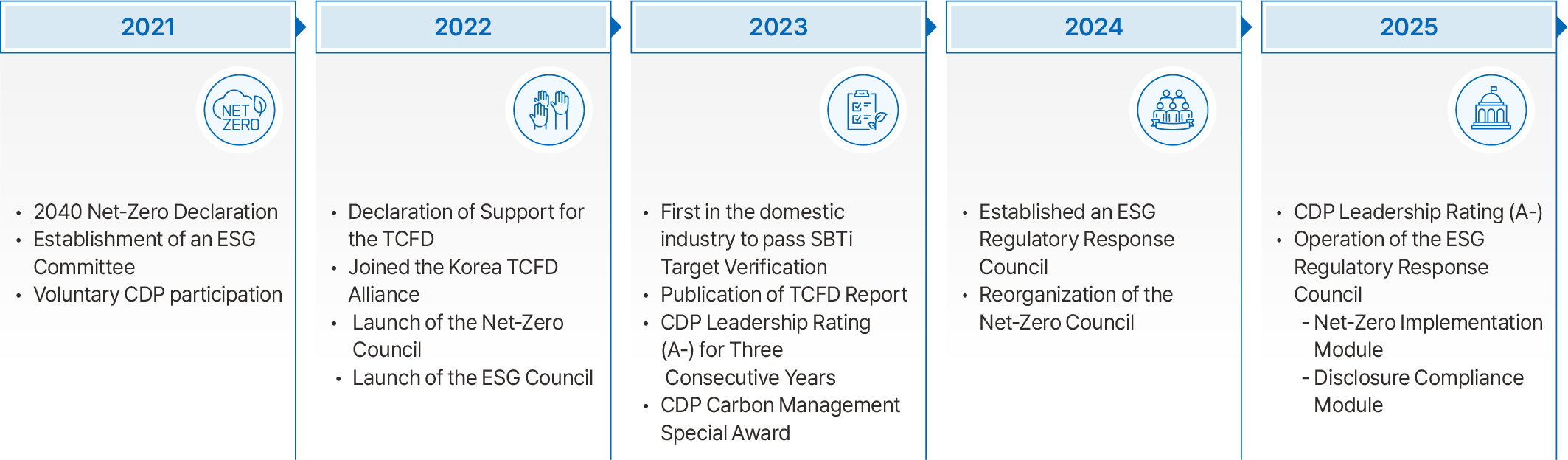
Based on its climate change governance framework, SK ecoplant identifies and assesses climate change risks and opportunities, while refining response strategies. The company has established a solid foundation for addressing climate change—including becoming the first Korean firm in its industry to obtain SBTi target verification and to publish a TCFD report, achieving a CDP Leadership rating (A-) for three consecutive years from 2021 to 2023, and maintaining the CDP Leadership rating in 2025—and is delivering tangible results.
Climate Change Response Journey
Climate Change Response Governance
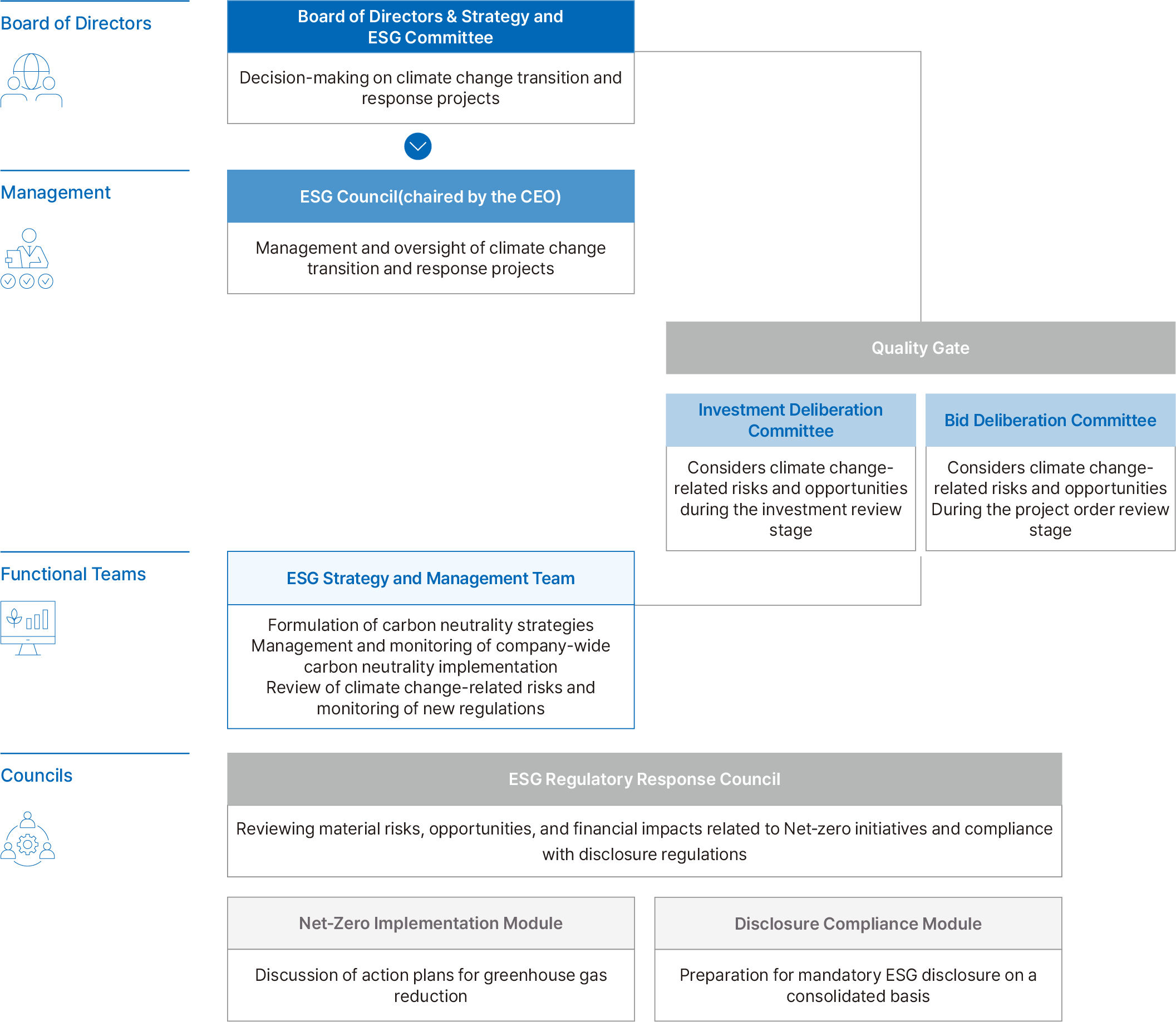
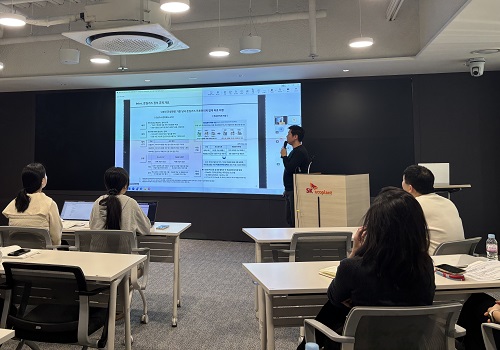
SK ecoplant is continuously enhancing its internal management systems to proactively address climate change risks and opportunities and to implement a company-wide business transformation strategy aimed at achieving net-zero. At the operational level, the ESG Strategy and Management Team leads the formulation and implementation of the net-zero strategy while continuously monitoring climate change-related risks and regulatory trends. Through the ESG Regulatory Response Council, established in 2024, the company manages carbon emission reduction metrics and strengthens its capacity to respond to ESG regulations.
Within the “Net Zero Implementation Module,” each business division discusses practical measures for reducing greenhouse gas emissions and develops implementation strategies. Having been designated as a company subject to the Greenhouse Gas and Energy Target Management System in both 2024 and 2025, SK ecoplant conducted training on system compliance at key sites, such as the Yongin Semiconductor Cluster. The company also carefully reviewed the organizational boundaries of each business unit to reduce greenhouse gas emissions and projected emissions that reflect the specific conditions of each business. Furthermore, net-zero roadmap scenarios are continually being evaluated to reflect restructuring of the business portfolio—including subsidiaries—as well as current business conditions.
Through the “Disclosure Compliance Module,” SK ecoplant proactively prepares for mandatory ESG disclosure on a consolidated basis while reviewing and addressing the demands of internal and external stakeholders. In 2025, consolidated disclosure standards, data metrics, and guidelines for mandatory ESG disclosure were established and refined. An IT system for ESG data management was introduced, while procedures were added to designate personnel responsible for each data metric and implement approval processes for data reliability. Going forward, the company plans to expand the scope of data collection and IT system implementation to include subsidiaries. SK ecoplant further aims to identify key risks and opportunities arising from the impacts of climate change on a consolidated basis— including subsidiaries—while also progressively conducting scenario-based impact analyses and developing response strategies.
The Board of Directors and Strategy and ESG Committee conduct annual reviews of the company’s climate change response strategy and the progress toward achieving greenhouse gas reduction targets. Decisions on major investment proposals are made only after comprehensive risk assessments by the Investment Deliberation Committee and the Bid Deliberation Committee. Management receives regular reports on greenhouse gas reduction performance through the ESG Council and, based on this information, reviews the company’s business structure and management activities with a focus on climate change response.
Organizational Chart for Climate Change Response
Strengthening the Roles of the Board of Directors and Strategy and ESG Committee
SK ecoplant’s Strategy and ESG Committee is the highest decision-making body responsible for formulating climate change response strategies and managing and overseeing their implementation. Established in 2021 under the Board of Directors, the committee has spearheaded discussions on climate change response and has formulated ESG strategies and business plans while monitoring their performance. Furthermore, to enhance the Board’s expertise, the company appoints individuals with specialized knowledge and practical experience in various fields—including business strategy, ESG, and global capacities—from the very beginning of the Board selection process.
In particular, as climate change response has become a core element of business strategy, expertise in this area is now a key criterion in the appointment of directors. The Strategy and ESG Committee meets at least four times a year and performs key functions related to climate change strategy, such as deliberating on net-zero implementation strategies and major investment proposals related to climate change response.
The Strategy and ESG Committee reviews major non-financial risks and opportunities across the entire company, encompassing SK ecoplant and its subsidiaries, ensuring that climate change issues are fully incorporated into the investment and business planning processes. In particular, for significant investment proposals above a certain threshold, the ESG organization’s written opinions on climate change risks and opportunities are reported to the Board of Directors as needed. Matters related to environmental management and climate change response performance are regularly reported to the Board of Directors and Strategy and ESG Committee at least once a year. In 2025, the Strategy and ESG Committee convened to discuss major management issues.
Agendas for Reporting and Resolution by the Board of Directors and Strategy and ESG Committee
Category | Agenda Item | Main Content | Voting |
|---|---|---|---|
Strategy and | Status of SV Monetization and | Report on 2024 SV Monetization Measurement Performance | Reported |
Materiality Assessment Results | Report on the 2025 Materiality Assessment Results and Response | Reported | |
Status of Climate Crisis Response | Report on the Background Behind the Greenhouse Gas and Energy | Reported | |
Status of Environmental Management | Report on Strategies to Minimize the Impact of Environmental Issues Through the Environmental Risk Management Process | Reported |
Climate Change Response Training for Independent Directors
SK ecoplant conducts regular training to strengthen the climate change response capabilities of its independent directors. The Board of Directors’ expertise and decision-making capabilities are enhanced through trend reports on key management issues and tailored training. In 2025, the company monitored trends in strategic shifts among global energy companies and, based on this analysis, assessed potential strategic synergies with its business portfolio.
Executive KPI Linkage
To ensure effective climate change response, SK ecoplant has designed and implemented ESG key performance indicators (KPIs) company-wide in a phased manner, from the CEO down to business units and teams. In 2022, the CEO’s KPIs included performance metrics for achieving annual greenhouse gas reduction targets, and starting in 2024, the weighting of non-financial performance—such as carbon emissions reductions and evaluation results for key climate change indicators—was increased to 10%. The decision to grant incentives based on these metrics is made following deliberation by the Board of Directors. Each business division establishes KPIs linked to company-wide greenhouse gas reduction targets and incorporates them into their compensation systems. The company is also implementing climate change response metrics tailored to its business characteristics, such as carbon emissions reduction, Scope 3 inventory development and reduction, and supply chain management. At the team level, detailed KPIs linked to company-wide reduction targets are set to promote the systematic development and execution of work plans. Through a KPI system that is progressively linked from the CEO down to each team, SK ecoplant is enhancing its ability to implement climate change responses aimed at achieving net-zero.
Supporting Subsidiaries’ Climate Change Response
As ESG management requirements for subsidiaries intensify, SK ecoplant is working to advance ESG management at its subsidiaries through the ESG Regulatory Response Council. First, the ESG performance of each subsidiary is assessed, taking into account its size and business characteristics. Based on these results, customized consulting and improvement recommendations are provided for each subsidiary to ensure that ESG management activities are effectively embedded.
In terms of climate change response, SK ecoplant goes beyond simply managing subsidiaries’ Scope 1 and 2 emissions; it also calculates Scope 3 emissions, which include emissions from major subsidiaries. Furthermore, by identifying key reduction measures for each subsidiary and providing expert consulting to enhance their feasibility, the company continues to offer practical support so that each subsidiary can independently develop and implement its own greenhouse gas reduction strategies.
In the medium to long term, SK ecoplant plans to provide phased support to help each subsidiary develop the capacity to respond independently to changes in the external environment. Through this, the company aims not only to proactively address clients’ climate change requirements and prepare for mandatory greenhouse gas disclosure obligations, but also to support subsidiaries in establishing and implementing their own reduction targets. To ensure resilience against transition risks, a net-zero target implementation framework that includes subsidiaries is also being established. By implementing a process to rapidly detect and proactively respond to climate change risks, losses caused by such risks are being minimized, while a transition to a sustainable business structure is being realized.
 |  |
|---|---|
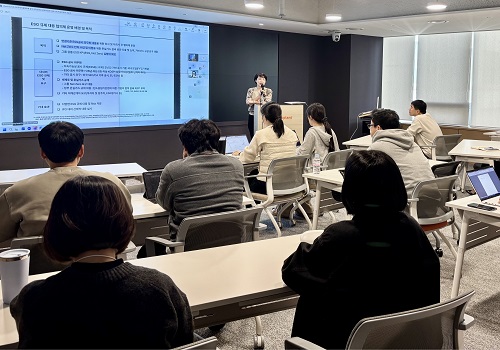
2025 ESG Regulatory Response Council | |
Strategy
Identifying and Assessing Climate Change Risks and Opportunities
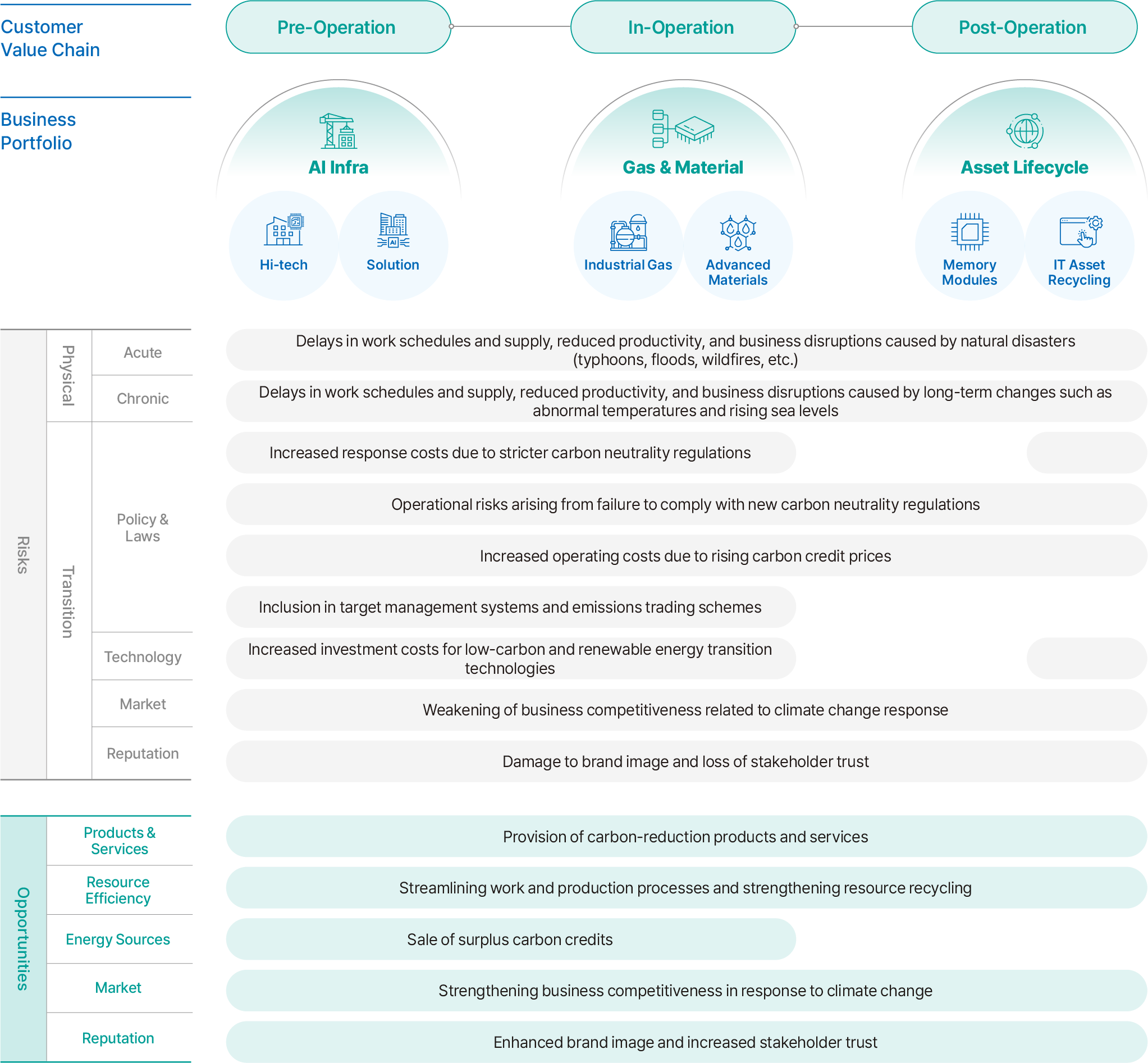
SK ecoplant identifies and analyzes risk and opportunity factors arising from climate change, and evaluates the impact of each factor and the timing at which that impact will be greatest. The potential impact of risk factors on financial performance is assessed, with mitigation measures and response strategies being implemented to ensure resilience. Strategies aligned with the business model, market trends, enhanced competitiveness, and stakeholder needs are developed to transform opportunity factors into new business opportunities.
Impact on Business and the Value Chain
Key Risks and Opportunities
Category | Risks and | Business and | Timing of Maximum | Response Strategy | ||||
|---|---|---|---|---|---|---|---|---|
Short-term (up to 1 | Medium term | Long- | ||||||
R | Physical | Acute | Increased |
| ● | ● | ● |
|
Production |
| ● | ● |
| ||||
Chronic | Rising need to |
| ● |
| ||||
Transition | Policy & | Strengthening of |
| ● |
| |||
Mandatory zero- |
| ● | ● |
| ||||
Need for transition to eco-friendly |
| ● | ● |
| ||||
Need to strengthen climate change |
| ● | ● |
| ||||
Rising carbon credit prices due to |
| ● | ● |
| ||||
Technology | Increased burden of R&D investment for carbon neutrality and the transition to renewable energy |
| ● | ● |
| |||
Need to secure |
| ● | ● |
| ||||
Need to secure |
| ● | ● |
| ||||
Category | Risks and Opportunities | Business and Financial | Timing of Maximum | Response Strategy | ||||
|---|---|---|---|---|---|---|---|---|
Short-tem | Medium term | Long-term (5 years or | ||||||
O | Products & Services | Growing demand for eco-friendly and low-carbon businesses |
| ● | ● |
| ||
Resource | Streamlining production and operational |
| ● | ● | ● |
| ||
Optimizing operating |
| ● | ● | ● |
| |||
Market | Increasing demand for |
| ● | ● | ● |
| ||
Growth of the national |
| ● | ● |
| ||||
Increased demand for |
| ● | ● |
| ||||
Increased demand for |
| ● | ● | ● |
| |||
1) IFRS (International Financial Reporting Standards) S2 (Climate-related Disclosures)
2) CBAM (Carbon Border Adjustment Mechanism)
3) CSRO (Circle-Sequence Reverse Osmosis)
4) WHRC (Waste Heat Reuse Chiller)
5) BEMS (Building Energy Management System)
6) BIPV (Building-Integrated Photovoltaic System)
7) SOFC: (Solid Oxide Fuel Cell)
8) First domestic introduction of SOFCs as a backup power source in a data center (Source: Company press release): This refers specifically to the installation of a 330-kW solid
oxide fuel cell (SOFC) as a backup power source at the Bupyeong Data Center.
Physical Risk Scenario Analysis
Physical risks caused by climate change—such as extreme temperatures, sea-level rise, and flooding—are gradually affecting corporate assets and operational stability in various ways. Furthermore, given the uncertainty of climate scenarios and the nature of the construction industry—where projects typically conclude within 3 to 5 years—mid-to-long-term loss estimates based on fixed assets have inherent structural limitations.
Accordingly, SK ecoplant selected seven regions (at the city level)—including Ulsan, Yongin, and Icheon—as subjects of analysis, assuming that future construction sites will be located in areas similar to current ones. Factors such as connection to current major projects, scale and duration of construction sites, and the sites’ location were also taken into account. Additionally, to analyze the financial impact of physical risks on business operations and assets, the company utilized the Korea Meteorological Administration’s Climate Information Portal and the S&P Global Climanomics platform.
Selection of Climate Scenarios
For the physical risk analysis, SK ecoplant applied the SSP (Shared Socioeconomic Pathways) scenarios based on the IPCC (Intergovernmental Panel on Climate Change) 6th Assessment Report, and analyzed comprehensive risks under low-carbon, medium-emission, and high-carbon emission scenarios.
Category | Scenario Description |
|---|---|
SSP 1-2.6 | Assumes that the use of fossil fuels is minimized due to advances in renewable energy technology, leading to environmentally friendly and sustainable economic growth |
SSP 2-4.5 | Assumes an intermediate level of climate change mitigation and socioeconomic development |
SSP 3-7.0 | Assumes a social structure vulnerable to climate change due to passive climate change mitigation policies and delayed technological development |
SSP 5-8.5 | Assumes a focus on rapid industrial and technological development, resulting in high fossil fuel use and the expansion of uncontrolled, urban-centered development |
Analysis Results: ① Risk Identification
Taking into account industry characteristics and project impacts, SK ecoplant identified the number of heatwave days, precipitation, torrential rain, average temperature, and sea-level rise as key physical risk factors. Subsequently, the company analyzed and evaluated trends in related indicators for 2030 and 2050 compared to the base year of 2021. For the scenario analysis, the Korea Meteorological Administration’s National Standard Climate Change Scenarios were utilized to adapt the IPCC’s SSP scenarios to Korea.
Category | Trend (compared to base year 2021) | Expected Risks | |
|---|---|---|---|
Acute | Number of |
|
|
Precipitation |
|
| |
Torrential |
|
| |
Chronic | Average |
|
|
Sea-level |
|
| |
Analysis Result ② Financial Impact
SK ecoplant analyzed financial impact based on electricity unit prices and electricity consumption (projected electricity consumption in 2050 compared to the base year) in relation to the increase in the number of heatwave days and average temperatures, which have the most direct impact on construction sites. As a result, electricity consumption (kWh) due to an increase in the number of heatwave days is projected to rise from 12.8% (SSP 1–2.6) to 21.8% (SSP 5-8.5) compared to the base year, while consumption resulting from rising average temperatures is also projected to increase from 4.5% (SSP 1-2.6) to 9.8% (SSP 5-8.5).
Furthermore, an analysis using S&P Global’s ClimanomicsⓇ Hazard Modeling indicated that the impact of disaster types such as extreme temperatures, sea-level rise, droughts, river flooding, torrential rains, typhoons, water stress, and wildfires would be minimal, with an annual asset value loss rate of less than 1% (LOW level). However, as the asset loss rate due to abnormal temperatures is showing a gradual upward trend, the company is operating a continuous monitoring and management system to prevent risks to employee safety and health, as well as declines in productivity.
Response Activities
Through the Disclosure Compliance Module of the ESG Regulatory Response Council, SK ecoplant identifies and assesses key risks and opportunities for the company and its subsidiaries arising from the impacts of climate change. After deriving risks and opportunities by business unit and subsidiary—taking into account internal and external policies, market conditions, and the magnitude and frequency of financial impacts—common and key control items are identified and managed In addition, scenario-based impacts for each item are analyzed, while criteria is established for calculating financial impacts. After setting the direction of response strategies and mid- to long-term goals, short-term goals, performance targets for the current year, and detailed activities for strategy execution based on target levels and achievement timelines are established and implemented. Going forward, SK ecoplant plans to utilize climate materiality assessment to advance calculation criteria and processes for determining the magnitude, scope, and probability of business and financial impacts triggered by key climate change risks and opportunities. Furthermore, the number of subject subsidiaries will be expanded according to the consolidated disclosure scope.
Assessment of Key Risks and Opportunities
SK ecoplant analyzed the risks and opportunities arising from climate change, assessed the impact and likelihood of each factor, and identified material risks and opportunities. Analysis results, as well as response measures, are transparently disclosed. The potential impact of risk factors on financial performance is assessed, with mitigation measures and response strategies being implemented to ensure resilience. Strategies aligned with the business model, market trends, enhanced competitiveness, and stakeholder needs are developed to transform opportunity factors into new business opportunities. By continuously monitoring and strategically managing these risks and opportunities, SK ecoplant is further strengthening its proactive response capacity for climate change.
Prioritization Evaluation Criteria for Climate Change Risks and Opportunities
Financial Impact | Probability of Occurrence | |||
|---|---|---|---|---|
Category | Scope of Impact | Category | Scope of Impact | |
Very High | Long-term impact on revenue structure | Very Likely | 90~100% | |
High | Significant impact on specific business | Likely | 66~100% | |
Medium | Impact on revenue and expenses, | About as likely as not | 33~66% | |
Low | Minor impact, but manageable | Unlikely | 0~33% | |
Very Low | Can be adjusted | Very Unlikely | 0~10% | |
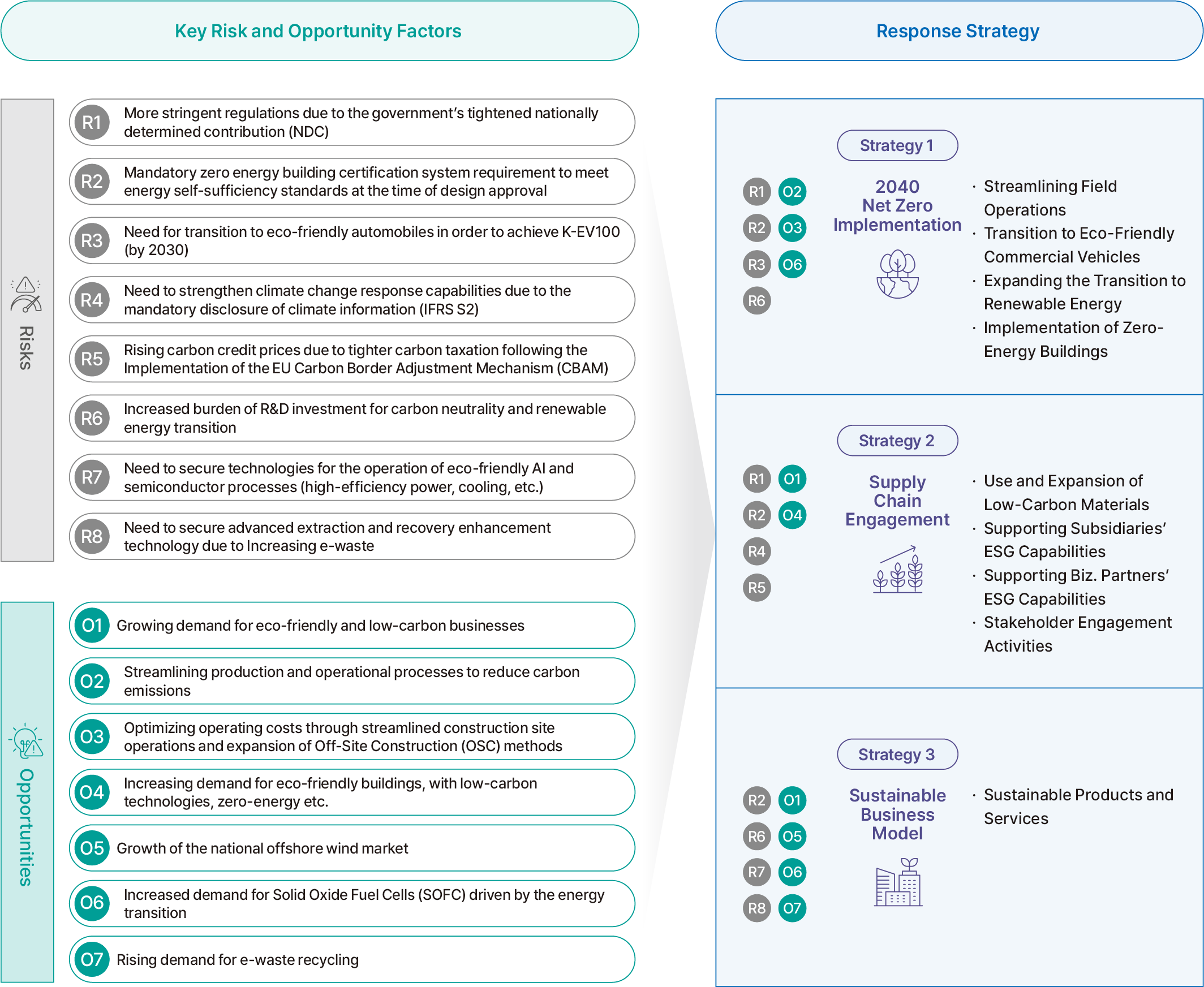
Strategies for Addressing Key Risks and Opportunities
Strategy 1. 2040 Net-Zero Implementation
To proactively address climate change, SK ecoplant has established a greenhouse gas inventory covering Scope 1, 2, and 3 emissions, and is accordingly managing emissions. Furthermore, to preemptively respond to domestic and international carbon regulations through fundamental reductions in greenhouse gas emissions, the company has set a “2040 Net Zero” target and is operating a company-wide implementation system.
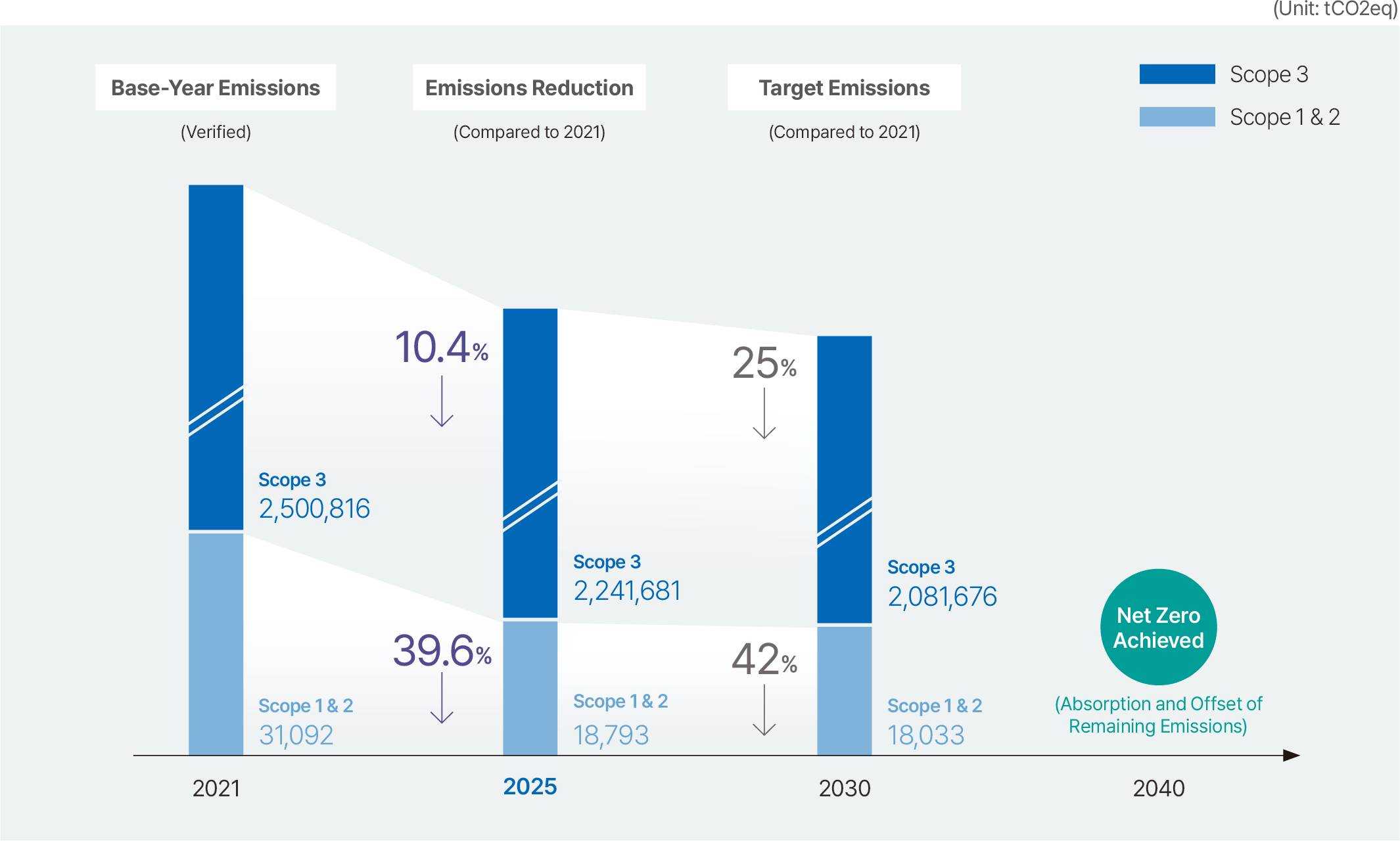
SK ecoplant aims to reduce Scope 1 & 2 emissions by 42% by 2030 compared to the base year of 2021, in line with the 1.5°C scenario. For Scope 3 emissions, the company aims to reduce priority reduction targets (1,675,547 tCO₂eq) by 25% compared to the base year, in line with the sub-2°C scenario. In 2023, SK ecoplant became the first Korean company in its industry to receive official approval from the Science-Based Targets initiative (SBTi) for these 2030 reduction targets (Near-term Targets). Progress against these targets is reviewed annually.
2040 Net-Zero Roadmap
Streamlining On-Site Operations
SK ecoplant is implementing measures to streamline on-site operations in order to manage carbon emissions generated at construction sites and reduce energy consumption. To this end, the company is limiting the use of outdated equipment and expanding the use of electrified equipment, while managing energy consumption and carbon emissions by taking into account factors that affect the number of working days and construction schedules—such as typhoons and heat waves—caused by climate change.
In addition, SK ecoplant is implementing site operation improvements—such as expanding the use of off-site construction (OSC) and modular construction methods, as well as optimizing equipment routes—to shorten construction periods, ensure construction safety, and improve the working hours of on-site personnel and heavy equipment, thereby contributing to energy reduction. Through a location-based site productivity management solution, the company is digitizing deployed resources—such as personnel, vehicles, and equipment—while minimizing the movement of equipment and materials based on location and operational data to enhance construction efficiency and manage fuel consumption. Furthermore, by utilizing pre-construction technology, SK ecoplant is analyzing potential risks throughout the entire construction process starting from the design phase, and improving on-site constructability to strengthen resource usage and carbon emissions management.
Streamlining Field Operations
Category | Goal | Implementation Activities |
|---|---|---|
Equipment Selection and Operation | Reducing Carbon Emissions |
|
Advancement of OSC | Enhancing Competitiveness |
|
Location-Based On-Site | Integrated Control System, |
|
Pre-Construction | Strengthening Project |
|
CASE | Subsidiary Process Efficiency Initiatives |
|---|
SK airplus, a subsidiary of SK ecoplant, is an industrial gas manufacturer with high electricity dependency. While the company faces structural constraints on greenhouse gas reduction due to ongoing business expansion driven by the growth of the semiconductor industry, it is laying the groundwork for gradual reductions through process improvements and enhanced electricity efficiency. In particular, at the Cheongju Plant 1, operational efficiency initiatives—such as half-mode operation of the nitrogen (N₂) process and optimization of CDA (Clean Dry Air) supply—have been implemented to reduce electricity consumption, thereby contributing to Scope 2 greenhouse gas emissions reductions. Furthermore, at the Yongin Plant—scheduled to begin operations in 2027—the company plans to minimize energy loss by recovering and reusing waste heat from equipment cooling water via heat exchangers. | |
|---|---|
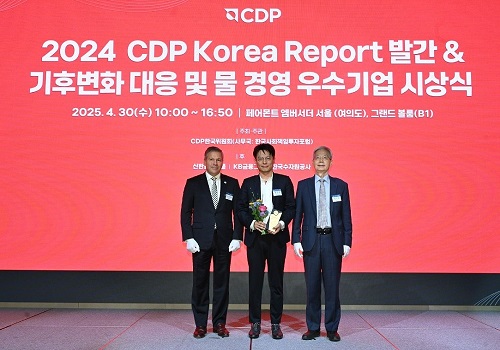 | It also plans to optimize energy efficiency from the initial design stage by introducing high-efficiency air compressors, which account for more than 80% of the CDA process energy consumption. In recognition of these efforts, SK airplus received the 2025 CDP Carbon Management Special Award. With the goal of achieving net-zero by 2045, SK airplus plans to expand its use of renewable energy through initiatives such as PPAs (Power Purchase Agreements) and RECs (Renewable Energy Certificates), while also strengthening the foundation for its transition to net-zero by establishing a concrete greenhouse gas reduction roadmap. |
Transition to Eco-Friendly Commercial Vehicles
SK ecoplant is transitioning to eco-friendly vehicles (including electric and hybrid vehicles) to reduce greenhouse gas emissions generated by the operation of fossil fuel-based vehicles. As of 2025, approximately 15% of the vehicles operated at its headquarters and worksites have been converted, resulting in a reduction of 91 tCO₂eq in greenhouse gas emissions.
Eco-Friendly Vehicle Transition Status
Category | Unit | 2023 | 2024 | 2025 |
|---|---|---|---|---|
Total Number of Vehicles | Vehicles | 278 | 291 | 364 |
Number of Eco-Friendly vehicles | Vehicles | 108 | 95 | 53 |
Eco-Friendly Vehicle Conversion Rate | % | 39 | 33 | 15 |
Greenhouse Gas Emissions Reduced1) | tCO₂eq | 96 | 80 | 91 |
1) Greenhouse gas emissions reductions resulting from the conversion to eco-friendly vehicles were calculated internally based on the Korea Road Traffic Authority’s statistics
on annual mileage, fuel emission factors, and national electricity emission factors, and may be subject to slight variations.
Expanding the Transition to Renewable Energy
SK ecoplant aims to transition 100% of the electricity used across its business divisions to renewable energy in order to achieve its 2040 net-zero goal. To this end, the company is prioritizing the installation of solar power generation facilities at sites where solar panels can be installed, while making efforts to increase the proportion of renewable energy. In 2025, renewable energy was directly generated and used at four sites equipped with solar panels, resulting in an annual greenhouse gas emissions reduction of approximately 144 tCO2eq. Going forward, SK ecoplant plans to expand the scope of renewable energy adoption to decarbonize electricity use across facilities and strengthen foundations for achieving net-zero.
On-Site Solar Panel Installation Status
Category | Unit | 2023 | 2024 | 2025 |
|---|---|---|---|---|
Greenhouse Gas Emissions Reduced1) | tCO₂eq | 123 | 163 | 144 |
1) The electricity generated by solar panels installed at each site was converted into greenhouse gas emissions reduction amount by applying the national electricity emission factor.
Implementation of Zero-Energy Buildings
In line with policies mandating the adoption of Zero Energy Buildings (ZEB), SK ecoplant is taking the lead in realizing green buildings to increase energy self-sufficiency rates. In 2021, the company formed an internal task force to develop an annual roadmap for improving self-sufficiency rates, with the goal of establishing design standards for meeting energy self-sufficiency criteria. Using a proprietary performance estimation tool, measures to maximize energy efficiency in terms of passive, active, and renewable energy during the bidding and design phases are being reviewed. In particular, SK ecoplant is focusing on optimizing integrated energy solutions that combine rooftop solar (PV), building-integrated photovoltaics (BIPV), and solid oxide fuel cells (SOFC). The company aims to proactively respond to changes in the Zero Energy Building (ZEB) system, contribute to minimizing energy consumption, and reduce building lifecycle greenhouse gas emissions. Through these efforts, SK ecoplant will simultaneously enhance customer value and environmental performance while fulfilling its responsibility for a sustainable building environment.
Strategies for Achieving Zero-Energy Buildings
Category | Details |
|---|---|
Passive | Minimizing heat loss in buildings through the application of highly insulated and airtight envelope systems |
Active | Implementation of a Building Energy Management System (BEMS) to maximize building operational |
Renewable Energy | Performance verification and analysis of medium- to large-scale solid oxide fuel cells (SOFCs) |
Strategy 2. Supply Chain Engagement
SK ecoplant is striving to manage and reduce Scope 3 emissions within its supply chain. To this end, the company is collaborating with subsidiaries and Biz. Partners to provide materials that contribute to carbon reduction and products and services that contribute to energy savings.
Supply Chain Scope 3 Emissions Management Strategy
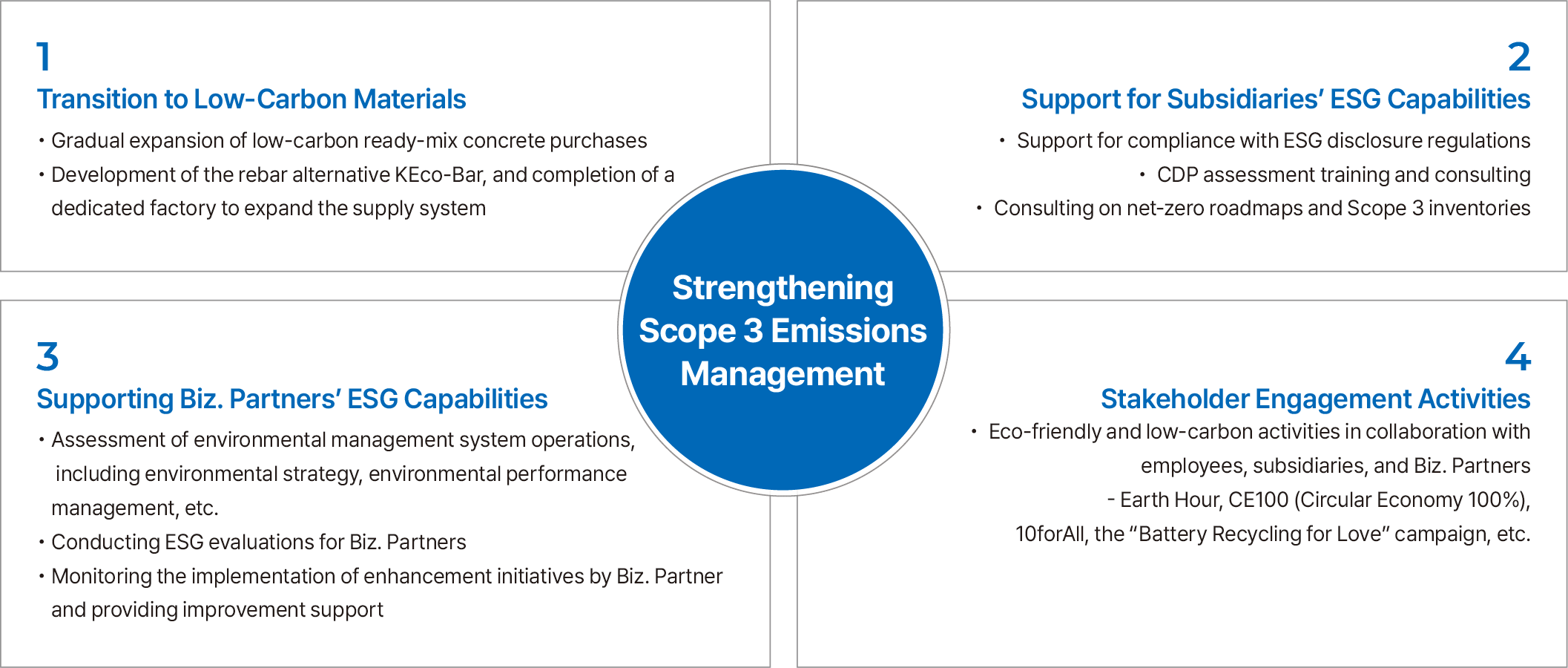
Use and Expansion of Low-Carbon Materials
SK ecoplant is expanding the use of low-carbon materials, such as low-carbon ready-mix concrete and cold-resistant concrete, while also striving to develop new low-carbon materials, including the development and certification of KEco-Bar. In addition, the company is jointly developing eco-friendly material technologies with Biz. Partners through open innovation and applying them to worksites. Through these efforts, SK ecoplant is accelerating the reduction of Scope 3 emissions and the achievement of carbon neutrality across the entire supply chain.
Activities to Use and Expand Low-Carbon Materials
Category | Details |
|---|---|
Procurement of Low-Carbon | SK ecoplant is gradually expanding the use of low-carbon ready-mix concrete to reduce greenhouse gas emissions from traditional ready-mix concrete. However, there are significant constraints, including ensuring quality, supply stability, transportation distances, and site-specific specifications. Low-carbon ready-mix concrete is being introduced primarily at sites where it is currently feasible, with plans underway to expand usage in phases to those with improved supply infrastructure. |
Application of Cold-Resistant | Cold-resistant concrete is a special type of concrete that can cure at sub-zero temperatures without a separate heat source. When used in winter construction, it reduces the need to operate hot-air curing units, thereby lowering greenhouse gas emissions caused by the use of kerosene-fired heaters. In 2025, cold-resistant concrete was applied to the Ulsan Data Center, Yongin Cluster, and non-security facility projects. SK ecoplant plans to gradually expand its application scope in the future depending on site conditions. |
KEco-Bar | KEco-Bar, an alternative to rebar made by blending recycled PET with glass-fiber-reinforced plastic (GFRP), offers excellent construction stability and work efficiency. It is a material that addresses the shortcomings of conventional rebar by considering carbon emissions during the production process. In 2022, SK ecoplant completed construction of a dedicated factory with an annual production capacity of 50,000 tons. To ensure product performance and reliability, the company obtained Green Certification and Eco-Label Certification, in addition to completing registration under KDS (Korea Design Standard) Code 24 (General Structures) and Code 14 (Bridges). Registration under Code 41 (Building Structures) is currently being pursued. |
Joint Development of Eco-Friendly | To discover innovative technologies in the semiconductor and environmental sectors, SK ecoplant hosts annual technology competitions for small and medium-sized enterprises and startups, such as “Tech Open Collaboration” and “ConTech Meet-up Day.” In 2024, Around Blue’s “plastic manufacturing technology using natural by-products” was selected for joint R&D. In 2025, joint technology development and a patent application were completed for plastic materials for semiconductor trays using oyster shells. |
Supporting Subsidiaries’ ESG Capabilities
Through its ESG Regulatory Response Council, SK ecoplant supports its subsidiaries in identifying direct and indirect risks and opportunities arising from climate change, as well as in formulating and implementing response strategies. The company provides training and consulting to help subsidiaries comply with climate change and ESG disclosure regulations, such as the CDP assessment, while collaborating with them to reassess their Business As Usual (BAU) scenarios and review reduction costs when developing their net-zero roadmaps. Additionally, training is provided on calculation standards and methods—including emission factors—for Scope 3 inventory calculations, in conjunction with consulting services for verification of activity data.
Supporting Biz. Partners’ ESG Capabilities
SK ecoplant conducts regular ESG evaluations of core Biz. Partners to strengthen supply chain climate change response capabilities. Under the environmental management system category, company-wide organizational structures and policies, as well as management systems for addressing climate change, are reviewed. Furthermore, implementation performance is verified based on environmental data. For Biz. Partners whose overall ESG management levels are found to be insufficient based on the evaluation results, SK ecoplant identifies improvement tasks and strengthens their sustainable management capabilities through tailored support, including training, consulting, and on-site coaching. Going forward, the company plans to expand the scope of evaluation and support to raise the overall ESG management level across the entire supply chain.
Stakeholder Engagement Activities
SK ecoplant conducts various eco-friendly and low-carbon activities in collaboration with stakeholders—including employees, subsidiaries, and Biz. Partners—to reduce greenhouse gas emissions and improve environmental awareness.
Eco-Friendly and Low-Carbon Activities with Stakeholders
Category | Details |
|---|---|
Employees |
|
Subsidiaries |
|
Biz. Partners |
|
Strategy 3. Sustainable Business Model
As part of its efforts to address climate change, SK ecoplant is strengthening its technological competitiveness in the environmental and energy sectors and continuously improving and advancing its sustainable product and service initiatives. Further details on these initiatives are available via the link below.
Risk Management
Climate Change Risk Management
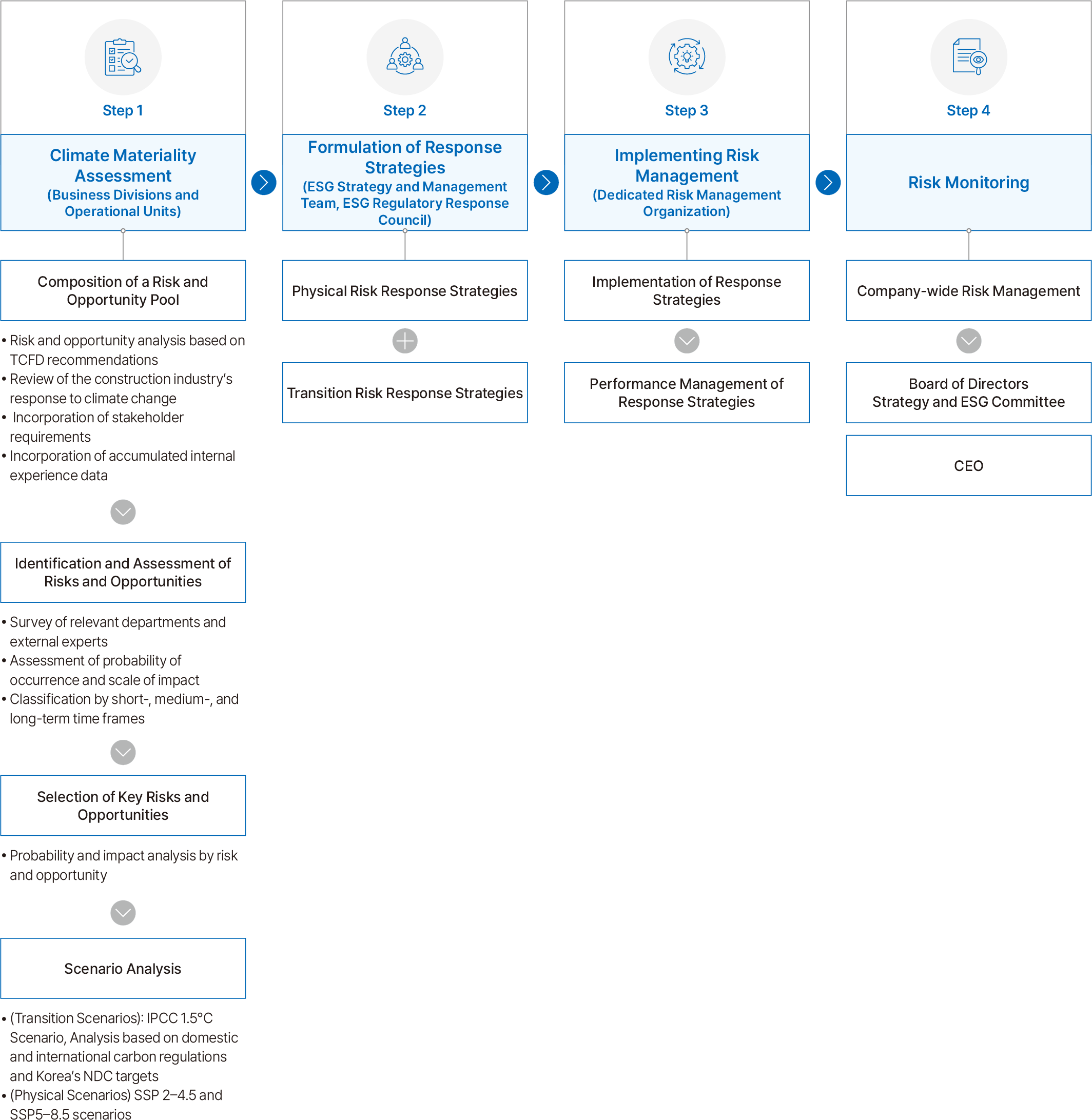
SK ecoplant operates a systematic implementation process to integrate key risks and opportunities arising from climate change into its company-wide risk management framework. The company establishes a pool of climate-related risks and opportunities by comprehensively analyzing the characteristics of its business value chain—including subsidiaries—as well as external regulations, market changes, industry trends, and literature reviews. The short-, medium-, and long-term likelihood of each factor and its potential impact on business is then analyzed, through interviews with relevant internal departments and external experts. Key risks and opportunities are identified based on these findings.
Based on scenario analysis, the identified key risks and opportunities are translated into concrete response strategies that align with SK ecoplant’s ESG strategy, mid- to long-term growth direction, and stakeholder expectations, before being implemented. During the strategy implementation process, key performance indicators are established, and performance against targets is periodically reviewed to strengthen the company’s ability to respond to climate change issues. SK ecoplant is currently optimizing its emissions reduction portfolio based on a cost-benefit analysis that takes into account the costs and effectiveness of each response strategy. Going forward, the company plans to expand quantitative analysis to focus on factors with high probability of occurrence and significant financial impact, and to transparently disclose the results to the public.
The response strategies and implementation results derived through the risk monitoring process are reported to the Board of Directors, Strategy and ESG Committee, as well as the CEO, and are reflected in the formulation of company-wide management strategies. Furthermore, to pro-actively prepare for the mandatory disclosure requirements on a consolidated basis, SK ecoplant operates a Disclosure Compliance Module under the ESG Regulatory Response Council. Starting with the enhancement of subsidiaries’ ESG data management systems, the company is also strengthening their climate risk response capabilities.
Climate Change Risk Management Process
Investment Decision-Making
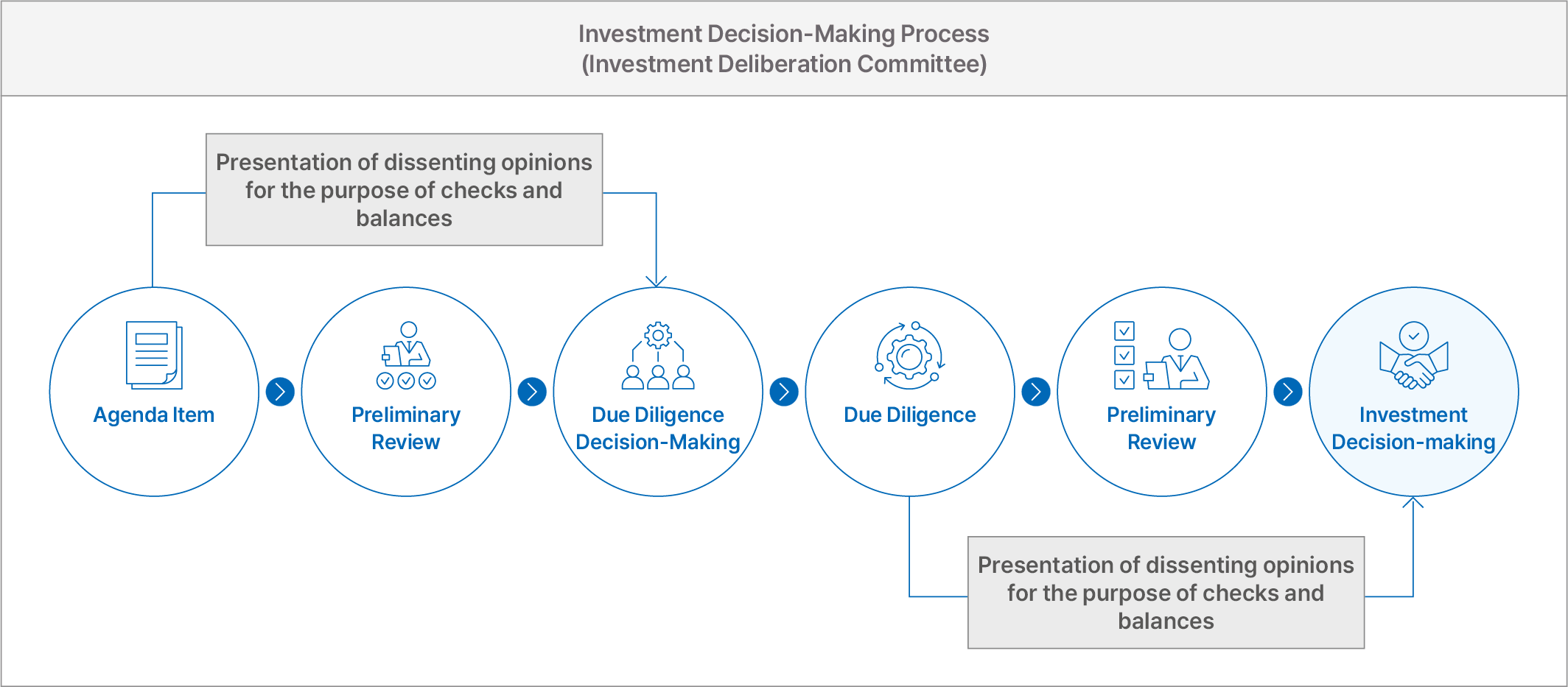
SK ecoplant comprehensively considers the risks and opportunities associated with climate change when reviewing investment proposals. These are incorporated as key factors in investment feasibility assessments. Starting in 2024, to ensure more objective and transparent decision-making, the company has introduced a voting system for its review committee and bases decisions for eligible projects on identified risks and verified information. Furthermore, an independent and fair investment review system has been established by separating the preliminary review and final decision-making bodies while creating a new oversight body composed of experts in various fields, including technology, ESG, and marketing. This body conducts comprehensive reviews of investment proposals and raises dissenting opinions; during the decision-making process, the final vote is cast after comprehensively considering both the results of the preliminary review and these dissenting opinions. In particular, when making new investments, SK ecoplant incorporate various factors—such as changes in greenhouse gas emissions and policy shifts—into feasibility assessments to inform strategic decision-making.
Furthermore, SK ecoplant has proactively introduced an internal carbon pricing system to quantitatively reflect the financial impacts of climate change. Through this system, the company aims to more realistically account for regulatory compliance costs, transition costs, and projected operating costs, thereby effectively managing greenhouse gas emission risks at the investment review stage. The internal carbon price was set by referencing the annual carbon price (as of 2022) from the GCAM 5.3+ model—one of the Net Zero 2050 scenarios developed by the Network for Greening the Financial System (NGFS)—to align with the 2040 net-zero target. SK ecoplant is currently in the process of gradually adjusting this price to reflect portfolio rebalancing and actual operating conditions. This framework is being adjusted to enable more substantive and consistent decision-making, and continuous reviews and refinements are planned in response to future market conditions as well as policy changes.
Investment Decision-Making Process
Greenwashing Pre-Review System
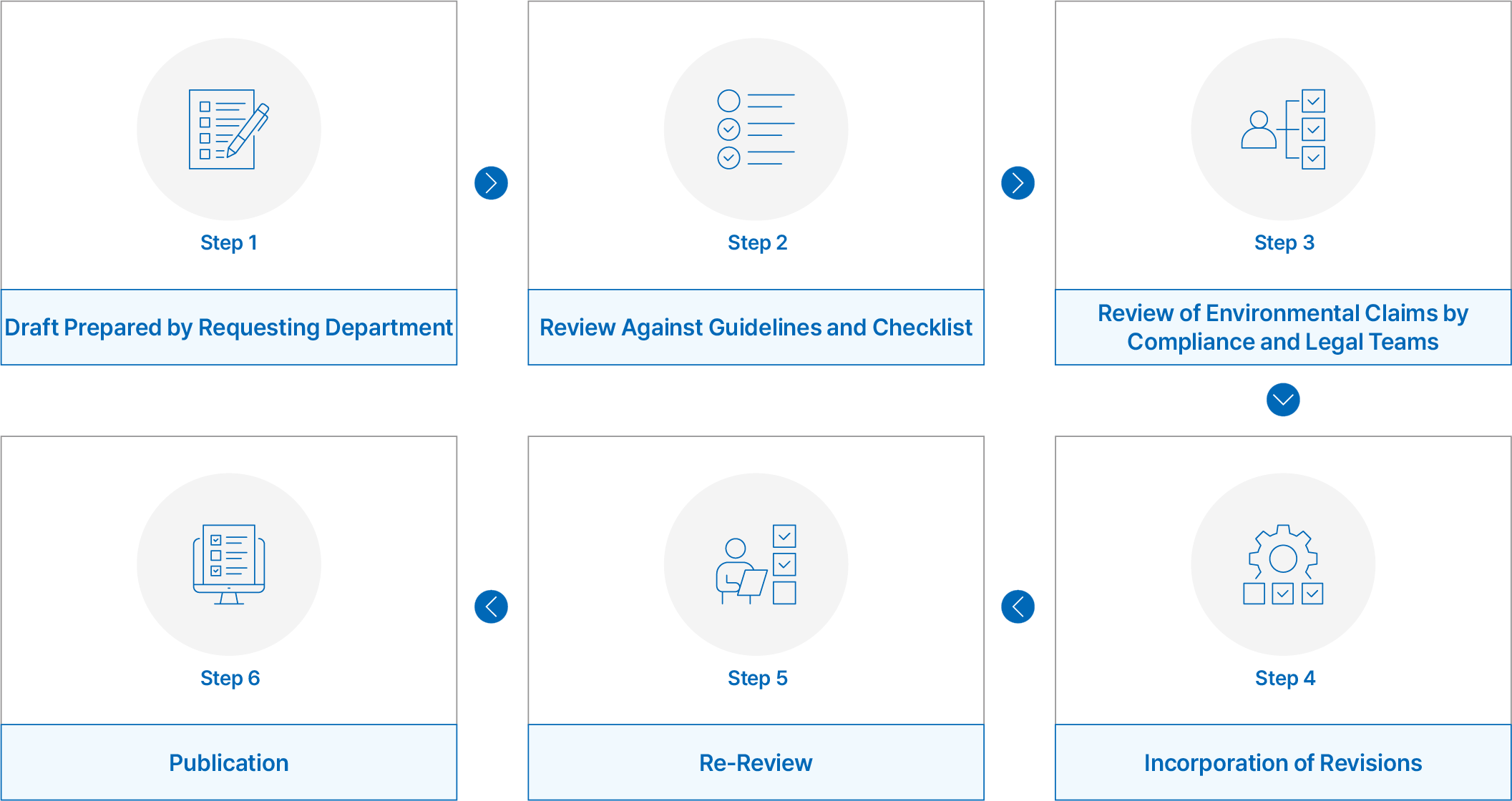
SK ecoplant operates a company-wide pre-review system for environmental claims in advertising, based on Article 3, Paragraph 1 of the Act on Fair Labeling and Advertising and Article 16-10, Paragraph 1 of the Environmental Technology and Industry Support Act. The review scope includes not only advertisements but also press releases, ESG disclosures, and all externally published materials that may influence stakeholders. The department drafting the material conducts an initial self-review based on company-wide guidelines and a self-assessment checklist. Subsequently, the Compliance and Legal teams conduct a professional pre-review and provide revision feedback. Through this process, SK ecoplant enhances the accuracy and credibility of its external communications and proactively prevents legal and reputational risks associated with environmental claims.
Pre-Review Process
Metrics & Targets
Greenhouse Gas Reduction and Renewable Energy Transition Targets
SK ecoplant aims to reduce its Scope 1 & 2 emissions by 42% by 2030 compared to the base year of 2021, in line with the 1.5°C scenario. Additionally, in line with the sub-2°C scenario, the company has set a target to reduce 1,675,547 tCO₂eq—the priority reduction target among Scope 3 emissions—by 25% by 2030 compared to the base year of 2021. Total Scope 3 emissions in 2021 were approximately 2.5 million tCO₂eq, of which the categories subject to reduction are Categories 1 (Purchase of Raw Materials and Services), 6 (Employee Business Travel), 7 (Employee Commuting), 11 (Use of Sold Products), and 15 (Investment). In particular, the company is implementing key reduction measures focused on Purchase of Raw Materials and Services—which account for the largest share of emissions—to achieve this goal.
Furthermore, to achieve its 2040 net-zero goal, SK ecoplant aims to transition 100% of the electricity used across all business divisions to renewable energy. The target renewable energy transition rate by 2030 is 41%, and implementation plans are continuously being refined in response to domestic and international renewable energy supply conditions.
Scope 1 & 2 Emissions Status and Targets
Category | Unit | Performance | Target2) | |
|---|---|---|---|---|
2025(Target) | 2025(Actual) | 2030 | ||
Scope 1 & 2 Emissions1) | tCO₂eq | 25,288 | 18,793 | Achieve 18,033 |
Scope 1 & 2 Emissions Intensity | tCO2eq/KRW billion | 14.1 | 2.6 | - |
1) Scope 1 & 2 Emissions: Calculated on a regional basis | ||||
Scope 3 Emissions Status and Targets
Category | Unit | Baseline (2021) | Performance | Target |
|---|---|---|---|---|
2025 | 2030 | |||
Total Scope 3 Emissions1) | tCO₂eq | 2,500,816 | 2,241,681 | - |
Total Scope 3 Emissions Target | tCO₂eq | - | - | Achieve 2,081,676 tCO2eq by 2030 |
Scope 3 Target Reduction Rate | % | - | - | 25% reduction by 2030 compared |
1) Total Scope 3 Emissions: Calculated based on domestic emissions; among the specific items, only Category 15 | ||||
Energy Consumption Status and Targets
Category | Unit | Performance | |
|---|---|---|---|
2025(Target)1) | 2025(Actual) | ||
Energy Intensity | GJ/KRW billion | 226 | 51.6 |
1) Total Energy Consumption per Unit Target: Set based on our management standards, comparing against the per-unit | |||