Human Rights Management System
Human Rights Management Policy
SK ecoplant supports and complies with the UN Universal Declaration of Human Rights, key conventions of the International Labor Organization (ILO), the 10 Principles of the UN Global Compact, and domestic labor laws and regulations. SK ecoplant’s “Human Rights Management Declaration” and “Human Rights Policy” apply across the entire value chain—including employees, subsidiaries, Biz. Partners, and joint ventures—and encompass a human rights risk management system that includes risk identification and remediation. Furthermore, through the 10 Ground Rules, the company publicly commits to its social and environmental responsibilities to protect the human rights of all stakeholders, including the prohibition of discrimination, respect for diversity, and the creation of a safe working environment.
Human Rights Management Governance
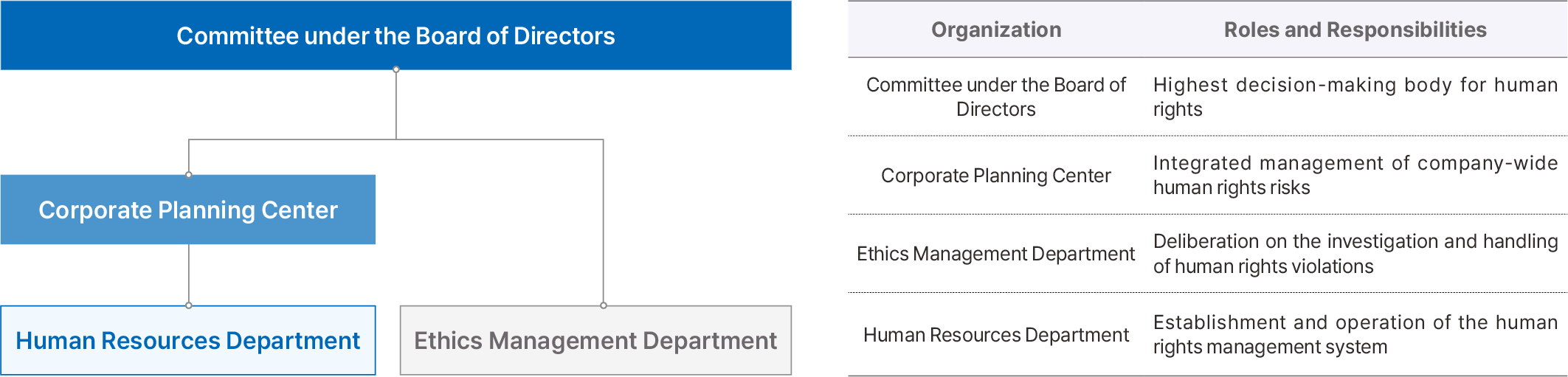
SK ecoplant has established a system for reporting major human rights-related issues to a committee under the Board of Directors. The Human Resources Department is responsible for the working-level management of human rights. As the organization overseeing human rights management, it performs roles such as conducting human rights impact assessments for human rights risk management, establishing and implementing corrective measures, and providing human rights training. The Ethics Management Department regularly reports issues received through the Group’s integrated whistleblowing system and other channels to the CEO and the Audit Committee to address employees’ human rights concerns. It also collaborates with the Human Resources Department to discuss and determine specific response measures, such as remedial actions and disciplinary levels, for cases of human rights violations.
Meanwhile, the Safety and Quality Organization under the BRM Center is exclusively responsible for managing and maintaining the work environment from a safety, health, and environmental perspective. It establishes operational standards and implements measures to improve on-site working conditions. It also disseminates the same standards and guidelines to subsidiaries as those used by the parent company and, when necessary, inspects their operational and maintenance levels to ensure that employees can tangibly experience and actively participate in the human rights management system.
Human Rights Management Organizational Chart
Human Rights Management System
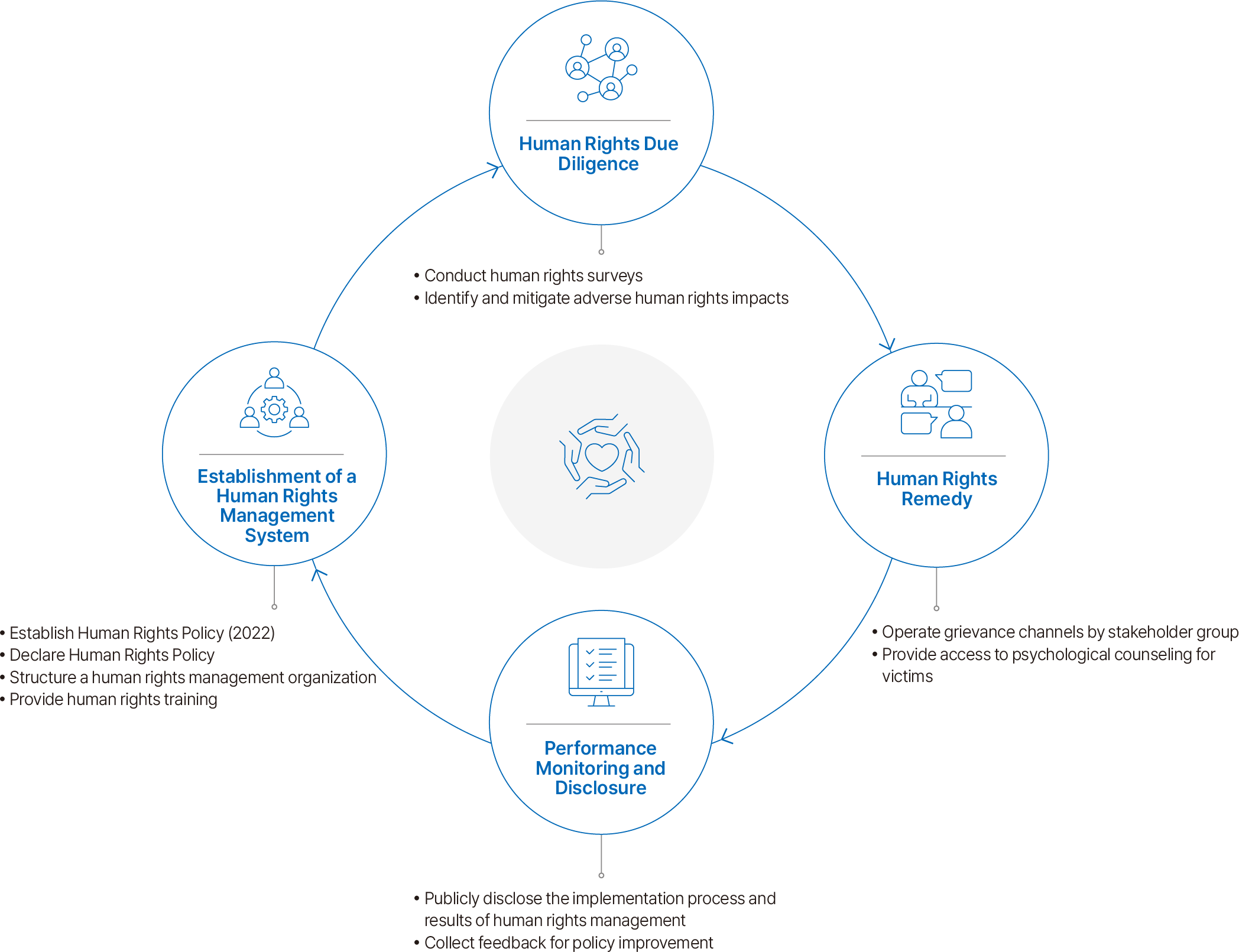
SK ecoplant has established a human rights management system based on the UN Guiding Principles on Business and Human Rights. The company has laid the groundwork for implementation by enacting a Human Rights Policy and forming a dedicated organization. Potential human rights risks are proactively identified and addressed through risk management processes, including human rights impact assessments. In addition, SK ecoplant operates a human rights grievance channel to provide stakeholders with practical remedies and take appropriate measures in response to reported grievances. The company continuously monitors the performance of these human rights management activities and incorporates findings to enhance its human rights management system. These results are transparently disclosed through the Sustainability Report and other channels.
Human Rights Management Implementation Process
Human Rights Management Objectives
To embed the human rights management system, SK ecoplant expanded the scope of its human rights risk assessment from headquarters employees in 2022 to all employees beginning in 2023. In 2024, human rights awareness programs were implemented across subsidiaries, with active support provided for the establishment of subsidiary-level human rights policies and diagnostic processes to promote the adoption of a structured human rights management system. In the mid-to-long term, the scope of human rights risk management will be gradually expanded to cover all subsidiaries by 2026 and Biz. Partners by 2030, aiming to establish a human rights management system across the entire value chain.
Human Rights Management Roadmap

Human Rights Risk Management
Human Rights Risk Management Procedures
Through the human rights risk management process, SK ecoplant protects the human rights of all stakeholders by proactively identifying and managing human rights risks that may arise throughout the business value chain. This process consists of five stages: defining human rights impact factors, identifying and assessing risks, establishing and implementing mitigation measures, monitoring, and post-implementation reporting.
Human Rights Risk Management Process
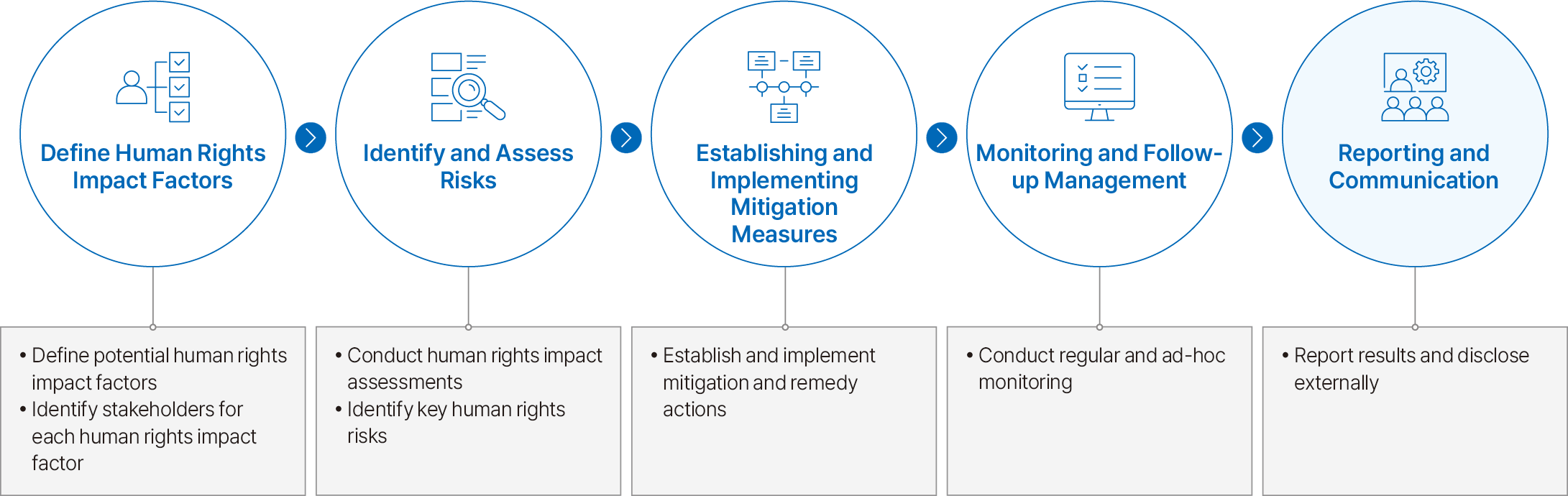
Human Rights Impact Assessment
SK ecoplant conducts annual human rights impact assessments and surveys to identify and evaluate actual and potential human rights risks, thereby assessing the level of human rights management. In 2022, a human rights impact assessment was conducted for headquarters employees, and beginning in 2023, the scope was expanded to all employees through human rights surveys to assess awareness of human rights management. The human rights survey is based on the ten management areas outlined in SK ecoplant’s Human Rights Policy, and any potential human rights risks identified through this process are continuously monitored to ensure that corrective actions are completed within the year.
Human Rights Survey Overview
Category | Details | |
|---|---|---|
Evaluation Target | All SK ecoplant employees | |
Evaluation Frequency | Once a year | |
Evaluation Procedure | Establish assessment plan → Develop questionnaire → Conduct survey → Identify vulnerable groups and conduct FGI → Prepare result report → Report to senior management and disclose information | |
Evaluation Items | 1. Prohibition of Discrimination 2. Respect for Diversity 3. Prohibition of Forced and Child Labor 4. Protection of Freedom of Association and Collective Bargaining Rights 5. Fair Treatment and Support for Education and Training | 6. Compliance with and Improvement of Working Conditions 7. Establishment of a Pleasant and Safe Working Environment 8. Compliance with Environmental Laws and Regulations 9. Fulfillment of Environmental and Social Responsibilities 10. Protection of Local Residents’ Environment, Safety, and Property Rights |
Identification and Assessment of Human Rights Risks
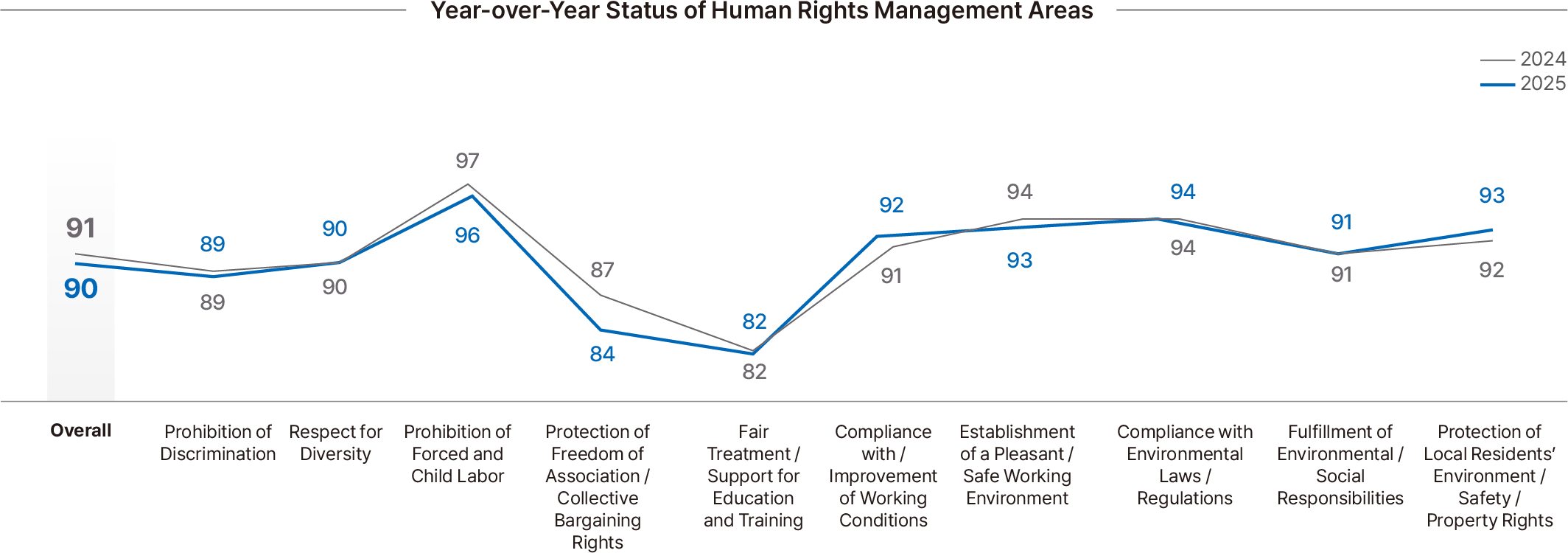
An assessment of employees’ awareness of human rights management, conducted through human rights impact assessments and surveys, revealed a 90% positive response rate* for human rights management in 2025, retaining a similarly high level of as the previous year. Furthermore, positive response rates exceeded 80% across all 10 management areas of the the Human Rights Policy, indicating a high level of company-wide awareness of human rights. Among the 10 management areas, the item with the lowest positive response rate—“Fair Treatment and Support for Education and Training”—was designated as a priority management area.
* Percentage of employees who responded that the company’s human rights management level in each area is well-established (“Strongly Agree” and “Agree”)
Human Rights Management Awareness Level Diagnosis Results
Management of Potential Human Rights Risks
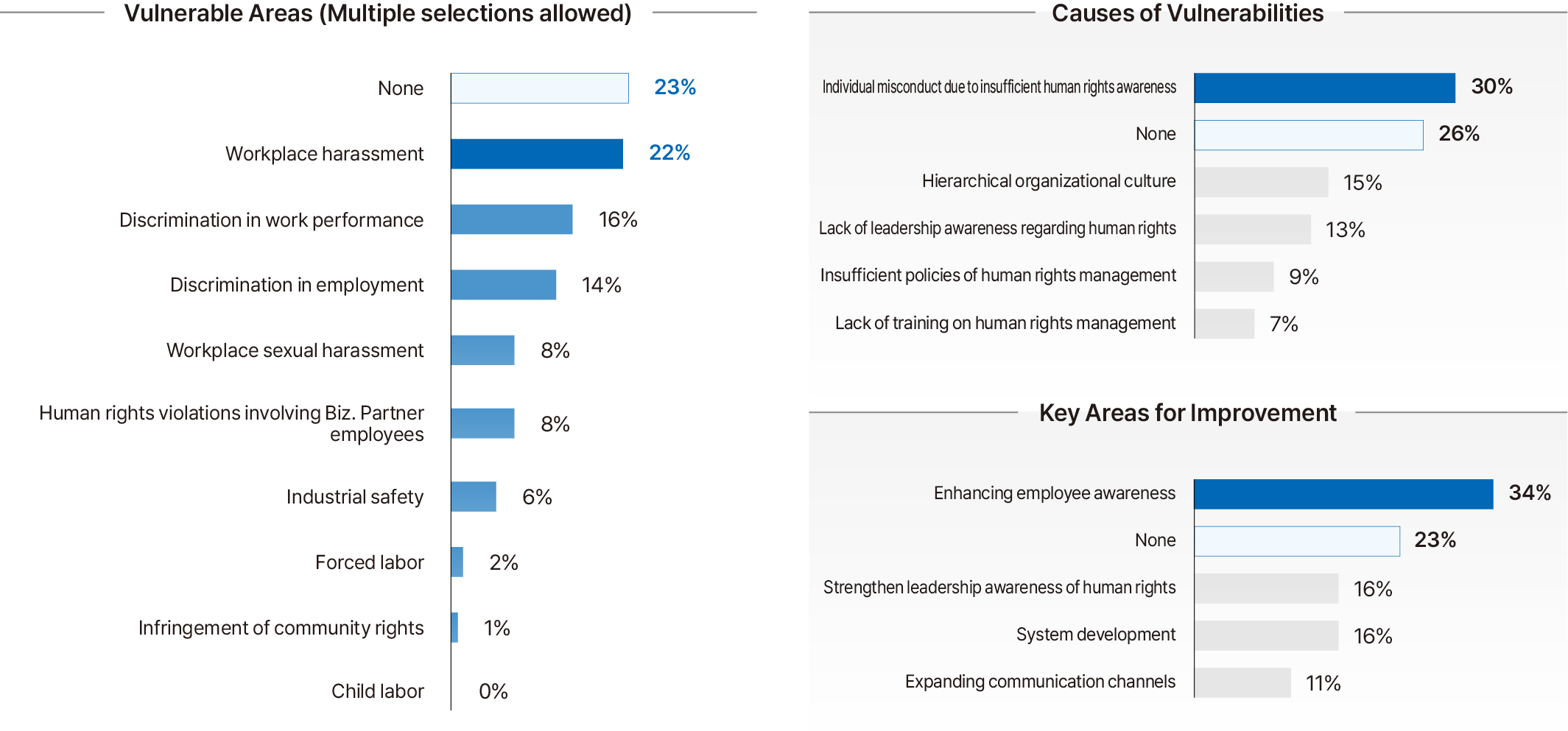
For the management of potential human rights risks, SK ecoplant conducted an investigation on internal human rights violations, their underlying causes, and improvement measures. The investigation identified non-regular employees as a relatively vulnerable group; however, due to the nature of their employment status, the risk was found to be latent and unavoidable rather than indicative of direct exposure to human rights violations. Meanwhile, “Workplace Harassment” was identified as the most vulnerable area, requiring proactive prevention and management. The root cause of vulnerability in this area was analyzed to be “individual misconduct due to insufficient human rights awareness,” and the key area for improvement was identified as enhancing employee awareness.
To mitigate potential human rights risks, SK ecoplant is conducting human rights and ethical management training for all employees to enhance their consciousness of human rights issues. In particular, for managers who play a key role in shaping organizational culture, the company has organized and implemented separate training—such as sexual harassment prevention training—as part of its ethical management initiatives. This effort aims to establish a culture that eradicates human rights violations within the organization through leaders setting a positive example. Through this approach, leaders are spearheading the fostering of a healthy organizational culture, thereby building a virtuous cycle in which respect for human rights spreads throughout the entire workforce.
Results of the Potential Human Rights Risk Investigation
Human Rights Risk Improvement and Mitigation
SK ecoplant operates various programs to address key management areas and potential human rights risks identified through human rights impact assessments. Through “EP, US,” an internal communication platform, the company strengthens internal dialogue and appoints grievance committee members within the Management Development Council to discuss remedies for human rights violations experienced by employees. In 2024, communication forums between executives and employees was expanded to build consensus around human rights risk mitigation activities. Human rights management training for leadership was reinforced, and efforts were made to prevent and remedy violations through workplace harassment prevention campaigns and enhanced access to psychological counseling for victims.
Activities to Improve and Mitigate Human Rights Risks
Category | Area | Details | Effectiveness Evaluation Result |
|---|---|---|---|
Focus Area | Fair Treatment |
|
|
Potential Human | Workplace |
|
|
Prevention and Remedy of Human Rights Violations
Human Rights Grievance Handling
SK ecoplant operates a variety of online and offline grievance and reporting channels—such as its website, KakaoTalk, email, and postal mail—to address human rights grievances and provide remedies for all stakeholders. The Ethics Management Department regularly reports received grievances to the CEO and Audit Committee, and, in consultation with the HR Department, determines the appropriate remedial actions and disciplinary measures for human rights violations. All stakeholders, including employees, Biz. Partners, and third parties, may report human rights violations either anonymously or under their real names through the grievance handling channels, and all reporter identities and report details are strictly kept confidential. Whistleblower protection policies are also enforced to prevent any disadvantage resulting from a report, and strict disciplinary standards are applied to any attempt to identify the whistleblower or engage in discriminatory behavior against them.
In 2025, promotional efforts for the grievance channels were strengthened, and the company continues to expand protective measures for victims and whistleblowers, including psychological counseling support and separation measures for perpetrators. In July 2025, whistleblower protection policies were revised. Post-reporting monitoring was institutionalized to regularly check whether whistleblowers and those who assist them are experiencing retaliation, adverse treatment, or other harm. Furthermore, to raise employees’ awareness of human rights and instill a culture of human rights management, the company operates a “Human Rights Management Bulletin” on the internal intranet. The bulletin is publicly available for employees to review at any time, containing information on human rights policies, related processes, and human rights management programs.
Human Rights Grievance Channels by Stakeholder Group
Stakeholder Group | Human Rights Grievance Channels |
Employees | Ethics Reporting Website, Internal Intranet, Management Development Council |
Biz. Partners | Ethics Reporting Website, Bulletin Board for Biz. Partner |
Communities | Ethics Reporting Website, Residents’ Council and Cooperative Bodies |
Other Vulnerable Groups in Terms of Human Rights | Ethics Reporting Website |
Human Rights Training
SK ecoplant provides regular statutory human rights training for all employees—from executives including the CEO to contract-based staff—covering topics such as prevention of workplace harassment and sexual harassment, as well as awareness training on persons with disabilities. After completion of training, participants are evaluated on the content, and, if necessary, follow-up training is conducted to reinforce learning outcomes. in 2025, SK ecoplant achieved a 100% completion rate for human rights training, including follow-up sessions. For daily workers and overseas skilled workers, training was conducted in written format as a substitute to ensure universal participation.
Furthermore, going beyond statutory training, SK ecoplant has independently developed and implemented “Corporate Human Rights Training” to further enhance employees’ understanding of and commitment to human rights management. In 2024, training and internal intranet content was provided covering the concept of human rights management, the company’s human rights policies, and best practices from other companies. In 2025, SK ecoplant continued to offer online training via the mySUNI education platform to enhance awareness on the necessity for human rights management. Training content was built around human rights establishment measures in external environments, society, and companies where corporate human rights requirements are being strengthened, as well as concrete examples of global companies' human rights policies(DEI) and corporate culture. Furthermore, employees' human rights awareness levels and potential risks are diagnosed through training-linked "human rights status surveys." Survey results are being utilized as foundational materials to advance human rights management.